
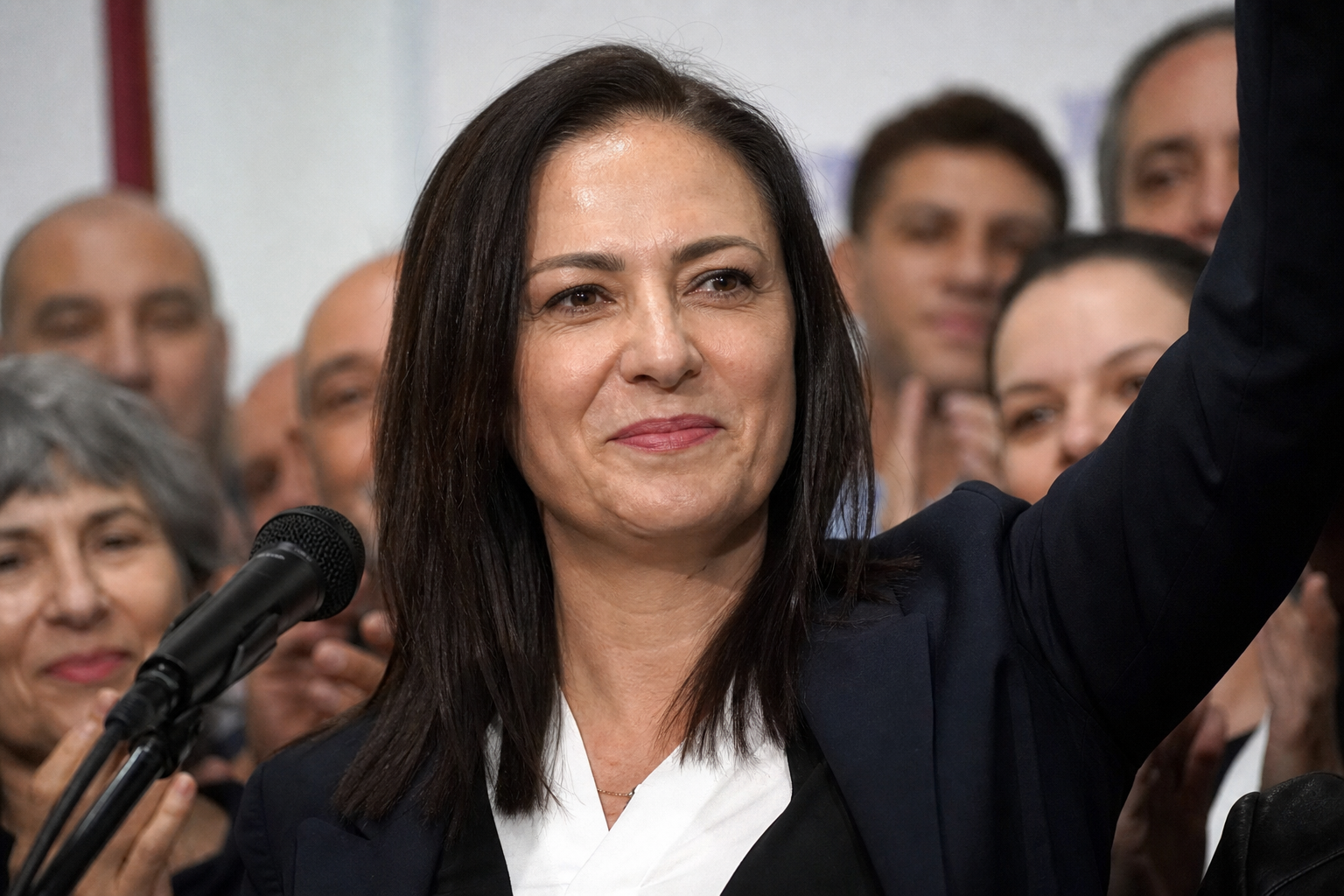
Former Knesset member Yousef Jabareen has been elected leader of the Arab-majority Hadash party, stepping into the top position at a moment of internal transition and strategic recalibration ahead of national elections.
The vote took place on May 16, 2026, at the party’s national council meeting in Deir Hanna. Jabareen, a resident of Umm al-Fahm, defeated Dr. Shukri Awawdeh to claim first place on the Hadash Knesset list. The result ends the long chairmanship of Ayman Odeh, who is resigning along with two other MKs.
Jabareen’s victory places him at the head of a list that includes Jafar Farah in the second slot, Ofer Cassif in third, and the party’s sole woman representative, Nihaya Wishahy, in fifth. The outcome signals both continuity in the party’s left-wing platform and a deliberate effort to refresh its public face.
I call for the establishment of the broadest and strongest Joint List possible. This is the need of the hour, and it is what our public demands.
Jabareen made clear that his immediate priority is rebuilding the Joint List alliance that once united several Arab parties. He argued that only a unified slate can maximize Arab representation and prevent another term for the Netanyahu government that includes ministers Itamar Ben-Gvir and Bezalel Smotrich.
We will do everything to prevent the Netanyahu, Ben-Gvir, and Smotrich government from continuing for another term.
Hadash has long positioned itself as a Jewish-Arab party committed to socialist principles and equality. Its decision to field a mixed list that includes Cassif, a Jewish MK, underscores the party’s refusal to retreat into purely sectarian politics even as Arab voters express growing frustration with coalition exclusion.
The leadership change arrives against a backdrop of declining Arab turnout in recent elections and repeated failures to translate demographic weight into sustained parliamentary power. Party activists in the Galilee and the Triangle now look to Jabareen to reverse that trend by restoring the broad electoral front that performed strongly in 2015 and 2020.
Insiders describe the Deir Hanna meeting as unusually tense, with competing visions over whether Hadash should remain inside a wider Joint List or run independently to preserve its distinct ideological brand. Jabareen’s win is widely read as endorsement of the alliance route.
Observers note that the party’s new number-two, Jafar Farah, brings extensive experience in Arab civil-society organizations and is expected to focus on socioeconomic issues that resonate beyond traditional voters. Nihaya Wishahy’s fifth-place finish guarantees a female voice on the list for the first time in several cycles.
Political analysts in Jerusalem say the timing of the shakeup is deliberate. With general elections widely expected within eighteen months, Hadash is racing to finalize an electoral pact that could again include the United Arab List or other factions that split away after the last Knesset term.
Jabareen’s personal background as a former MK and academic gives him credibility both inside the party and among potential coalition partners. He has spent years cultivating ties with Jewish left-wing groups that share Hadash’s opposition to occupation and its support for a two-state framework.
Campaigners in Arab towns report that voters are demanding unity after years of fragmentation that left Arab parties with fewer seats than their combined vote share might have delivered. Jabareen’s opening statement directly addressed that sentiment.
The party’s national council also approved procedural changes intended to speed up negotiations with other Arab factions. A steering committee is expected to begin formal talks within weeks, aiming to present a single slate by late summer.
Israeli political commentators point out that any revived Joint List would face legal and political hurdles, including threshold requirements and possible challenges from right-wing parties seeking to disqualify candidates. Jabareen has pledged to meet every legal test while maintaining the party’s core positions.
Inside Umm al-Fahm, the reaction to Jabareen’s election was largely positive. Residents interviewed after the vote expressed hope that a familiar local figure could translate personal popularity into national influence.
Still, challenges remain. Arab public opinion is divided over participation in any government and over the proper balance between parliamentary work and street protest. Jabareen will need to navigate those tensions while keeping the party’s activist base mobilized.
The departure of Odeh and two other MKs creates three open slots that the new leadership must fill with candidates capable of attracting both traditional Hadash voters and younger Arabs who have drifted toward other lists or abstention.
Jabareen has indicated he will retain the party’s emphasis on social welfare, anti-racism legislation, and opposition to settlement expansion. At the same time, he signaled willingness to explore limited legislative cooperation on issues such as crime in Arab communities where common ground may exist with centrist parties.
Whether these overtures produce tangible results will depend on the wider political map after the next election. For now, the focus inside Hadash remains on completing the list and sealing an alliance that can maximize seats.
The coming months will test Jabareen’s ability to unify competing factions and present a credible alternative to the current government. His first public appearances as leader will be watched closely by both supporters and rivals across the political spectrum.