
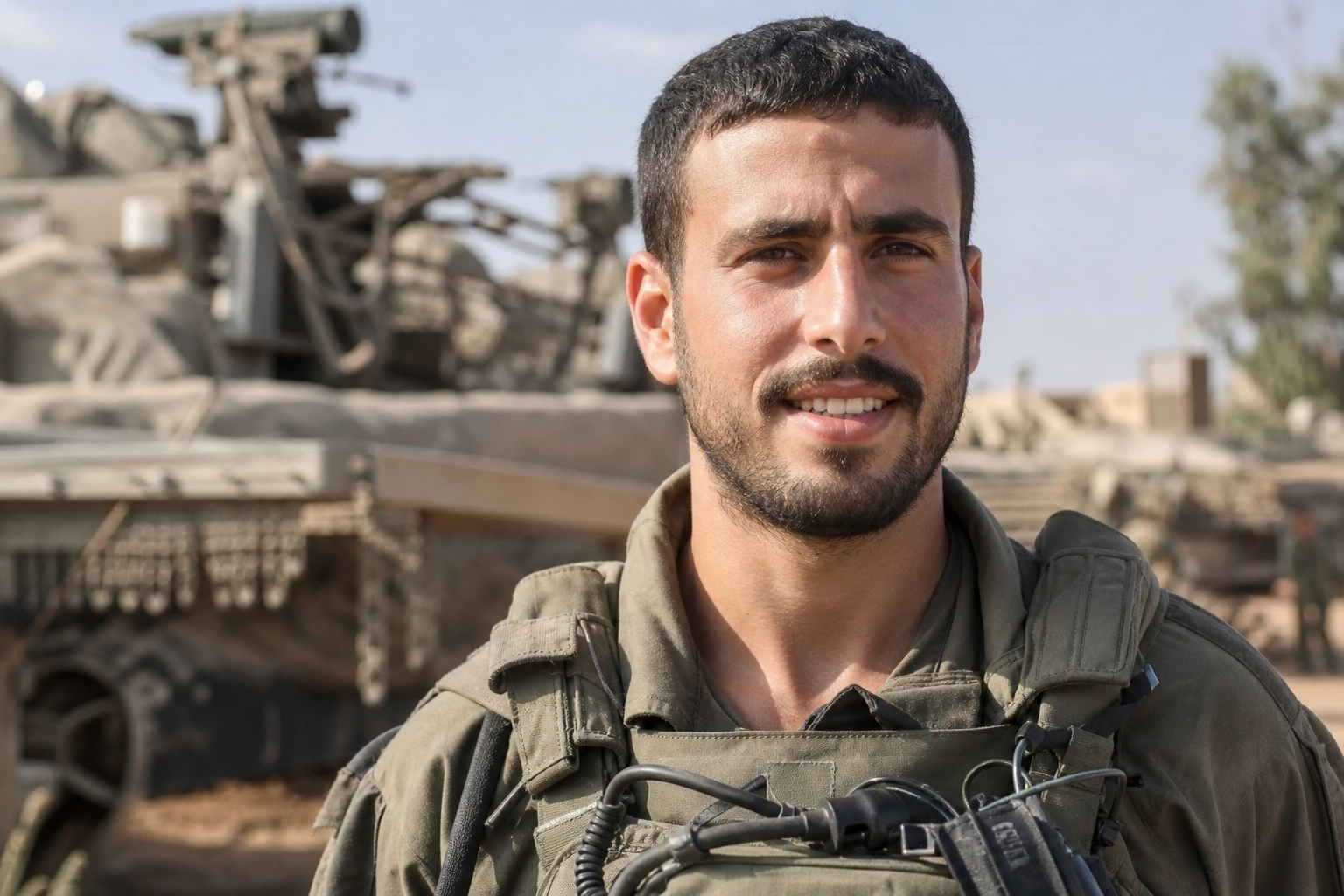
Captain Maoz Israel Recanati, a platoon commander in the Golani Brigade’s 12th Battalion, was killed during combat operations in southern Lebanon.
Recanati, who had been serving as a lieutenant, received a posthumous promotion to the rank of captain. He led his unit in engagements against Hezbollah militants in the area around the Litani River.
The Israel Defense Forces confirmed the incident as part of ongoing efforts to neutralize threats along the northern border. Recanati’s death adds to the toll of soldiers lost in the current round of fighting.
His unit had been conducting targeted operations to dismantle Hezbollah infrastructure and prevent cross-border attacks. Fellow soldiers described him as a dedicated leader who placed the safety of his troops first in every mission.
Prime Minister Benjamin Netanyahu issued a statement honoring the fallen, noting the heavy price paid by young officers in the defense of Israel’s borders. “Capt. Maoz Israel Recanati, of blessed memory, who fell in battle in southern Lebanon,” the prime minister said, extending similar sentiments to all recent casualties including Recanati.
The 12th Battalion of the Golani Brigade has been at the forefront of ground maneuvers since the escalation began. Recanati joined the battalion after completing officer training and quickly rose to platoon command due to his tactical skill and calm under fire.
Family members and comrades gathered for his funeral in central Israel, where military officials praised his commitment and leadership. The ceremony highlighted the personal sacrifices made by reservists and career soldiers alike in the prolonged campaign.
Defense officials reported that Hezbollah continues to launch mortar and drone strikes from positions south of the Litani River. These attacks have forced IDF units to maintain a high operational tempo despite the costs.
Recanati’s promotion reflects the IDF’s tradition of recognizing valor and service even after the ultimate sacrifice. His name joins the growing list of officers who have fallen while directing troops in close-quarters combat.
Local communities near the northern border expressed grief mixed with resolve. Residents said the loss of such young leaders underscores the need for a decisive outcome against the Iranian-backed group.
Military analysts noted that the 12th Battalion’s experience in urban and rural terrain has proven critical in recent weeks. Recanati’s platoon had successfully cleared several key positions before the fatal engagement.
The total number of Israeli soldiers killed in the current Lebanon fighting round now stands at 19. Each name added to the list brings renewed calls for both security and remembrance.
Recanati leaves behind parents, siblings, and fellow soldiers who trained and fought alongside him. His legacy, they said, will endure through the continued mission to secure Israel’s northern communities.
Additional details from the field indicate that the clash involved intense exchanges of fire lasting several hours. IDF forces responded with precision strikes that neutralized the immediate threat.
Haaretz and Times of Israel both carried reports on the broader casualty figures, placing Recanati’s death within the context of sustained Hezbollah resistance. Social media tributes from organizations such as StandWithUs referenced his service in connection with drone-related incidents.
The Golani Brigade as a whole has sustained multiple losses since the ground phase intensified. Commanders have emphasized the importance of maintaining morale and operational effectiveness amid the attrition.
Recanati’s story mirrors that of many young Israelis thrust into leadership roles at a critical time. His rapid rise from lieutenant to captain, even posthumously, speaks to the trust placed in him by superiors.
Further operations in the region continue as the IDF seeks to push Hezbollah fighters farther from the border. The military has vowed to complete its objectives despite the human cost.
Communities across Israel observed moments of silence in honor of Recanati and the other fallen soldiers. Flags flew at half-staff at military bases and government buildings.
The Litani River area remains a focal point of the conflict, with both sides exchanging fire across the waterway. Recanati’s unit was part of the effort to establish secure zones free of militant activity.
His comrades recalled specific missions where his quick decisions prevented greater losses. Those accounts have circulated among veterans and active-duty personnel in recent days.
Official IDF channels released a brief biography highlighting Recanati’s service record and the circumstances of his death. The statement avoided operational details for security reasons.
Support networks for bereaved families have activated to assist Recanati’s relatives with immediate needs and long-term care. National mourning periods typically follow such announcements.
The current round of fighting has displaced thousands on both sides of the border. Recanati’s sacrifice is viewed by many as part of the larger effort to allow residents to return safely to their homes.
International observers continue to monitor the situation closely, with calls for de-escalation balanced against Israel’s right to self-defense. Recanati’s death has been noted in diplomatic cables as evidence of the conflict’s intensity.
Future operations will likely build on the groundwork laid by units like the 12th Battalion. Recanati’s leadership example is expected to guide new officers entering the same theater.
The full impact of these losses will be assessed once the campaign reaches its conclusion. For now, Capt. Maoz Israel Recanati is remembered as a soldier who gave everything for his country’s security.