
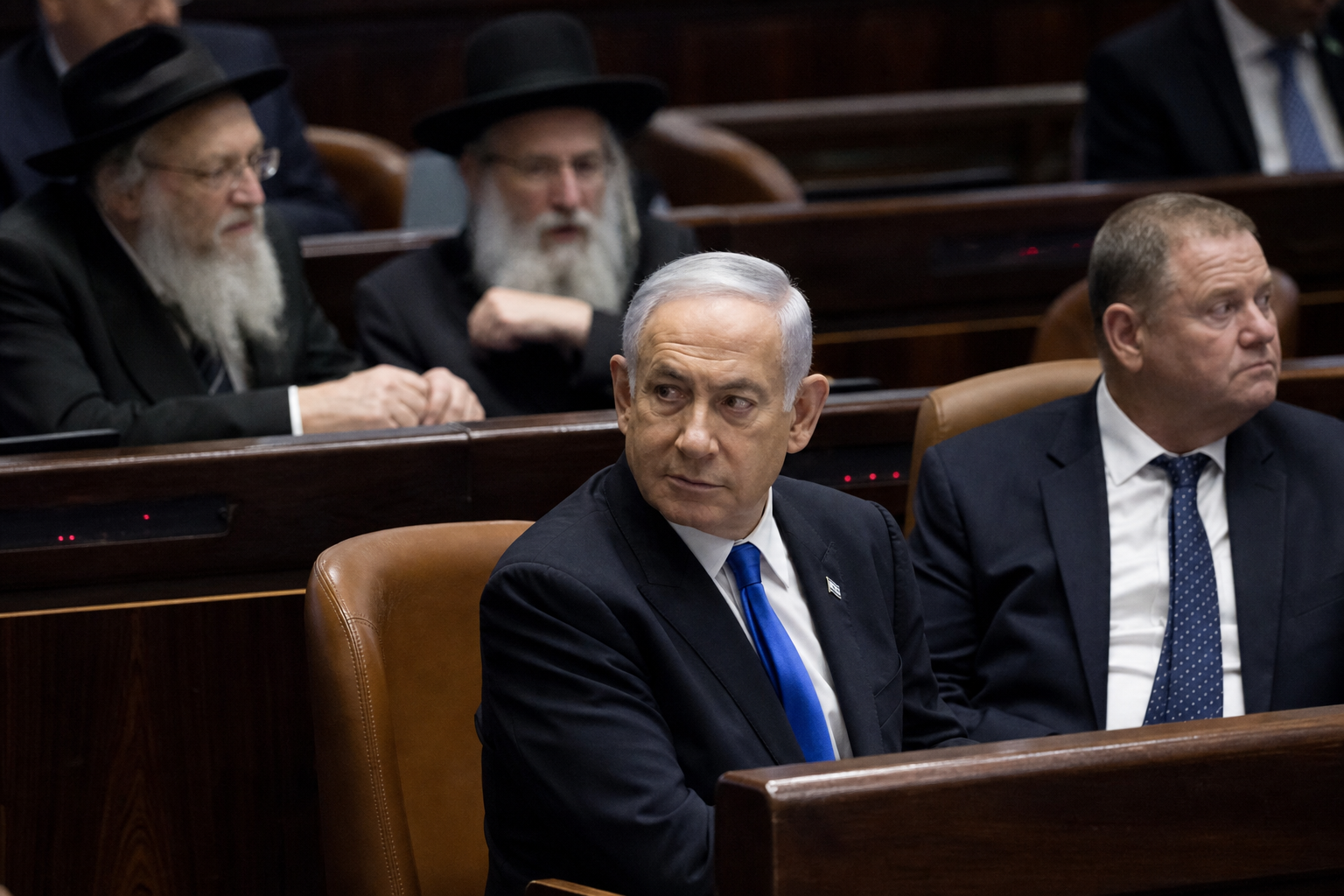
Prime Minister Benjamin Netanyahu has offered to restart Knesset committee discussions on exempting ultra-Orthodox men from military service.
The move comes as his coalition shows clear signs of breaking apart. Haredi parties have threatened to support early elections that could take place as soon as late August.
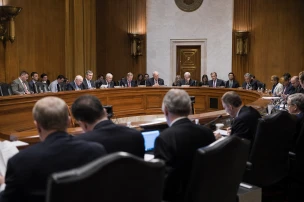
On May 17, 2026, Netanyahu’s office proposed resuming work in the Foreign Affairs and Defense Committee to advance the Haredi draft exemption bill toward final readings.
The two main Haredi factions in the coalition, Degel HaTorah and Shas, have demanded swift progress on the legislation. They prefer elections in September during the High Holidays period.
Netanyahu instead wants to stretch the timeline to October. This would give him additional weeks in office while the coalition remains intact.
The coalition submitted a formal dissolution bill on May 17 and 18. If the bill passes the following week, voters could head to the polls in late August.
What changed over the last week? Nothing. It’s just an attempt to delay the election date.
Coalition insiders say the sudden revival of the draft bill follows weeks of stalled negotiations. Haredi leaders had warned they would no longer prop up the government without concrete movement on exemptions.
The proposed legislation would allow thousands of yeshiva students to avoid conscription. It would replace the temporary arrangements that have governed ultra-Orthodox service since the Supreme Court struck down previous exemptions.
Israel’s military has faced sustained manpower shortages during the ongoing war that began with the October 2023 Hamas attacks. Senior officers have repeatedly called for broader conscription across all population sectors.
Another desperate attempt by the premier to buy himself a few more weeks in power at the expense of the national interest of strengthening the IDF during a war.
Opposition figures argue that Netanyahu is placing personal political survival above operational needs of the armed forces. They point to recruitment shortfalls in combat units that have persisted for more than two years.
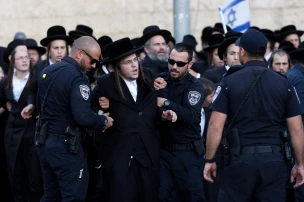
Ultra-Orthodox parties view any forced conscription as an existential threat to their communities. They insist that full-time Torah study constitutes a legitimate contribution to national resilience.
Netanyahu’s governing majority rests on the combined seats held by Shas and Degel HaTorah. Losing either party would immediately strip the coalition of its ability to pass legislation.
Inside the Knesset, negotiators have spent months trying to craft language that satisfies both religious leaders and military planners. No version has yet secured enough votes to pass final readings.
Public debate over the issue has grown sharper since the war began. Secular Israelis increasingly question why one sector of society remains largely exempt while others serve in combat roles.
Haredi politicians counter that their communities already contribute through high birth rates and charitable networks that support soldiers’ families. They reject comparisons to other groups that serve in the reserves.
If the revived talks produce a bill that reaches the Knesset floor, Netanyahu could claim a legislative achievement. That achievement might temporarily calm his coalition partners.
However, even a successful vote would not automatically resolve the underlying tension. Haredi leaders have signaled they may still push for a September election date regardless of progress on the draft law.
Defense officials have warned that any further delay in resolving the conscription question will complicate annual recruitment cycles. The IDF has already adjusted training schedules to accommodate possible larger cohorts of new soldiers.
Coalition sources indicate that Netanyahu’s team is calculating the precise timing of committee meetings. They hope to create enough procedural momentum to keep Haredi parties from supporting dissolution in the coming days.
The dissolution bill itself requires several readings and committee reviews before it can take effect. This process gives the prime minister a narrow window to strike a deal.
Analysts note that Netanyahu has used similar legislative maneuvers in past coalition crises. He has repeatedly extended the life of fragile governments by promising movement on contentious religious issues.
Should elections ultimately occur in October rather than August, Netanyahu would gain valuable time to improve his standing with voters. Current polling shows his Likud party trailing several opposition blocs.
The Haredi parties face their own internal pressures. Their voters expect tangible protection of the exemption system before agreeing to any early vote.
Legal experts say the Supreme Court will likely review whatever final text emerges from the Knesset. Previous versions have been returned for failing to meet constitutional standards of equality.
Meanwhile, military commanders continue to emphasize that every additional recruit reduces the burden on existing combat units. They have asked politicians to separate security requirements from coalition arithmetic.
The coming week will determine whether Netanyahu’s latest offer succeeds in keeping his government afloat or accelerates its collapse. Both sides have made clear that further delays carry significant political costs.