
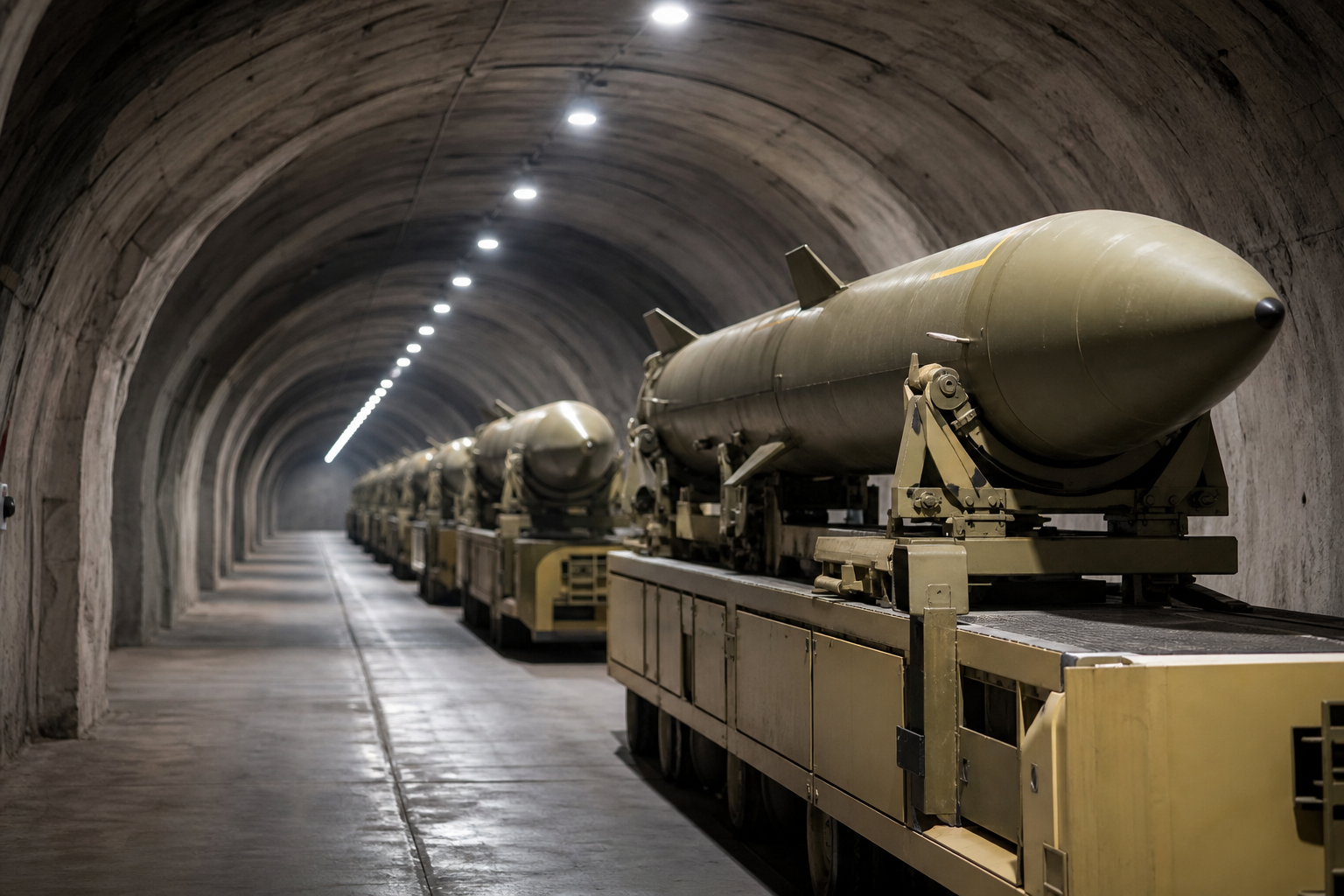
Iran has moved large numbers of its strategic missiles into underground bunkers in recent weeks as fears of possible U.S. military strikes grow.
U.S. intelligence assessments from May 12, 2026, indicate that Iran has regained access to roughly 90 percent of its underground missile storage and launch facilities nationwide. These sites are now assessed to be partially or fully operational.
The New York Times obtained details from classified reports that describe extensive recovery operations at multiple locations. Iranian forces used heavy equipment to dig out launchers trapped inside bunkers near Isfahan and on Qeshm Island.
According to U.S. intelligence assessments obtained by The New York Times, Iran has regained access to roughly 90 percent of its underground missile storage and launch facilities nationwide, which are now assessed to be partially or fully operational.
Along the Strait of Hormuz, Iran has restored operational access to 30 of 33 missile sites. This development allows Tehran to position weapons that could threaten commercial shipping and U.S. warships operating in the narrow waterway.
Retired Lebanese Brigadier-General Hassan Jouni called Qeshm a site that houses striking Iranian capabilities inside an underground missile city. The facility features tunnel networks built to protect missiles from air attacks.
Satellite imagery captured in May 2026 shows convoys of trucks and excavators working at the entrances of several bunkers. The activity increased during a brief ceasefire period that allowed Iranian units to resume work without immediate threat.
These underground complexes give Iran greater survivability against precision strikes. Launchers can be moved quickly from storage tunnels to firing positions and then returned to cover.
Analysts tracking the Strait of Hormuz sites note that even partial restoration of 30 facilities creates new risks for global energy routes. Roughly one-fifth of the world’s oil supply passes through the area each day.
Israeli officials have reviewed the same satellite data and expressed concern over the speed of Iran’s recovery. They view the bunker movements as preparation for sustained operations in any future conflict.
The Wall Street Journal reported earlier in 2026 that Iran’s missile cities contain hardened storage halls connected by rail systems. Recent imagery suggests those systems are once again functional at most locations.
U.S. intelligence officials continue to monitor daily changes at the sites. They assess that Iran’s ability to threaten shipping has risen sharply since the start of the year.
Qeshm Island serves as a central hub for short- and medium-range ballistic missiles. Its underground layout includes multiple entrances and internal roads that allow rapid dispersal of launch vehicles.
Isfahan province hosts several additional bunker complexes that were damaged in earlier exchanges. Fresh excavation work indicates those sites are returning to service as well.
The restoration effort reflects Iranian leaders’ priority on preserving a credible deterrent. By placing missiles deep underground, Tehran aims to ensure some weapons survive an initial wave of strikes.
American naval commanders in the region have adjusted patrol patterns in response to the new assessments. Warships now maintain greater distances from known missile launch zones when possible.
Middle East Eye summarized the intelligence findings and noted that only three of the 33 Strait of Hormuz sites remain inaccessible. That margin still leaves Iran with substantial coverage of the waterway.
Construction of the missile cities began more than a decade ago with assistance from North Korean engineers. The tunnels were designed to withstand repeated bombing runs.
Current satellite passes show fresh tracks leading into bunker entrances at both Qeshm and Isfahan. These tracks match the movement of heavy transporter-erector-launcher vehicles.
Regional governments fear that any closure attempt of the Strait of Hormuz would trigger immediate military responses from the United States and its allies. The economic fallout would extend far beyond the Middle East.
Iranian state media has not confirmed the relocation operations. Instead, officials speak only of routine maintenance at defensive positions.
Defense analysts in Washington calculate that striking all operational sites would require hundreds of precision munitions. Even then, some underground storage halls might remain intact.
The May 12 assessments also note that Iran has improved its ability to reload launchers quickly from protected magazines. This shortens the time between salvos in a prolonged exchange.
Israeli air force planners have studied similar bunker networks in past operations. They acknowledge that underground targets demand specialized munitions and repeated strikes.
Global shipping companies have begun reviewing contingency plans for rerouting tankers around the Strait of Hormuz. Insurance rates for vessels in the Persian Gulf have already ticked upward.
U.S. intelligence continues to track Iranian efforts to stockpile fuel and spare parts inside the same bunker systems. These supplies would support extended operations without reliance on surface depots.
The combination of restored site access and active missile movements inside bunkers signals a deliberate hardening of Iran’s posture. Both Washington and Jerusalem are evaluating options to address the changed landscape.