
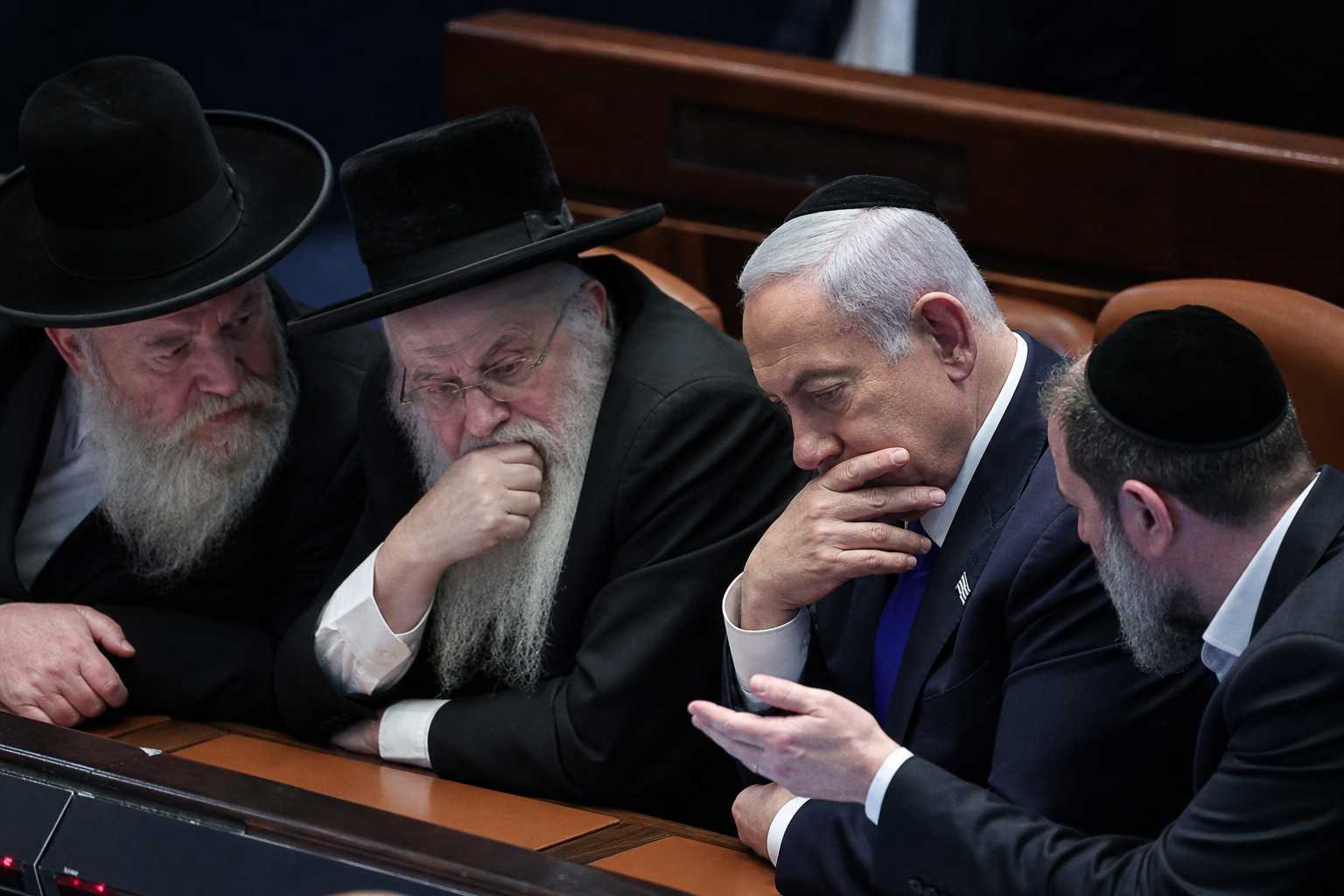
Ultra-Orthodox leaders have openly accused Prime Minister Benjamin Netanyahu of betraying their coalition agreement on military draft exemptions.
On May 17, 2026, representatives from Degel HaTorah and Shas told Netanyahu the government no longer holds a majority to pass the long-promised Haredi draft exemption bill. The two parties immediately threatened to dissolve the Knesset and push for new elections.
Netanyahu responded by reviving public talks about the bill just days later. Coalition insiders say the sudden move was designed only to push any election date from September into late October.
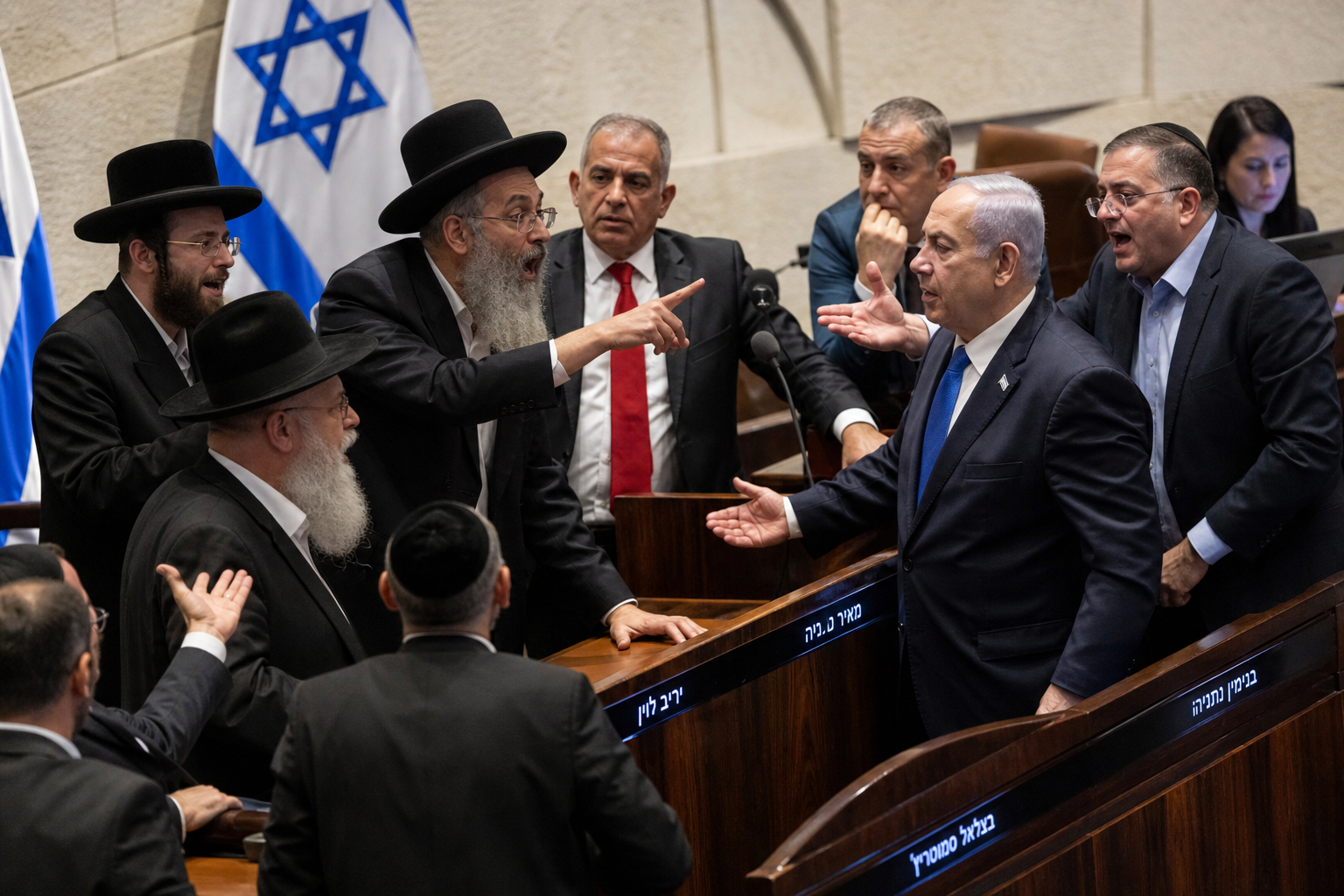
Motti Babchik, aide to UTJ chairman Yitzhak Goldknopf, summed up the anger. "Last week Bibi informed Degel HaTorah that he didn’t have a majority for the bill. Today, he’s making noise about wanting to pass it. What changed over the last week? Nothing. It’s just an attempt to delay the election date."
Shas chairman Aryeh Deri was equally blunt. "The coalition failed to deliver our most crucial law."
The draft exemption issue has defined Haredi participation in Israeli governments for decades. Successive Netanyahu coalitions promised legislation that would codify broad exemptions for full-time yeshiva students while requiring only limited service from others. Courts have repeatedly struck down previous versions, forcing the current coalition to deliver a new framework before the end of its term.
Haredi parties entered the current government with explicit written commitments on the draft law. Those commitments formed the core of their support for Netanyahu after the 2022 election. Without progress on the bill, both Shas and Degel HaTorah view continued participation as politically untenable within their own communities.
The parties have now begun coordinating on an early election date of September 1, 2026. That timing coincides with the High Holidays and Selichot period, when yeshiva students and synagogue attendees are most likely to vote in large numbers. Haredi strategists believe higher turnout among their base could translate into additional seats and stronger bargaining power afterward.
Netanyahu has instead floated October 27 as a possible election date. The later calendar would give him more weeks to stabilize the coalition and perhaps peel away centrist support from opposition parties. Haredi leaders see the October proposal as further evidence that their priorities are being subordinated to Likud’s survival calculations.
Inside the coalition, other partners are watching the standoff closely. Religious Zionist and Likud members have privately urged Netanyahu to find a formula that keeps the Haredi parties inside rather than risk an election they fear could strengthen the opposition. Yet no alternative majority has materialized for the draft bill in its current form.
Haredi negotiators now present themselves as kingmakers regardless of the outcome. If elections are called, they intend to campaign on the betrayal narrative and demand ironclad guarantees in any future coalition. If Netanyahu manages to delay the vote, they plan to extract additional budgetary and legal concessions as the price of continued support.
The dispute also exposes deeper tensions over military service burdens. Secular and national-religious parties have grown increasingly vocal about equalizing the load after years of war and reserve duty. Any exemption framework must now pass not only coalition arithmetic but also public scrutiny and High Court review.
Opposition leaders have seized on the rift to argue that Netanyahu’s government is paralyzed. They point to the draft impasse as proof that narrow sectoral interests continue to override broader national needs. Polls conducted in mid-May showed declining support for the current coalition configuration.
Within Haredi communities, rabbis and community activists have begun preparing voters for the possibility of new elections. Campaign materials already emphasize the need to protect Torah study from external pressure. The September timing is viewed as advantageous because many yeshiva students return home for the holidays and can be mobilized quickly.
Netanyahu’s office has declined to comment directly on the accusations of betrayal. Officials instead stress ongoing efforts to reach a compromise acceptable to all coalition factions. Those efforts have so far produced only statements rather than votes.
The coming weeks will determine whether the Haredi parties carry out their threat to dissolve the Knesset or accept further delays in exchange for side benefits. Either path carries significant risk for Netanyahu’s ability to remain prime minister through the end of the current term.
Coalition sources describe private meetings between Netanyahu and Haredi leaders as increasingly tense. The prime minister has offered additional funding for yeshivas and symbolic statements of support, yet these gestures have not addressed the core demand for legislative protection of draft exemptions.
Shas and Degel HaTorah have scheduled joint meetings with their rabbinic councils to decide next steps. The councils hold decisive influence over whether the parties remain in government or force elections. Several senior rabbis have already signaled impatience with further postponements.
Israeli politics now hinges on whether Netanyahu can manufacture a last-minute majority or whether the Haredi parties will follow through on their September election timetable. The outcome will shape not only the composition of the next Knesset but also the future terms under which Haredi men participate in national service.