
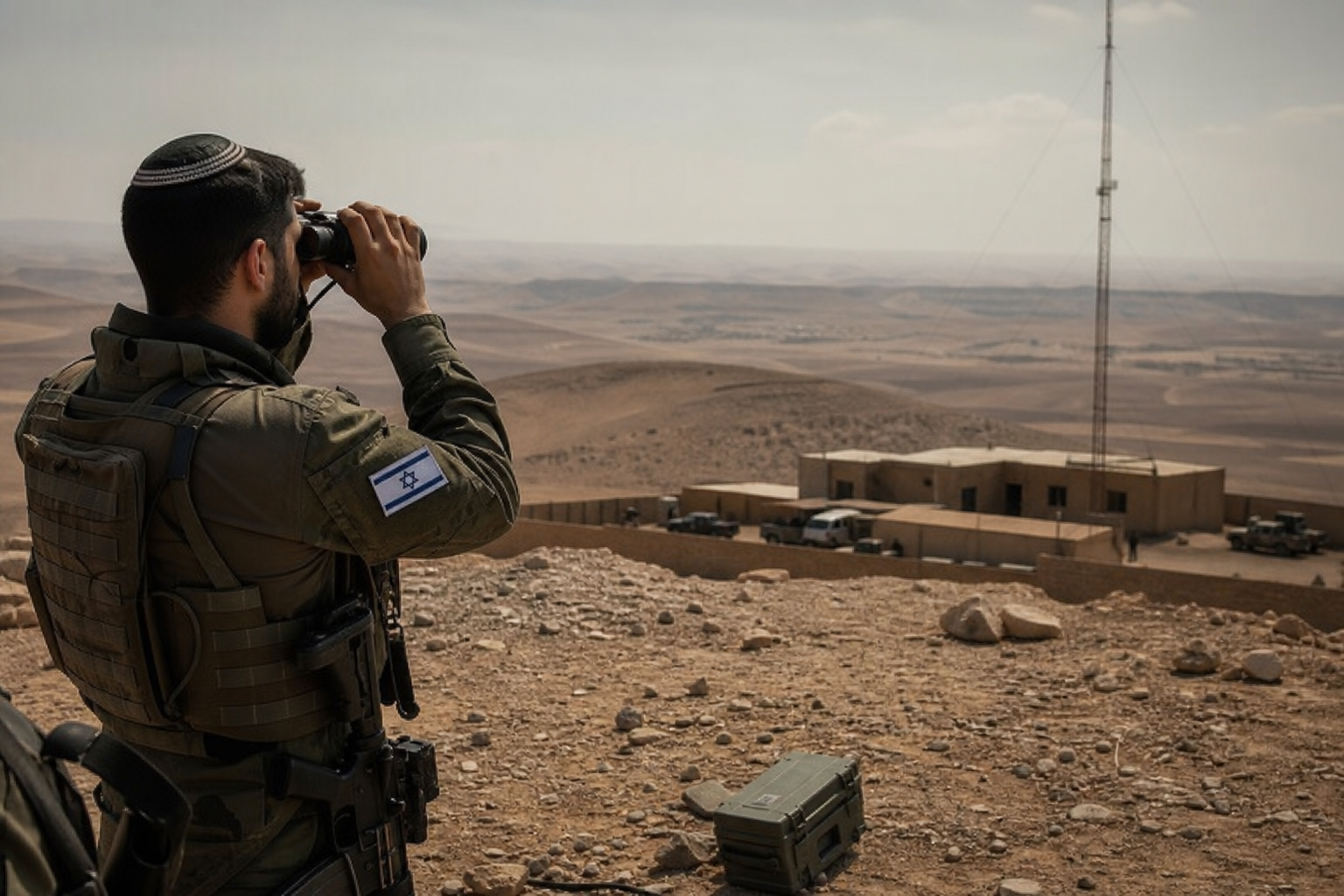
In the arid stretches of Iraq's western desert, Israeli commandos maintained hidden facilities that directly supported operations against Iran.
The Wall Street Journal first disclosed on May 9, 2026, that one such outpost sat in a remote area of the desert. American officials knew about the site before the joint U.S.-Israeli campaign against Iran began. The base housed special operations personnel and functioned as both a supply point and a forward location for search-and-rescue teams.
The New York Times followed eight days later with additional reporting that confirmed Israel had operated at least two separate facilities in the same region. Construction on the first site started in late 2024, well before open hostilities with Iran. Both publications described the installations as small, heavily guarded, and designed to remain invisible to Iraqi authorities and local populations.
Discovery proved fatal for at least two Iraqis. On March 3, 2026, 29-year-old shepherd Awad al-Shammari encountered one of the sites near the town of al-Nukhaib, roughly 180 kilometers southwest of Karbala. Helicopter fire killed him shortly afterward. His cousin Amir al-Shammari later recounted the final hours: "Awad al-Shammari, 29, set off on a grocery trip... Instead of making it home, the shepherd stumbled upon a closely guarded Israeli military secret... His family believes it cost him his life."
Baghdad lodged formal protests with both Washington and Tel Aviv after the incident. Iraqi officials described the presence of foreign troops on their soil as a clear violation of sovereignty. The government demanded explanations and compensation, though no public response from Israeli authorities has been recorded.
One Iraqi soldier also died while attempting to secure the perimeter of a second facility, according to the New York Times account. The circumstances surrounding that death remain unclear, but the loss added to growing domestic anger over foreign incursions. Local tribal leaders in the western desert region have since increased patrols, citing fears that additional hidden installations may exist.
The strategic value of these outposts appears tied to the broader campaign against Iranian targets. Western Iraq offered a relatively short flight corridor for Israeli aircraft and drones heading toward western Iran. The desert terrain provided natural cover for low-level helicopter operations and emergency landings. Having forward search-and-rescue assets reduced the risk of captured personnel during deep strikes.
American awareness of the first base raises questions about coordination between Washington and Jerusalem. The Wall Street Journal noted that U.S. intelligence and military planners were briefed on the location before major operations commenced. This knowledge likely helped deconflict air traffic and avoid friendly-fire incidents in a crowded battlespace above Iraq and Syria.
Relations between Iraq and Iran have grown closer since the fall of Saddam Hussein. Successive Shia-led governments in Baghdad maintain economic and security ties with Tehran. The revelation of Israeli facilities therefore carries political risk for Iraqi leaders who must balance American security partnerships against domestic constituencies sympathetic to Iran.
Regional analysts point out that Israel has conducted operations inside Iraq before, most notably against Iranian-linked targets during the fight against ISIS. Those earlier missions were typically brief raids rather than sustained bases. The new outposts represent a longer-term commitment that required local infrastructure, water supplies, and regular resupply flights.
Iraqi security forces have increased surveillance along desert routes since March. Checkpoints have been reinforced near al-Nukhaib and other settlements. Residents report frequent helicopter activity at night, though official statements attribute the flights to counter-terrorism exercises.
Washington has so far avoided direct comment on the specific locations. State Department spokespeople have reiterated support for Iraq's territorial integrity while emphasizing the need to counter Iranian influence. This careful phrasing leaves open the possibility that U.S. officials viewed the Israeli presence as a tactical necessity during active combat.
Israeli sources, speaking on condition of anonymity, have neither confirmed nor denied the reports. They instead stress the existential threats posed by Iran's nuclear program and proxy network. The outposts, they argue, saved lives by enabling rapid recovery of downed aircrews and damaged equipment.
The deaths of the shepherd and the soldier have fueled parliamentary debates in Baghdad. Several lawmakers called for expulsion of any remaining American trainers and a review of intelligence-sharing agreements. Others warned that public anger could spill into street protests if further details emerge about additional sites.
Geographically, the western desert offers few natural obstacles to low-altitude flight. Sand dunes and wadis provide concealment for small teams on the ground. Proximity to the Jordanian and Syrian borders also allowed discreet overflight corridors for Israeli aircraft departing from the Mediterranean.
Local tribes in the area have historically maintained autonomy from central government control. This autonomy may have allowed the outposts to remain hidden longer than they would have in more populated regions. However, the killing of Awad al-Shammari has prompted tribal elders to demand greater protection and compensation from Baghdad.
Reuters summarized the Wall Street Journal findings on May 9, noting that the base served dual purposes as a logistics node and medical evacuation point. Such capabilities become critical when operating far from friendly territory and under constant threat of Iranian air defenses.
Questions remain about how long the facilities operated after the main phase of fighting subsided. The New York Times suggested that at least one site continued limited activity into early 2026. Whether those activities included ongoing surveillance of Iranian movements or purely defensive posture is still unknown.
International law experts note that uninvited foreign military presence on another country's territory violates basic principles of sovereignty. Iraq's government has the legal right to demand withdrawal and reparations. Practical enforcement, however, depends on political will and the leverage Baghdad holds over its American security partners.
The episode illustrates the complex web of alliances and rivalries that define the modern Middle East. Israel sought operational advantages against Iran. The United States tolerated limited Israeli activity on Iraqi soil. Iraq found itself caught between competing powers, with ordinary citizens paying the highest price when secrecy failed.
Further reporting from both American newspapers indicated that the outposts were dismantled or evacuated once their utility diminished. Satellite imagery reviewed by independent analysts shows disturbed ground and new vehicle tracks consistent with rapid removal of temporary structures. No permanent buildings appear to remain at the reported coordinates.
Public reaction inside Israel has been muted. Most citizens view any measure that weakens Iran as justified, especially after years of missile exchanges and proxy attacks. The human cost to Iraqi civilians receives little coverage in Israeli media.
In contrast, Iraqi social media has circulated photographs of the shepherd and calls for justice. Families in the western desert region now treat any unexplained aircraft with suspicion. Trust in central government promises of border security has eroded further.
The long-term diplomatic fallout continues to unfold. Baghdad may use the incident to extract additional economic aid or security guarantees from Washington. Tehran will likely highlight the episode in its own propaganda as evidence of American-Israeli aggression against the Iraqi people.
Ultimately, the covert outposts delivered tactical benefits during a narrow window of active conflict. Whether those benefits justified the sovereignty breach and loss of life remains a matter of perspective. For the families of Awad al-Shammari and the unnamed soldier, no strategic calculation can restore what was taken.