
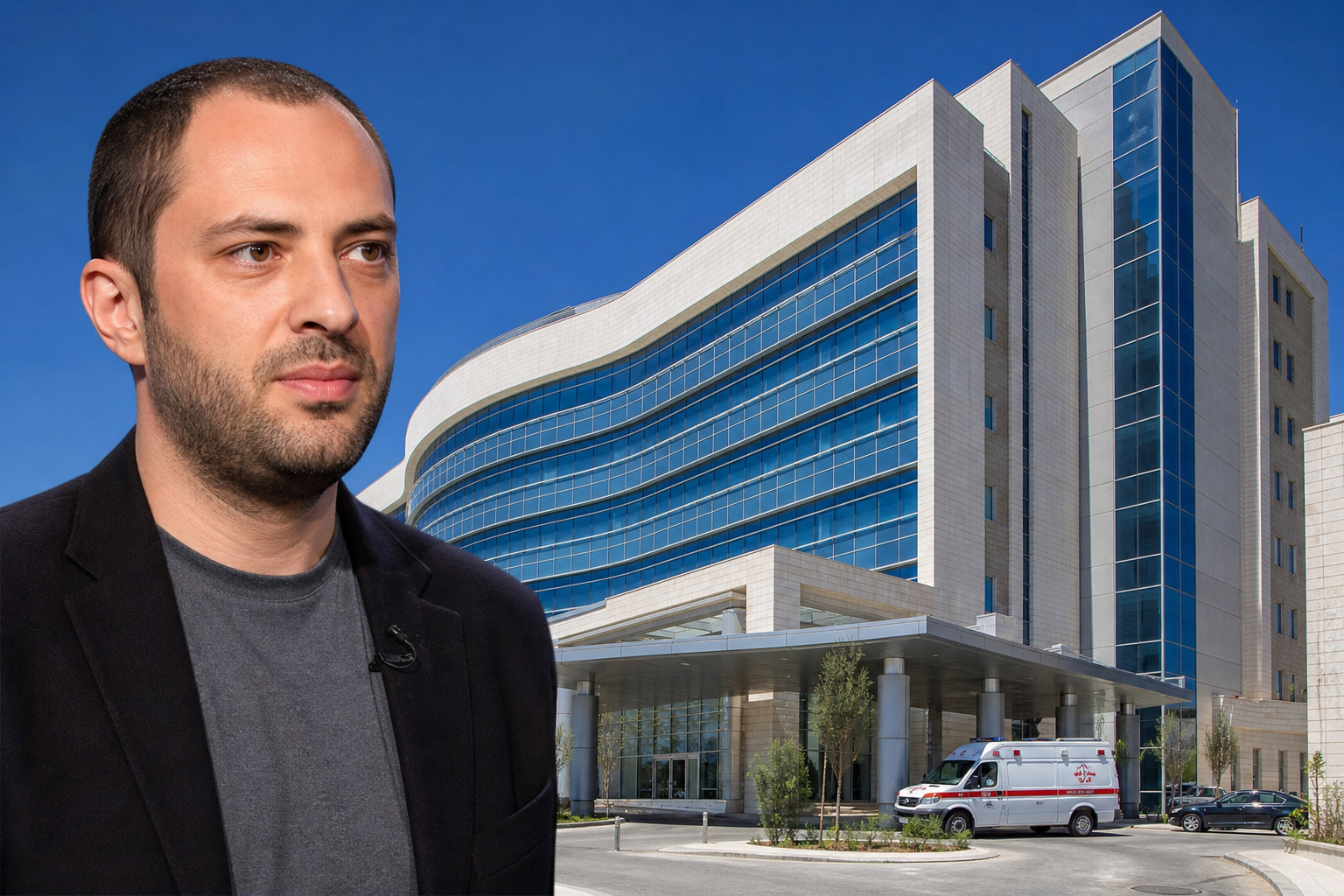
A $200 million donation from WhatsApp co-founder Jan Koum will build a 24-story inpatient tower at Jerusalem's Shaare Zedek Medical Center and rename the facility after his family.
The gift, announced on May 8, 2026, stands as the largest single contribution ever made to an Israeli hospital. It surpasses the previous record of $180 million given to Beilinson Hospital in 2025 and will add more than 1.5 million square feet of new clinical space.
Koum directed the funds through the Koum Family Foundation. The new tower will house expanded surgical suites, a larger emergency department, and a rooftop helipad for rapid patient transfers. Construction is expected to begin within two years and finish by 2031.
Prof. Jonathan Halevy, president of Shaare Zedek, called the pledge a defining moment. "This is truly a special moment in Shaare Zedek Medical Center’s 124-year-old history," Halevy said. "This record donation by The Koum Family Foundation reflects remarkable confidence in our hospital, our staff, the city of Jerusalem, the nation of Israel, and a heartfelt embrace of Zionism."
Jan Koum expressed similar confidence in a statement released with the announcement. "We are proud to partner with Shaare Zedek Medical Center, an institution that defines medical excellence in Jerusalem and beyond," Koum said. "This gift reflects our confidence in a future of medical innovation and research that will benefit patients in Israel and around the world."
The hospital will become known as Koum Shaare Zedek Medical Center once the project reaches completion. Hospital leaders said the name change honors both the donor and the institution's longstanding mission to serve Jerusalem's diverse population regardless of background.
Israeli healthcare leaders immediately framed the donation against a backdrop of chronic underfunding. Public hospitals across the country face persistent shortages of beds, nurses, and physicians. Waiting times for elective procedures often stretch months, and emergency departments routinely operate above capacity.
One senior Ministry of Health official, who spoke on condition of anonymity because he was not authorized to comment publicly, noted the structural risk. "The day they are gone, the state won't fill the void," the official said. "Private money arrives with fanfare, but core operating budgets remain the government's duty."
Shaare Zedek currently operates roughly 1,000 beds. The new tower is projected to add several hundred more inpatient beds plus specialized units for trauma, cardiology, and oncology. Hospital planners say the helipad will cut critical transport times from outlying areas by up to 40 minutes during peak traffic.
Healthcare analysts point out that Israeli hospitals have grown increasingly dependent on philanthropy in recent years. Donations help finance equipment and buildings, yet they rarely cover ongoing salaries or maintenance. When donor priorities shift, facilities can face sudden shortfalls.
Dr. Michal Cohen, director of health policy at a Tel Aviv research institute, said large gifts create uneven development. "Hospitals with strong overseas networks receive gleaming new towers while others in the periphery struggle to replace aging infrastructure," Cohen said. "This pattern widens regional disparities in care quality."
The donation follows months of quiet negotiations between Koum's representatives and hospital leadership. Sources close to the talks said Koum visited the campus twice last year and was particularly impressed by the hospital's trauma response during recent security incidents.
Jerusalem Mayor Moshe Lion welcomed the project as a boost to the city's medical infrastructure and economy. Construction of the tower is expected to create hundreds of temporary jobs and permanent positions once the facility opens.
Opposition lawmakers used the announcement to renew calls for increased state health spending. They argued that record private gifts should not become an excuse to delay budget increases approved by the Knesset finance committee.
Shaare Zedek treats patients from every sector of Jerusalem society, including ultra-Orthodox, Arab, and secular residents. Hospital data show roughly 30 percent of admissions come from outside the capital region, underscoring its role as a national referral center.
The 24-story structure will incorporate advanced seismic standards and energy-efficient systems. Architects said the design includes flexible floor plates that can be reconfigured quickly during mass-casualty events.
Previous major gifts to Israeli hospitals have included named wings and research institutes, yet none matched the scale of the Koum commitment. The new building will stand as the tallest medical structure in Jerusalem when completed.
Staff members expressed cautious optimism. Nurses and physicians noted that additional beds could ease chronic overcrowding, but they stressed the need for parallel increases in personnel budgets.
Ministry of Health figures indicate that Israel's hospital bed ratio per capita has declined steadily over the past decade. The country now ranks below the OECD average, and projections show demand rising sharply with an aging population.
Koum, who left WhatsApp after its sale to Meta, has directed substantial portions of his wealth toward education and health initiatives in Israel and the United States. This gift marks his largest single contribution to date.
Hospital officials said fundraising for equipment and technology inside the new tower will continue separately. They hope additional donors will step forward to equip operating rooms and intensive-care units.
The project has drawn attention from other Israeli medical centers seeking similar partnerships. Development officers at several hospitals reportedly contacted the Koum Family Foundation within days of the announcement.
Public reaction in Jerusalem has been largely positive, with residents noting the visible investment in a city that often feels overlooked in national infrastructure planning. Local business leaders expect the expanded medical complex to attract related biomedical companies.
Still, the cautionary note from health officials lingers. They emphasize that while landmark donations transform individual institutions, sustainable improvement in Israeli healthcare ultimately rests on consistent government funding and workforce planning.
Construction permits are expected to be filed later this year. Groundbreaking is slated for early 2027, with phased opening of floors beginning in 2030.