
US intelligence agencies have uncovered Chinese companies actively discussing clandestine arms sales to Iran with shipments planned through third countries to conceal their origins.
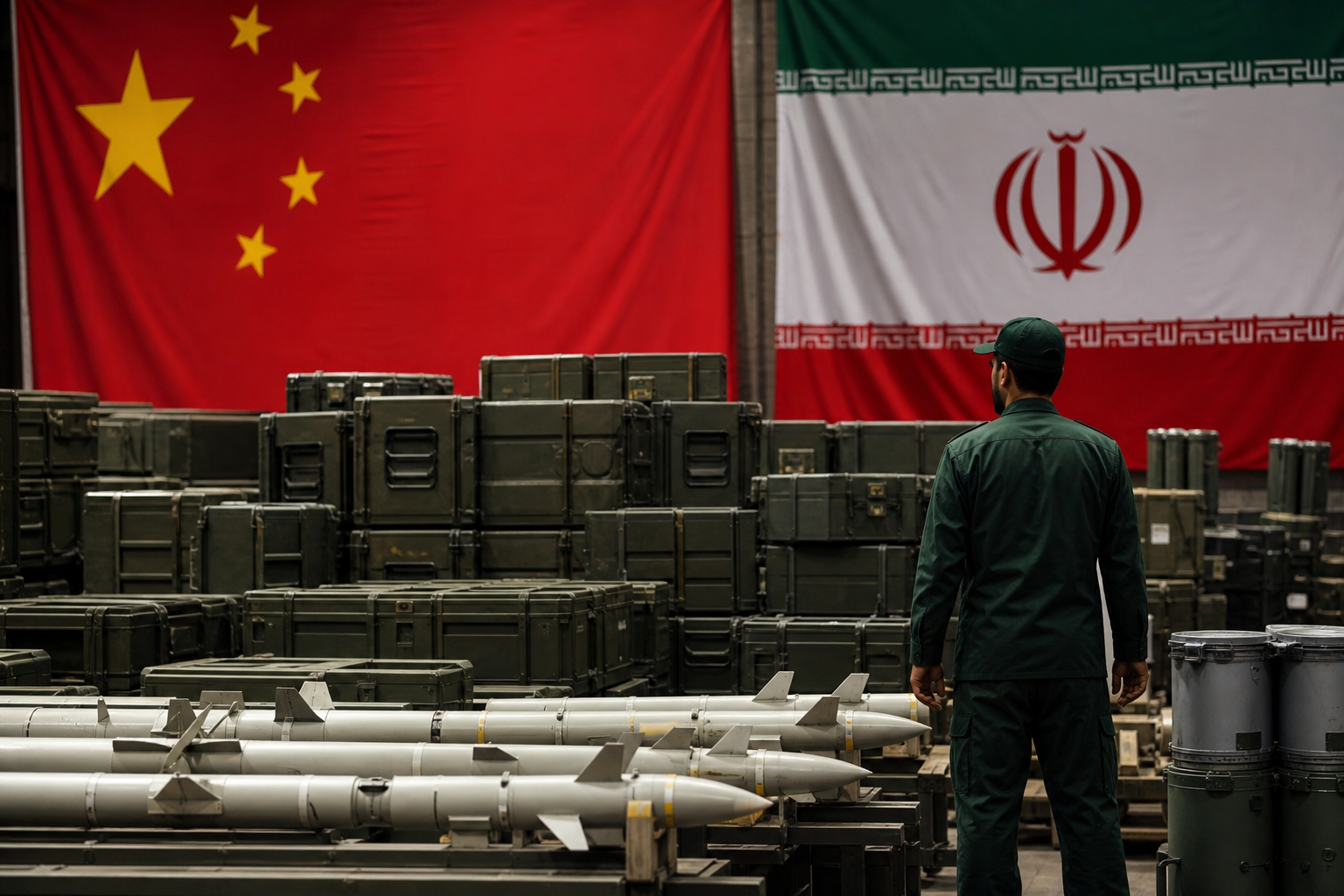
The New York Times reported on May 13 2026 that American intelligence had intercepted communications showing multiple Chinese firms exploring ways to supply advanced weaponry including shoulder fired anti aircraft missiles known as MANPADs. These discussions involved detailed logistics for disguising the cargo as commercial goods and routing it through neutral ports before final delivery to Iranian buyers.
Earlier reporting by CNN on April 11 2026 first highlighted the imminent nature of the threat. US officials assessed that China was preparing to deliver batches of MANPADs to Iran within weeks at that time. The weapons would allow Iranian forces to target aircraft at low altitudes creating new risks for American military assets operating across the Middle East.
MANPADs are portable surface to air missiles that can be operated by small teams and are highly effective against helicopters and low flying planes. Their transfer would mark a significant escalation in the quality of arms reaching Iran from Chinese sources. Intelligence indicated the missiles were to be broken into component parts for separate shipments to reduce the chance of detection at sea or in transit hubs.
On May 9 2026 the US Treasury Department responded by imposing sanctions on eleven entities and three individuals. Among those targeted was the Shanghai based firm Yushita Shanghai International Trade Company Limited which Treasury accused of coordinating the movement of missile and drone components. The sanctions also covered other China linked suppliers accused of providing satellite imagery that helped Iranian forces strike US positions.
US Secretary of State Marco Rubio stated that several China based entities included in the actions were providing satellite imagery to enable Iran’s military strikes against US forces in the Middle East. The measures froze any assets held in US jurisdictions and barred American persons from doing business with the listed parties.
China has provided substantial support to Iran throughout the ongoing regional conflict. This assistance has included real time intelligence on the locations and movements of US forces as well as steady supplies of dual use materials essential for manufacturing drones and ballistic missiles. These materials range from specialized electronics to propellant chemicals that allow Iran to sustain and expand its weapons production despite international restrictions.
American officials have tracked the pattern for months. A US official familiar with the intelligence told reporters there is definitely some activity indicating ongoing negotiations between Chinese suppliers and Iranian procurement networks. The shipments are structured to appear as routine commercial trade with false manifests listing the cargo as industrial machinery or consumer electronics.
Third country routing adds layers of complexity. Cargo is often transshipped through ports in Southeast Asia or the Persian Gulf where customs scrutiny is lighter. Once in Iran the components are reassembled into complete systems capable of threatening both manned aircraft and commercial flights in the region. Israel in particular faces heightened exposure because Iranian drone and missile barrages have repeatedly targeted its territory in recent years.
The sanctions announced in May build on earlier efforts to disrupt these supply lines. Treasury officials emphasized that the designated entities played direct roles in moving technology that strengthens Iran’s ability to project power through proxies. By cutting off access to US dollars and international banking the measures aim to raise the cost of continued cooperation with Tehran’s weapons programs.
Diplomatic channels remain open even as enforcement intensifies. Washington continues to press Beijing to curb private sector involvement in arms proliferation. Chinese authorities have publicly denied any state role in the transactions yet the intelligence shows commercial actors operating with considerable freedom inside China’s export control system.
Regional security analysts note that MANPADs in Iranian hands could alter the balance of air operations. US and allied pilots already operate under strict threat assessments when flying near Iranian influence zones. Additional shoulder fired missiles would force further adjustments to flight profiles and increase reliance on electronic countermeasures.
US forces stationed at bases across Iraq Syria and the Gulf have received updated briefings on the evolving risk. Training now includes more emphasis on rapid dispersal and the use of decoy flares during takeoff and landing. The goal is to minimize exposure windows against weapons that can be launched from concealed positions near airfields.
Israel’s defense establishment is monitoring the developments closely. Iranian drone attacks have already demonstrated the reach of Tehran’s arsenal and any upgrade in missile technology would compound existing challenges. Israeli officials have urged stronger international coordination to prevent the new weapons from reaching operational status.
The intelligence picture continues to evolve. Additional Chinese firms are believed to be exploring similar deals involving guidance systems and airframe materials for longer range missiles. Treasury sanctions are expected to expand if fresh evidence surfaces linking more entities to the network.
Washington views the Chinese activity as part of a broader challenge to nonproliferation norms. Iran’s weapons programs rely heavily on imported components and dual use technology. Disrupting those flows remains a central pillar of US strategy even as direct military options stay limited.
Industry experts point out that many of the sanctioned items have legitimate civilian applications in telecommunications and remote sensing. The difficulty lies in verifying end use once the goods leave Chinese territory. Enhanced export licensing requirements inside China could help but enforcement has proven inconsistent.
Publicly available shipping data shows a noticeable uptick in cargo movements from Chinese ports toward known transshipment points in the months preceding the intelligence reports. While most containers carry ordinary goods a small fraction are suspected of containing sensitive military related items hidden among benign cargo.
The May sanctions represent the latest chapter in a long running effort to constrain Iran’s military supply chain. Previous rounds targeted Iranian procurement agents and front companies in the Middle East and Asia. The inclusion of multiple Chinese entities signals that Washington sees Beijing based actors as increasingly central to the problem.
US officials stress that the intelligence is highly specific. Communications intercepts and financial tracking have mapped conversations between Chinese traders and Iranian military procurement officers. The discussions include price negotiations delivery schedules and methods for avoiding Western financial surveillance.
China maintains that its companies operate independently and that any violations are handled under domestic law. Beijing has called the sanctions unwarranted interference in normal trade. American policymakers counter that the volume and nature of the transfers exceed what could be dismissed as rogue activity.
Looking ahead the United States intends to sustain pressure through both unilateral sanctions and multilateral diplomacy. Partners in Europe and Asia have been briefed on the latest findings and are considering parallel restrictions. The objective remains to raise the financial and reputational cost of supplying Iran with advanced weaponry.
For now the shipments remain in the planning stage according to the most recent assessments. Intelligence agencies continue to watch for signs that containers have left Chinese ports. Any movement would trigger additional alerts and possibly preemptive actions by naval forces monitoring key sea lanes.
The episode underscores the persistent difficulty of controlling arms flows in an era of globalized supply chains. Chinese manufacturing capacity combined with Iran’s determination to rebuild its missile and drone forces creates a powerful incentive for covert deals. US intelligence and sanctions represent the primary tools available to slow that process.