
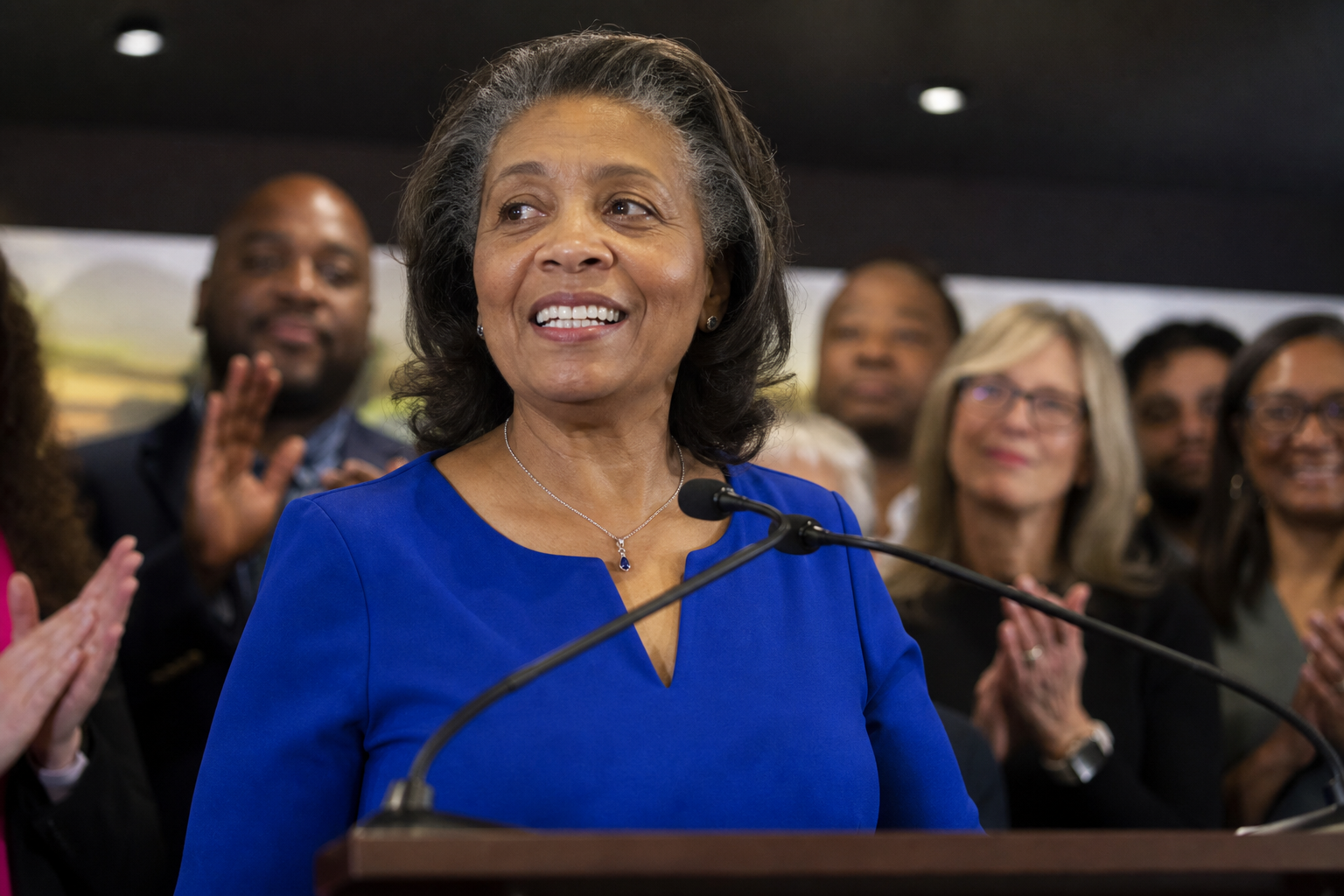
Denise Powell has won the Democratic primary for Nebraska's 2nd Congressional District after a tight contest that drew national attention for its potential impact on the balance of power in the U.S. House.
Results from the May 12, 2026 primary showed Powell with 38.9 percent of the vote to State Sen. John Cavanaugh's 36.8 percent and Crystal Rhoades' 13.9 percent. Decision Desk HQ projected her victory and the Associated Press called the race on May 13 with nearly 10,000 ballots still uncounted in Douglas County. Her margin held as additional votes were tallied overnight.
The Omaha-centered district has long been one of the most competitive House seats in the country. It is currently held by retiring Republican Rep. Don Bacon and carries a Lean Democratic rating from multiple forecasters. Control of the chamber could hinge on outcomes like this one in November.
Powell addressed supporters shortly after the race was called. "I'm really excited. It's been an amazing night. We feel really, really good about the numbers. Feel really, really good about where we sit, and now we're gonna get some rest tonight, hopefully and see what happens in the morning," Powell said.
She also framed her candidacy around broader voter sentiment. "I think people are ready for that fired-up mom. I think that they're looking for change, and hopefully they see me as the person to help Nebraska to bring it," Powell said.
Throughout the primary campaign Powell emphasized kitchen-table issues including access to affordable health care, support for working families, and protecting reproductive rights. Her background as a community organizer and parent resonated with voters in suburban Douglas County precincts where turnout proved decisive.
Cavanaugh, a state senator from Omaha, positioned himself as a pragmatic legislator with deep roots in the district. He highlighted his record on education funding and public safety during the campaign. Despite a strong showing, he fell short in the final count.
Rhoades, the third candidate in the race, focused on progressive priorities such as criminal justice reform and climate action. Her 13.9 percent share split the more liberal vote and contributed to the narrow margin between the top two contenders.
Nebraska's 2nd District has flipped between parties in recent cycles. Bacon won reelection in 2022 by a slim margin after the seat voted for President Biden in 2020. The retirement of the five-term incumbent opens the door for Democrats to pick up the seat for the first time since 2008.
Local observers noted high engagement in early voting and on primary day. Douglas County election officials reported steady lines at polling places in western Omaha and surrounding suburbs where new housing developments have brought younger families into the electorate.
Powell now turns to the general election. Republicans have not yet nominated their candidate, but the field includes several state legislators and local officials who are expected to emphasize border security, inflation, and traditional values. The race is already drawing significant outside spending from both parties and aligned groups.
National Democratic strategists view the seat as a must-win target in their effort to regain the House majority. Powell's primary victory gives the party a nominee who can appeal to suburban moderates while energizing the progressive base that turned out heavily on May 12.
Republican leaders meanwhile see an opportunity to defend the district by tying Powell to national Democratic policies on spending and regulation. They plan to highlight Bacon's bipartisan record on defense and agriculture issues that remain important to Nebraska voters.
The remaining ballots in Douglas County were expected to be processed by the end of the week. Official certification of the primary results will follow standard state procedures and is unlikely to alter the outcome given Powell's lead.
With the primary now behind her, Powell will begin unifying the party and raising the substantial funds needed for a competitive fall campaign against a well-funded Republican opponent. The contest is poised to remain one of the most watched House races of the 2026 cycle.
Voter interviews on primary night revealed frustration with gridlock in Washington and a desire for fresh representation focused on local economic concerns. Many cited rising housing costs and child care expenses as top issues that influenced their choice.
Powell pledged to bring that perspective to Congress if elected. She has already begun outlining a legislative agenda centered on expanding paid family leave, investing in infrastructure, and protecting Social Security and Medicare benefits for seniors in the district.
The outcome in Nebraska's 2nd District will be studied closely by both parties as they calibrate strategies for other battleground seats stretching from the Midwest to the Sun Belt. Powell's ability to consolidate support after a divisive primary will be tested in the months ahead.
As the general election campaign gets underway, attention will shift to debates, advertising, and candidate forums that will shape voter perceptions in the Omaha media market and surrounding counties. The race remains fluid, but Powell enters it with momentum from her primary win.