
In a significant move to boost cultural heritage tourism, Egyptian authorities have opened the restored tombs of Amenhotep Rabuia and his son Samut for public viewing in the ancient necropolis of El-Khokha on Luxor's West Bank.
The inauguration took place on May 14, 2026, under the supervision of Tourism and Antiquities Minister Sherif Fathy and Luxor Governor Abdel Muttalib Emara. These tombs, designated TT416 and TT417, represent important examples of 18th Dynasty burial practices from the peak of Egypt's New Kingdom civilization.
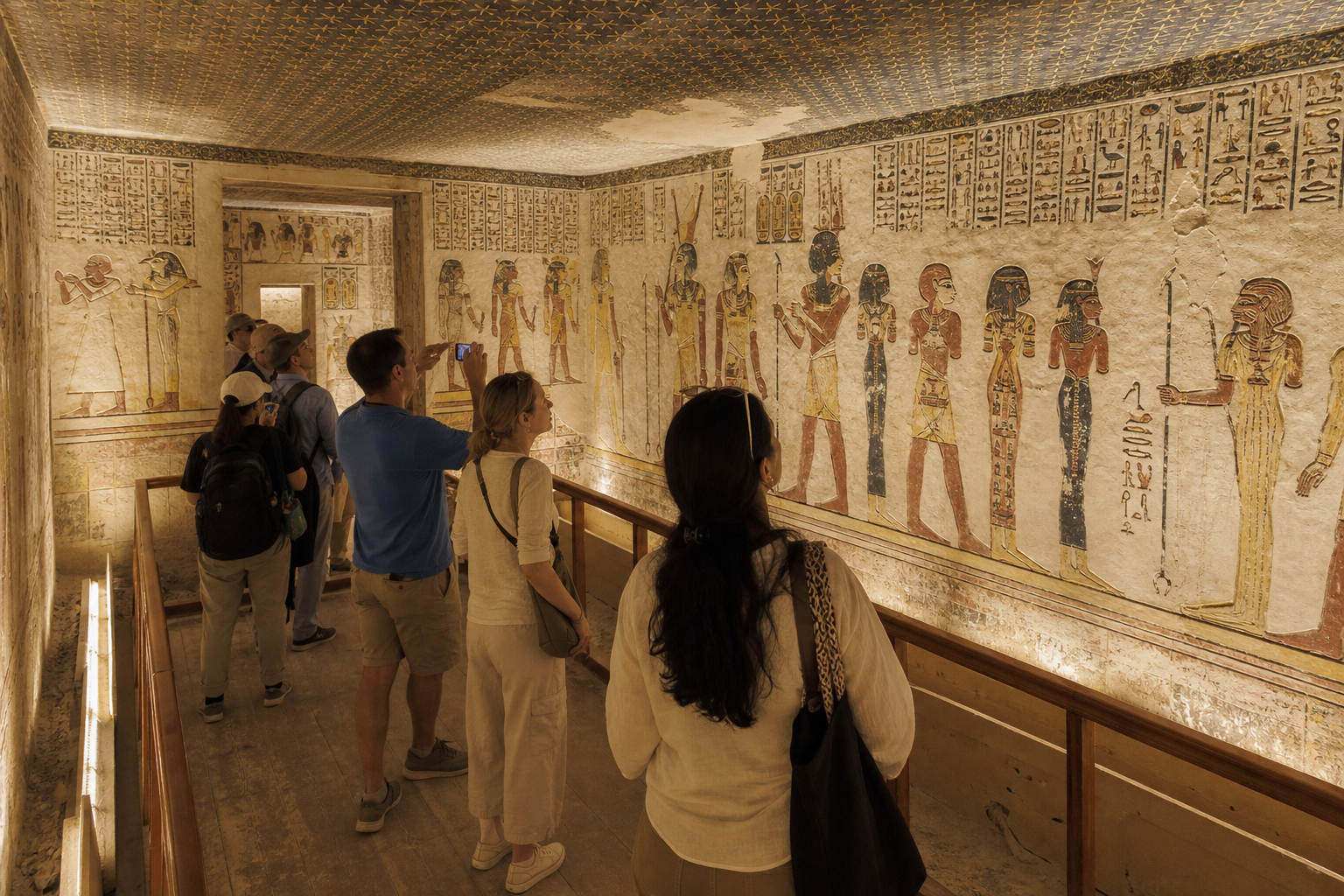
Visitors can now explore the intricate wall paintings and inscriptions that adorn the chambers of these tombs. The artwork depicts scenes from daily life, including agricultural activities, family gatherings, and elaborate funerary rituals that highlight the beliefs and customs of the time.
Amenhotep Rabuia served during the reign of Pharaoh Thutmose III, a period marked by extensive military campaigns that expanded Egypt's empire to its greatest extent. His son Samut lived into the reign of Thutmose IV, continuing the family's prominence in society.
The tombs were discovered accidentally in 2015 during routine excavation work in the area. Archaeologists were surprised to find the well-preserved structures hidden beneath layers of debris and sand that had accumulated over millennia.
Restoration efforts spanned several years, involving careful cleaning of the surfaces, stabilization of the structures, and documentation of every detail. Experts from Egypt's Supreme Council of Antiquities worked diligently to ensure the authenticity of the site while making it safe for visitors.
Hisham El-Leithy, Secretary-General of Egypt's Supreme Council of Antiquities, emphasized the importance of the discovery during the opening ceremony. "Today we are inaugurating two very important tombs that were discovered by chance in 2015," he stated.
The opening comes as part of Egypt's broader initiative to showcase its rich archaeological heritage and attract more international tourists to sites beyond the well-known attractions like the Valley of the Kings. El-Khokha forms part of the larger Theban necropolis where nobles and officials received elaborate burials reflecting their status and achievements.
Scholars note that the religious imagery in the tombs reflects the complex theology of ancient Egypt, with depictions of gods such as Osiris and Anubis guiding the deceased through the afterlife. These elements illustrate the transition from life to eternity as understood by Egyptians more than three thousand years ago.
Daily life scenes offer a rare window into the occupations and leisure activities of ancient Egyptians, from scribes recording harvests to musicians entertaining at banquets. Such imagery reveals the structured society where officials like Amenhotep Rabuia managed estates and oversaw production along the Nile.
The restoration has preserved vibrant colors in the paintings that had faded over time, allowing modern visitors to appreciate the skill of ancient artisans who created these masterpieces thousands of years ago. Careful consolidation prevented further flaking while maintaining the original pigments applied with natural binders.
Officials hope that the new attraction will contribute to the local economy in Luxor, which relies heavily on tourism related to its pharaonic history. Additional staff have been trained to guide groups through the chambers without touching the delicate surfaces.
Similar projects have been undertaken in recent years, including the opening of other tombs and the grand museum developments in Cairo and Giza. The strategy focuses on distributing visitors across multiple sites to reduce pressure on overcrowded locations such as the tomb of Tutankhamun.
Archaeologists continue to study the artifacts found within the tombs, which include pottery, tools, and personal items that belonged to the occupants and their families. These objects provide material evidence of trade networks reaching into the Levant and Nubia during the height of imperial power.
The 18th Dynasty is often regarded as the golden age of ancient Egypt, with monumental constructions like the temples at Karnak and Luxor itself bearing witness to the power and wealth of the pharaohs. Thutmose III commissioned obelisks and pylons that still stand today as testaments to engineering prowess.
Thutmose III, in particular, is celebrated as one of Egypt's greatest military leaders, whose conquests brought prosperity and cultural exchange to the Nile Valley. His annals recorded on temple walls detail campaigns that secured resources and tribute flowing into Egypt.
For Samut, the tomb reflects the continuation of family legacy and the transmission of status across generations during a time of relative stability and artistic flourishing. Stylistic shifts between the two tombs demonstrate evolving artistic conventions under successive rulers.
With the tombs now accessible, guided tours are being organized to provide context and prevent damage from uncontrolled visitor traffic. Capacity limits have been set to safeguard the microclimate inside the chambers.
Egyptian authorities plan to monitor the sites closely and implement conservation measures to protect them for future generations. Sensors track temperature and humidity fluctuations that could accelerate deterioration of the painted plaster.
This development underscores Egypt's commitment to preserving its past while sharing it with the world through thoughtful and sustainable tourism practices. Partnerships with international universities support ongoing analysis of pigments and construction techniques employed by ancient craftsmen.
The architectural layout follows standard patterns for noble tombs of the period, featuring an entrance corridor leading to a chapel with offering scenes and a vertical shaft descending to the burial chamber. Such designs ensured the ka and ba of the deceased received sustenance while remaining secure from robbers.
Paintings show Amenhotep Rabuia receiving offerings of bread, beer, and meat from family members, alongside processions of servants carrying produce from his estates. These representations served both religious and commemorative functions, asserting the tomb owner's continued influence after death.
Samut's slightly later tomb incorporates additional motifs of divine protection, including winged goddesses spreading their wings over the burial niche. The evolution in iconography mirrors broader religious developments emphasizing personal piety in the later 18th Dynasty.
Local residents near El-Khokha have expressed pride in the new attraction, noting increased foot traffic that supports nearby cafes and souvenir vendors. Tourism revenue directly benefits communities that have maintained ties to the archaeological zone for generations.
Digital documentation created during restoration allows virtual access for researchers studying comparable tombs elsewhere in the necropolis. Three-dimensional scans preserve spatial relationships that might otherwise be lost if physical conditions change.
The tombs stand as vivid reminders of a civilization that combined administrative sophistication with profound spiritual convictions, leaving behind monuments that continue to inform understanding of human history.