

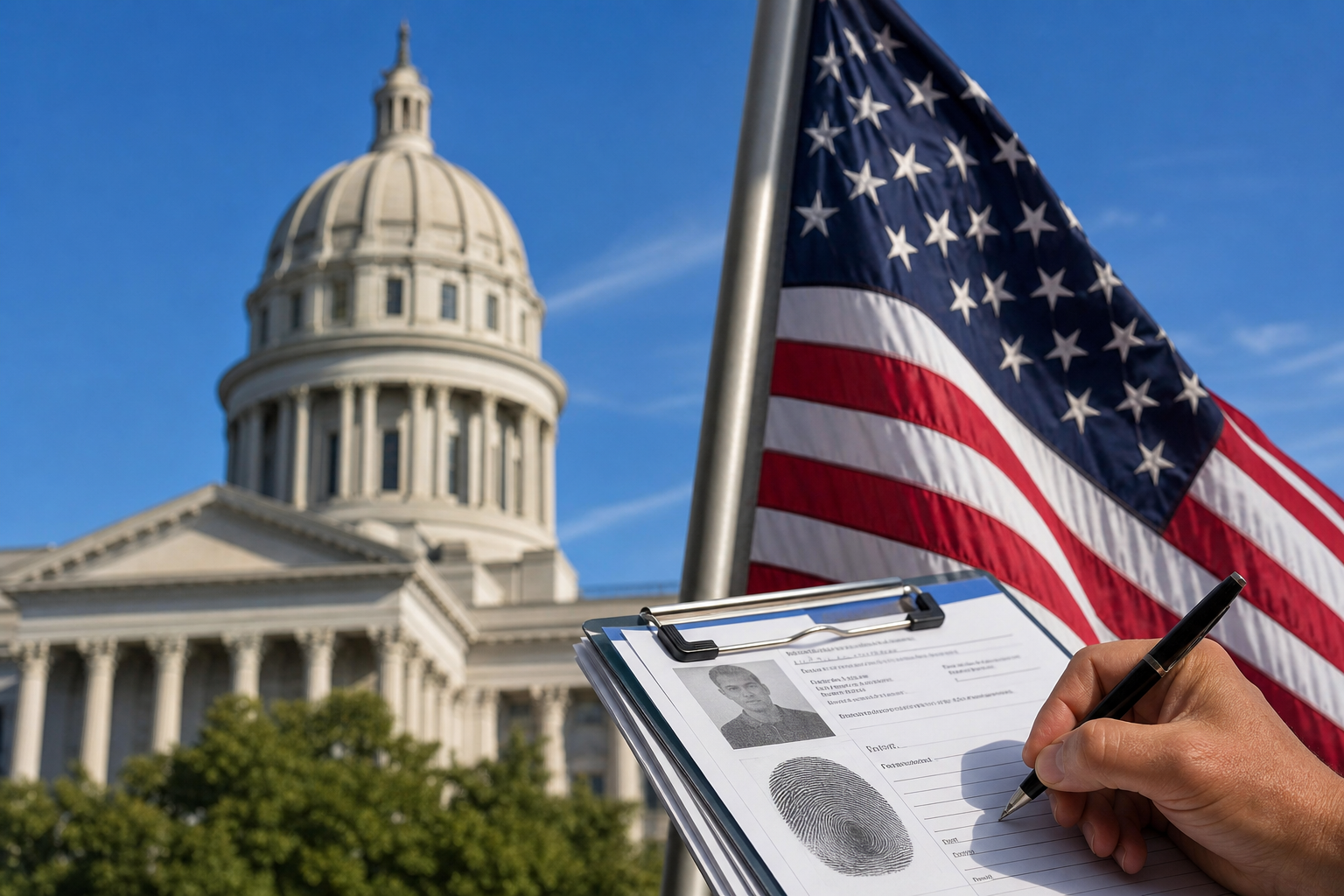
Tennessee lawmakers have enacted strict requirements that force social service agencies to verify the immigration status of every person seeking public benefits and to report those without legal status directly to federal authorities.
The measure known as HB1710 in the House and SB1915 in the Senate cleared both chambers in April 2026. It applies to all state and local agencies including the state's 95 public health departments. Agencies must check documentation for every applicant and forward information on undocumented individuals to the Centralized Immigration Enforcement Agency.
Governor Bill Lee received the bill on April 21, 2026. The law takes effect July 1, 2026. Sponsors designed the requirements as part of a coordinated package developed with White House adviser Stephen Miller to align state operations with federal immigration priorities.
Rep. Dennis Powers, the Republican sponsor from Jacksboro, declared that immigrants in Tennessee without legal status must be excluded from all state-funded benefits. His statement captures the core purpose of shutting off access to programs supported by state dollars.
Indiana, Utah, and Wyoming passed parallel verification and reporting statutes in 2026. Louisiana enacted an identical framework in 2025. These states now operate under uniform rules that embed immigration screening inside routine benefit applications.
A Stateline.org analysis observed that an increasing number of conservative states are mandating that state and local social service providers verify and report the immigration status of the people they serve. Some of the new statutes attach stiff penalties for public employees who fail to comply.
Public health clinics must now integrate status checks into every intake process. Applicants for vaccinations, family planning services, or disease screenings will present proof of legal presence. Staff who skip the verification step or omit required reports face criminal penalties while agencies risk losing state funding.
The Centralized Immigration Enforcement Agency serves as the single repository for all reports generated by local offices. Once an agency identifies an undocumented applicant, the information travels directly to this body for further action. This direct pipeline removes discretion from front-line workers.
WPLN News reported that the obligations extend across every public clinic and agency that distributes state-supported services. The reach covers routine health visits as well as longer-term assistance programs managed at the county level.
Verification relies on standard federal documents such as permanent resident cards, employment authorization documents, or passports with valid visas. Agencies cross-reference these items against available databases before approving benefits. Any mismatch triggers an automatic report.
State funding formulas now include compliance audits. Agencies that cannot demonstrate consistent verification procedures lose portions of their allocations. This financial pressure ensures that even smaller county offices adopt the new protocols without delay.
The policy excludes undocumented immigrants from every category of state-funded assistance. Health departments that once served mixed-status families must now limit services to those who can prove eligibility. The change alters daily operations for thousands of employees across the affected states.
Training programs for social service workers now include detailed modules on acceptable documents and reporting timelines. Supervisors review case files to confirm that status checks occurred before any benefit was issued. These internal controls reduce the chance of oversight.
Similar statutes in Indiana, Utah, Wyoming, and Louisiana follow the same pattern of mandatory checks followed by direct reporting. The four states share best practices on database access and penalty structures. This coordination accelerates implementation across multiple jurisdictions.
The July 1, 2026 start date gives agencies several months to update software, train staff, and revise application forms. Health departments are printing new intake packets that include immigration status questions at the top of every packet. Electronic systems are being reprogrammed to flag incomplete verifications.
Stephen Miller's involvement signals that these state actions support a larger federal strategy scheduled for rollout during 2026. Tennessee officials have described their statute as a model that other states can copy without additional federal legislation.
Public employees who knowingly approve benefits without performing the required check can face misdemeanor or felony charges depending on the number of violations. The criminal exposure applies individually rather than only to the agency as a whole. This personal liability distinguishes the new laws from earlier verification requirements.
County health directors are preparing public notices that explain the new rules to applicants. The notices list the documents that establish legal status and describe the reporting obligation in plain language. The goal is to deter ineligible applications before they reach the intake desk.
The combined effect of the Tennessee, Indiana, Utah, Wyoming, and Louisiana statutes creates a regional block of states with identical immigration screening inside social services. Applicants who move between these states encounter the same verification process in each location.
Funding penalties scale with the size of the agency and the number of missed reports. A single documented failure can trigger an audit that examines every case processed during the preceding quarter. Repeat violations compound the financial loss.
By embedding immigration enforcement inside routine benefit delivery, the states convert social service workers into de facto immigration screeners. The shift expands the reach of enforcement without hiring additional federal agents.
The April 2026 legislative action in Tennessee and the parallel bills in neighboring states mark a decisive expansion of state-level immigration control. The requirements take effect on schedule and the penalties ensure rapid compliance across thousands of agency offices.