
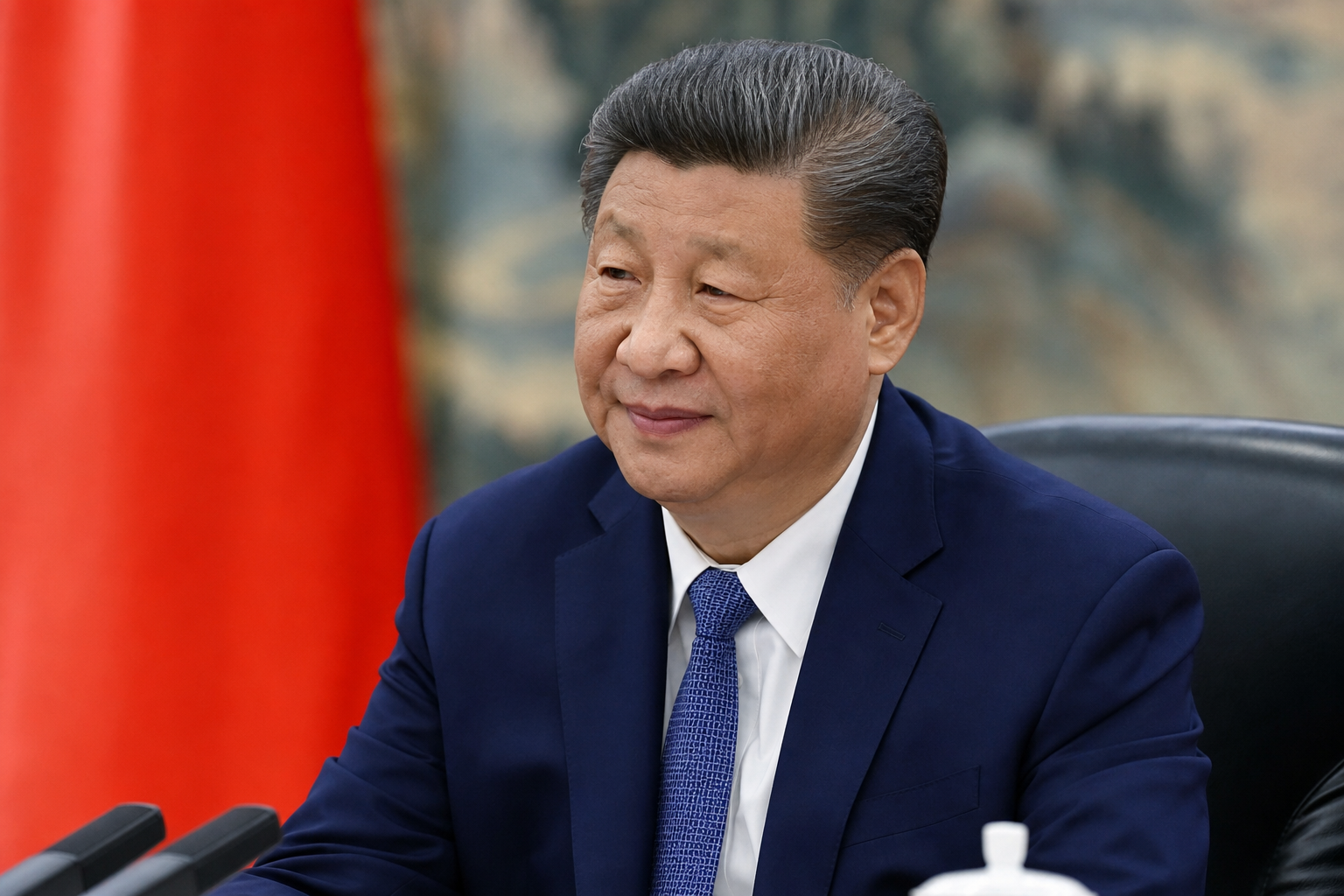
Chinese President Xi Jinping has unveiled a new framework for relations with the United States, calling it constructive strategic stability after direct talks with President Donald Trump.
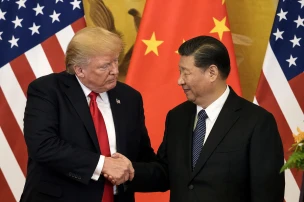
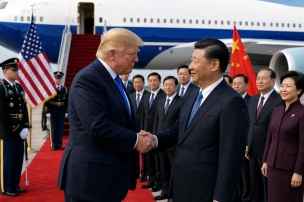
The two leaders met on May 14, 2026, inside the Great Hall of the People in Beijing and settled on this positioning to guide bilateral ties for the next three years and beyond.
Xi described the concept in clear terms during the session. He said the framework delivers positive stability with cooperation as the mainstay, healthy stability with competition within proper limits, constant stability with manageable differences, and lasting stability with expectable peace.
I have agreed with President Trump on a new vision of building a constructive China-U.S. relationship of strategic stability. This will provide strategic guidance for China-U.S. relations over the next three years and beyond.
— Xi Jinping, Chinese President.
Xi expanded on each element to show how they fit together. Positive stability places cooperation at the center so both countries can pursue shared gains in trade, public health, and global infrastructure projects.
Healthy stability accepts that competition will occur but insists it stay bounded so neither side crosses lines that damage supply chains or financial markets.
Constant stability treats differences as normal yet requires they be handled through established channels rather than sudden moves that could spark crises.
Lasting stability looks further ahead and aims for predictable peace built on regular high-level contact and clear red lines that both capitals understand.
Reuters reported the announcement immediately after the closed-door portion of the meeting concluded. Its correspondents noted the unusually detailed public explanation Xi offered for each of the four aspects.
Xinhua carried the full text of Xi’s remarks the following day and placed special emphasis on the phrase “constructive strategic stability” as the agreed new positioning.
The Global Times ran an editorial that described the framework as strategic guidance capable of steering relations through the remainder of the decade.
The setting inside the Great Hall of the People reinforced the weight both sides attached to the outcome. Large red flags and polished wood paneling formed the backdrop as the two presidents spoke.
Trade volumes between the two economies already exceed 500 billion dollars annually. The new positioning seeks to protect those flows from abrupt policy shocks while allowing each side to defend core interests.
Technology competition remains the most visible arena for measured rivalry. Both governments have signaled they will continue export controls and investment screening yet will avoid blanket bans that sever entire sectors.
Security issues such as Taiwan and the South China Sea fall under the category of manageable differences. The framework calls for sustained military-to-military talks to reduce the risk of unintended incidents at sea or in the air.
Climate and public health offer the clearest near-term opportunities for cooperation. Joint work on methane reduction targets and pandemic early-warning systems could begin within months under existing working groups.
Xi’s formulation stresses that stability must be positive rather than merely frozen. Cooperation is therefore expected to produce visible results that both populations can recognize.
Competition must remain healthy so that innovation continues without sliding into subsidies or market distortions that invite retaliation.
Differences must stay constant in the sense that they are openly acknowledged and addressed through diplomacy instead of being allowed to fester.
Peace must be expectable so businesses and allies can plan investments and deployments on the assumption that major conflict will not erupt without warning.
Implementation will rely on regular leader-level calls and expanded working-level channels established during the Beijing summit. Both sides have agreed to quarterly reviews of progress on each pillar.
Allies of both countries are watching how the framework translates into concrete policy. European and Asian capitals have already begun quiet consultations to adjust their own approaches to Washington and Beijing.
The three-year horizon provides a defined period for testing whether the four aspects can be sustained through election cycles and leadership transitions on either side.
Xi’s emphasis on expectable peace reflects a desire to lower the temperature after years of tariff escalations and technology restrictions that began in 2018.
Trump’s agreement to the positioning signals willingness to pursue a transactional yet stable relationship that avoids the zero-sum rhetoric of his first term.
Both leaders left the Great Hall of the People expressing confidence that the new framework offers a practical path forward. The coming months will show whether the words translate into lasting practice.