
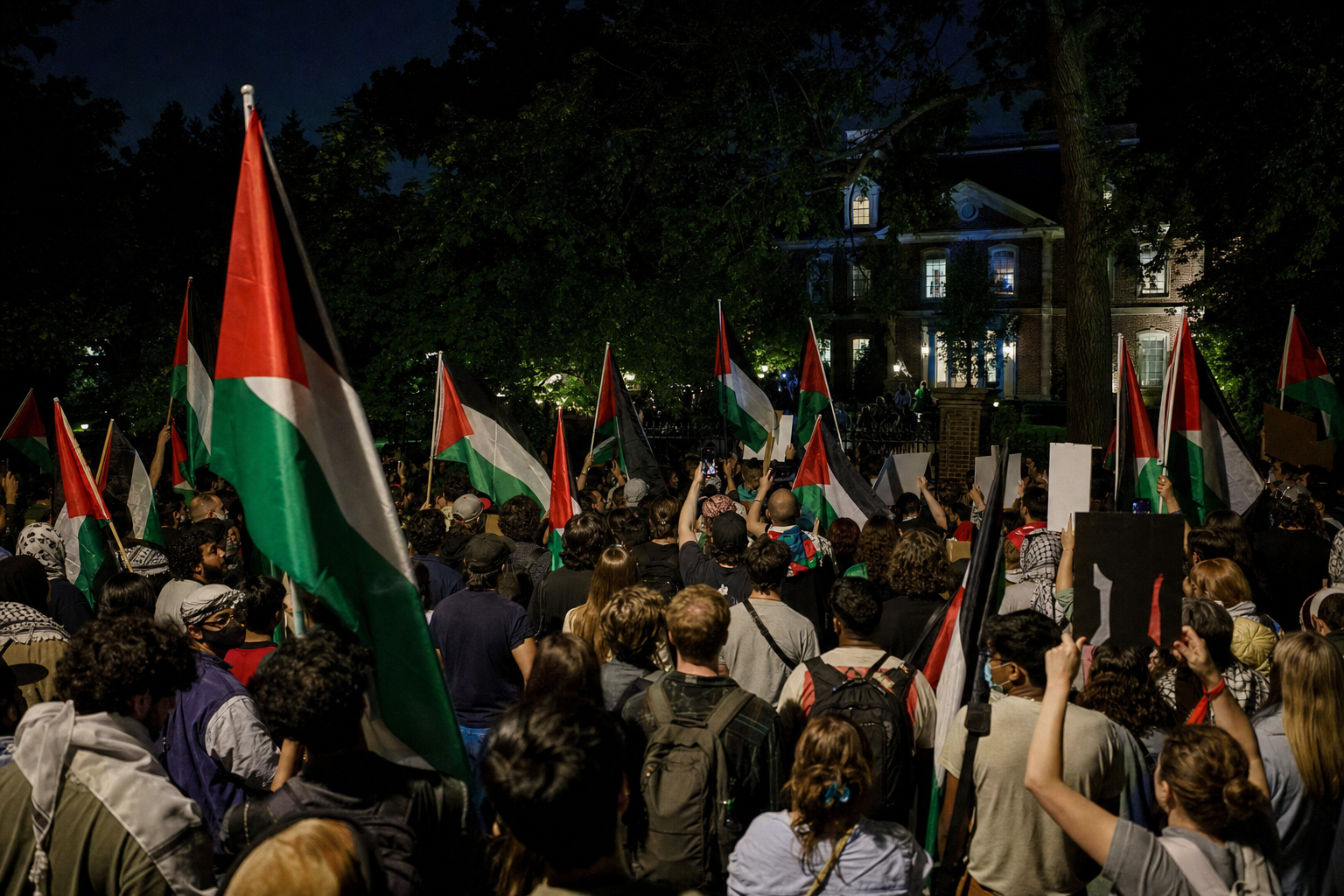
Dozens of demonstrators gathered outside the official Jerusalem residence of U.S. Ambassador Mike Huckabee on April 25, 2026, directly challenging Israeli Prime Minister Benjamin Netanyahu's policies and calling for greater American pressure on the government.
The protest formed part of wider anti-government actions taking place across Israel that day. Participants focused their message on the United States envoy, accusing Washington of enabling measures that entrench Netanyahu's authority during a period of sustained regional tensions.
Signs held by the crowd referenced shared democratic values between the two countries and demanded that Huckabee use his position to advocate for policy adjustments. Organizers framed the action as a direct appeal to American influence, which they argued carries significant weight in Israeli decision-making circles.
One report from the Times of Israel captured the central message in straightforward terms: "Protesters at Huckabee's Jerusalem home say US supporting policies to consolidate Netanyahu's power." The phrasing reflected the demonstrators' view that diplomatic support from the United States has helped sustain the current government's direction on both security and domestic fronts.
Participants included activists who have taken part in previous waves of protest against the Netanyahu coalition. They highlighted concerns over military operations, hostage negotiations, and judicial appointments that they believe tilt institutional power toward the prime minister's office. The choice of the ambassador's residence was deliberate, intended to draw international attention rather than remain confined to domestic streets.
WION provided video coverage showing the modest but determined group assembled on the residential street. The footage depicted individuals speaking with reporters about their expectations that the United States should condition aspects of its relationship on adherence to democratic norms. No arrests or major incidents were reported at the site.
Haaretz coverage placed the Jerusalem action within the larger pattern of demonstrations occurring simultaneously in other cities. Organizers in multiple locations coordinated messages around government accountability, though the envoy residence protest stood out for its explicit focus on bilateral relations.
Regional tensions formed the backdrop for the gathering. Ongoing conflicts and diplomatic maneuvering have kept security issues at the forefront of Israeli politics, giving the Netanyahu government substantial latitude in decision-making. Critics argue this latitude has been used to strengthen the prime minister's personal position through coalition arrangements and institutional changes.
Huckabee, a former governor and prominent figure in Republican politics, assumed the ambassador role with a mandate to strengthen ties between the two nations. Demonstrators outside his home expressed hope that he would convey their concerns directly to Washington, even as they acknowledged his likely alignment with existing administration positions.
"We are asking the United States to stand by the values it claims to represent and not allow those values to be eroded here," said activist Rachel Cohen, a participant in the demonstration.
The protest remained peaceful throughout the afternoon. Police maintained a presence but did not intervene as speakers addressed the small crowd and distributed written statements. Similar gatherings have occurred periodically at diplomatic residences when activists seek to internationalize domestic disputes.
Broader anti-government sentiment in Israel has fluctuated in intensity since the judicial reform protests of previous years. The April 25 actions reflected renewed mobilization around issues of governance and foreign policy alignment. While turnout at the Huckabee residence stayed limited to dozens, organizers viewed the location itself as a symbolic success.
Supporters of the Netanyahu government dismissed the demonstration as unrepresentative. They pointed to election results and coalition stability as evidence that the prime minister retains a mandate despite vocal opposition. Public opinion polls on specific policies continue to show divisions along familiar political lines.
US-Israel relations have historically weathered domestic protests in both countries. Past demonstrations outside the American embassy or ambassadorial residence have sometimes prompted quiet diplomatic conversations without producing immediate public shifts. Observers expect similar dynamics in this case.
The event underscored ongoing debates about the appropriate boundaries of American involvement in Israeli internal affairs. Protesters argued that US military and diplomatic support creates a responsibility to speak on governance questions, while government allies maintain that such support should remain unconditional on security matters.
By evening the crowd had dispersed without further incident. Organizers indicated they would continue similar actions at other diplomatic sites if they believed the message was not reaching decision-makers in Washington. The April 25 protest thus served as one data point in a longer series of efforts to influence both Israeli policy and its international backing.