
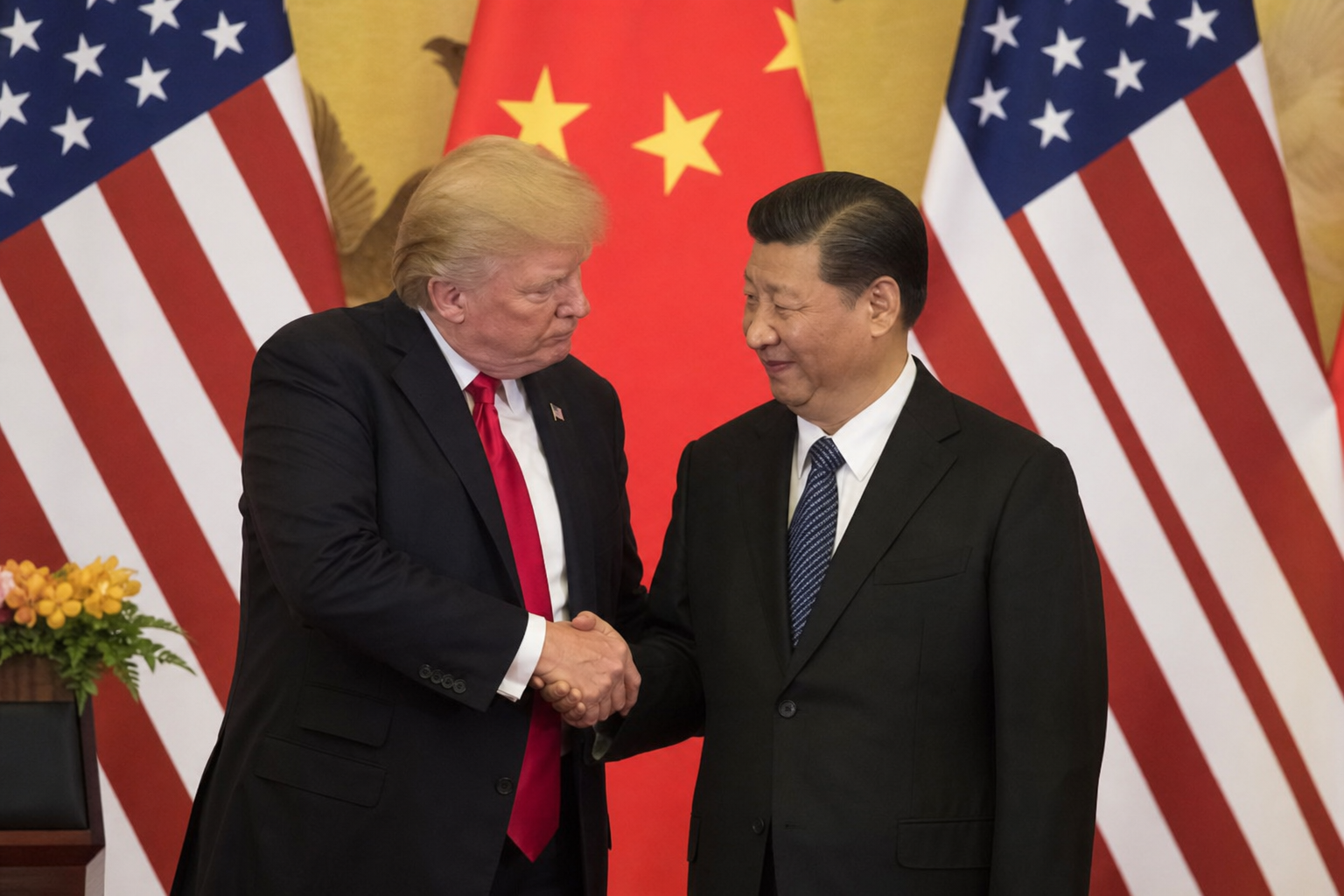
President Donald Trump declared that China will channel hundreds of billions of dollars into American technology companies whose leaders joined him for direct talks with Xi Jinping.
The statement came immediately after the May 14, 2026, meeting in Beijing. Trump spoke during a Fox News interview with Sean Hannity that aired the same evening. He tied the planned investments directly to the CEOs who sat in the room during the summit discussions.
Those executives included Elon Musk of Tesla, Tim Cook of Apple, and Jensen Huang of Nvidia. Each leads a company with deep existing ties to Chinese manufacturing and markets. Trump emphasized that the scale of the commitments reflected the presence of these specific business figures at the table.
"China’s going to invest hundreds of billions of dollars with those people that were in that room today. That’s why they came," Trump said. He added that the business leaders attended to finalize deals and bring jobs back to the United States.
The Beijing gathering spanned May 14 and 15. It focused on commercial opportunities rather than traditional diplomatic negotiations. Trump described the atmosphere as deal-oriented, with Chinese officials responding to concrete proposals from the American executives.
Tesla already operates a major factory in Shanghai that produces vehicles for both domestic and export markets. Musk has previously highlighted the importance of stable supply chains in China for his company’s global growth. Any new investment could expand production capacity or support battery technology development.
Apple maintains extensive assembly partnerships across China. Cook has overseen years of supplier relationships that allow the company to scale iPhone and other device output rapidly. Fresh capital from Chinese sources could accelerate research into new consumer hardware or services tailored to Asian markets.
Nvidia supplies advanced chips used in artificial intelligence and data centers. Huang attended the summit amid ongoing global competition in semiconductor technology. Investment from China could support expanded collaboration on specialized processors while navigating export restrictions.
Trump framed the outcome as evidence that personal engagement with Xi produces tangible results. He contrasted the approach with previous administrations that he said relied more on formal treaties than direct business negotiations.
Reports from the New York Post detailed Trump’s claim of hundreds of billions in planned investments. Just The News covered the Fox News interview and the specific link to the CEOs who participated. BBC reporting confirmed the president’s description of the scale and the target companies.
Market observers noted that shares in Tesla, Apple, and Nvidia traded higher in after-hours activity following the interview. Analysts pointed to the potential for accelerated capital expenditure in electric vehicles, consumer electronics, and high-performance computing.
The announcement arrives against a backdrop of complex US-China trade dynamics. Supply-chain resilience remains a priority for American firms seeking to balance cost efficiencies with geopolitical stability. Trump suggested the new commitments could reduce reliance on government subsidies by attracting private foreign capital instead.
Executives present at the summit have long advocated for predictable commercial relations between the two largest economies. Their attendance signaled willingness to pursue expanded partnerships under the current political environment.
Trump returned to the theme of job creation multiple times during the interview. He argued that Chinese investment in US-based operations would lead to expanded domestic manufacturing and research facilities rather than solely offshore production.
Details on the precise allocation of funds remain limited. Trump indicated the investments would follow the contours of the discussions held in the meeting room, suggesting sector-specific projects in areas where each company already maintains significant footprints.
The Beijing summit represented one of the first high-profile commercial engagements of Trump’s current term with Chinese leadership. Both sides described the tone as constructive, with emphasis placed on mutual economic benefit over contentious security issues.
Industry groups welcomed the prospect of additional capital inflows. Technology associations highlighted the role such investments could play in sustaining US leadership in innovation while creating employment across engineering, logistics, and assembly roles.
Trump closed the interview by noting that the presence of top American CEOs had produced a concrete outcome. He said the scale of the commitments demonstrated the value of direct dialogue with Xi on commercial matters.
Further announcements are expected as individual companies finalize terms with Chinese partners. The initial statement has already set expectations for multi-year investment programs across the technology sector.
Observers in Washington and Beijing will watch implementation closely. The coming months will reveal whether the announced figures translate into binding agreements and new facilities on American soil.