
A 19-year-old former Michigan National Guard soldier launched a drone over the U.S. Army TACOM facility in Warren as the opening move in an ISIS-inspired plan to massacre personnel at the Detroit Arsenal.
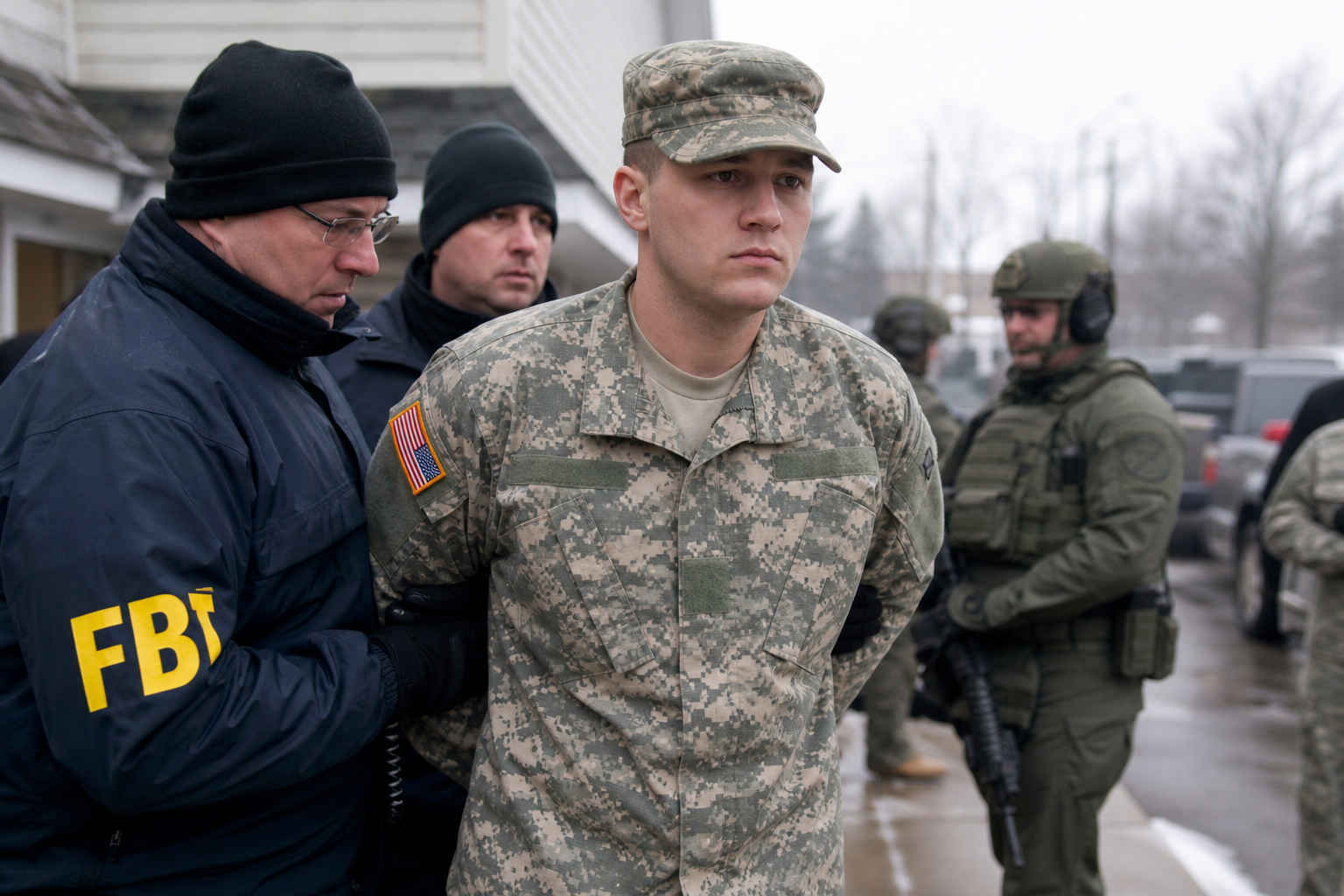
Federal agents arrested Ammar Abdulmajid-Mohamed Said of Melvindale on May 13, 2025, minutes after the drone flight. Court documents show he had already handed over armor-piercing ammunition, rifle magazines, reconnaissance video and instructions for building Molotov cocktails to people he believed were ISIS operatives.
Said was discharged from the Michigan Army National Guard in December 2024. Prosecutors say he began seeking ISIS contacts online shortly afterward and agreed to conduct the attack on the TACOM site in Warren, Michigan, a key logistics and maintenance hub for Army vehicles.
Undercover FBI agents posed as ISIS supporters during a series of meetings that began earlier this year. Said provided them with specific training on firearms handling and the assembly of incendiary devices, according to the criminal complaint.
He also delivered dozens of rounds of armor-piercing ammunition and compatible magazines during one of the recorded encounters. The same meeting included drone footage he had captured of the TACOM perimeter, guard posts and vehicle storage areas.
Authorities charged Said with attempting to provide material support to a foreign terrorist organization and with distributing information on the manufacture of a destructive device. Each count carries a maximum penalty of 20 years in prison.
"The arrest of this former soldier is a sobering reminder of the importance of our counterintelligence efforts to identify and disrupt those who would seek to harm our nation," said Department of Justice spokesperson Robert Smith.
U.S. Attorney Dawn Ison stated that the investigation revealed a clear intent to conduct a mass-casualty attack at a military installation. "Said took concrete steps to arm and train individuals he thought were ISIS members," Ison told reporters outside the federal courthouse in Detroit.
FBI Special Agent in Charge Robert Brown emphasized the speed of the disruption. "Once we identified the threat, agents moved quickly to neutralize it before any harm could reach the men and women serving at TACOM," Brown said.
Defense attorney James Smith entered a not-guilty plea on behalf of Said during the initial appearance. Smith declined further comment but confirmed his client would remain in federal custody pending a detention hearing.
The TACOM Detroit Arsenal houses thousands of military and civilian employees who repair and distribute combat vehicles. Security officials immediately increased patrols and restricted drone activity in the vicinity following the arrest.
Records show Said joined the Michigan National Guard in 2023 and completed basic training before his discharge less than two years later. Investigators have not disclosed the precise reason for his separation from service.
Prosecutors allege the plot evolved over several months. Said first discussed targeting the base during encrypted online chats, then met in person with the undercover agents to demonstrate his commitment by supplying weapons components and tactical information.
One recorded conversation captured Said explaining optimal firing positions around the facility perimeter and recommending the use of Molotov cocktails to create chaos during an initial assault. He also described how the drone footage could help attackers avoid detection by security cameras.
Melvin Warren, a retired Army colonel who once commanded logistics units at the Arsenal, described the base layout as a mix of large warehouses and open motor pools. "Any successful attack would require precise knowledge of patrol schedules and camera coverage, exactly the kind of information the defendant allegedly gathered," Warren said.
Local law enforcement in Warren and Melvindale coordinated with federal agents throughout the investigation. Police Chief Michael Thompson of Melvindale confirmed officers assisted in surveillance but were not involved in the arrest itself.
The case marks the latest in a series of domestic terrorism prosecutions involving former or current military personnel. Federal data indicate that service members and veterans appear in a disproportionate share of recent ISIS-related investigations compared with the general population.
Assistant Attorney General Matthew Olsen noted that the Justice Department continues to prioritize cases involving insider threats. "We remain focused on preventing individuals with military training from turning those skills against their fellow service members," Olsen said in a prepared statement.
Said is scheduled for a preliminary hearing later this month. Prosecutors have indicated they will seek to keep him detained until trial, citing the seriousness of the charges and the detailed planning already completed.
Community leaders in Melvindale expressed shock at the allegations. Mayor Mark Smith issued a brief statement urging residents to cooperate with any additional federal inquiries while emphasizing that the vast majority of local residents have no connection to the case.
Investigators recovered additional electronic devices from Said’s residence that reportedly contain further ISIS propaganda and communications. Forensic analysis of those devices is ongoing, according to court filings.
The Department of Justice press release issued May 14 outlined the timeline of the undercover operation but withheld certain operational details to protect ongoing methods. Officials confirmed that no actual attack was imminent at the time of the arrest.
Security analysts note that drone reconnaissance has become a recurring feature in recent plots against military and critical infrastructure targets. The FBI has issued several bulletins warning bases to treat unauthorized drone flights as potential pre-attack surveillance.
Said’s next court date is set for late May. If convicted, he faces up to 40 years in federal prison between the two counts.