
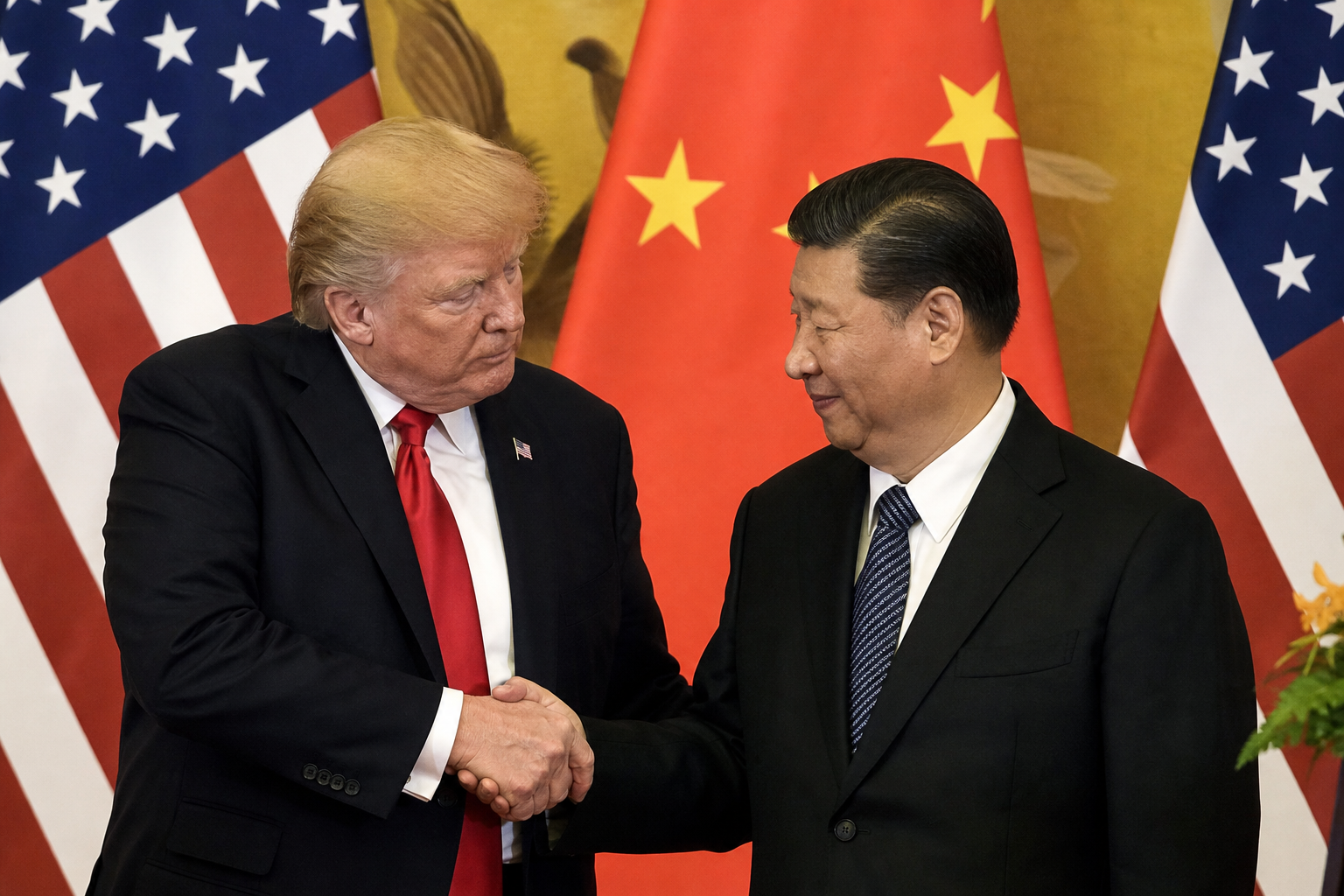
President Donald Trump confirmed he will raise American weapons sales to Taiwan when he sits down with Chinese President Xi Jinping in Beijing.
The American leader touched down in the Chinese capital on May 13, 2026, for a two-day summit that also includes trade negotiations and discussions on the Iran war.
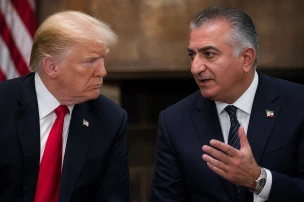
Trump made the commitment in remarks delivered from the Oval Office ahead of his departure. He said he plans to have the conversation even though Xi would prefer the United States drop the matter entirely.
The specific deal under review is a $14 billion arms package first authorized by the United States in December 2025. The weapons have not yet been delivered to Taiwan.
Chinese authorities used the same day to restate their firm opposition to any further US arms transfers to the island. They called on Washington to honor earlier pledges and refrain from steps that would inflame tensions in the Taiwan Strait.
Trump’s remarks set the stage for what is expected to be a direct exchange during the summit. The Taiwan question has remained one of the most sensitive items on the bilateral agenda for successive US administrations.
Beijing has consistently viewed all foreign arms supplies to Taiwan as interference in its internal affairs. Chinese officials argue that such sales violate the spirit of previous US-China communiqués that recognized the one-China principle.
Washington maintains that the sales fall under long-standing legal obligations designed to help Taiwan maintain a credible defensive capability. US policy holds that a secure and confident Taiwan contributes to regional stability rather than undermining it.
The $14 billion figure represents one of the larger proposed packages in recent years. It builds on an earlier authorization that totaled $11 billion and covered a range of air and naval defense systems.
Reuters noted that China’s May 13 statement served as a pre-summit reminder of its red lines. The message was delivered through official channels and carried in state media outlets.
AP News reported live from Beijing that security around the summit venue had been tightened in anticipation of the high-level talks. Motorcades and restricted zones were visible throughout the city center.
CNN detailed the timeline of the arms package, confirming the December 2025 authorization date and the fact that deliveries remain pending. The network also noted the package’s scope includes advanced aircraft and missile systems.
Trade issues are expected to occupy a significant portion of the leaders’ time. Both sides have signaled interest in addressing tariff levels and supply-chain vulnerabilities that have lingered since earlier rounds of economic friction.
The Iran conflict adds another urgent layer to the discussions. The United States and China hold differing views on sanctions enforcement and energy shipments that continue to affect global markets.
Trump’s willingness to address Taiwan openly reflects a pattern of direct engagement on contentious topics rather than deferring them to lower-level channels. He has repeatedly stated that personal diplomacy yields clearer outcomes.
Chinese diplomats have prepared a series of counter-arguments that emphasize the risks of escalation. They are expected to press the United States to cancel or at least scale back the pending deliveries.
Regional allies are watching the outcome closely. Japan, South Korea, and Australia have all expressed interest in how the Taiwan discussion unfolds during the Beijing meetings.
Any public progress on the arms issue is likely to be limited. Both governments have historically managed sensitive security topics through private understandings rather than joint statements.
The two-day format gives the delegations time to cover the full agenda without rushing. Evening working dinners are planned in addition to formal plenary sessions.
Trump’s arrival marks his first visit to Beijing since the previous summit cycle. The atmosphere this time is shaped by ongoing global conflicts and shifting economic priorities.
Chinese officials have framed the summit as an opportunity to stabilize relations. They argue that constructive dialogue serves both nations better than public confrontation.
US officials have emphasized that core security commitments to Taiwan will not be traded away during these talks. The arms package remains on track for eventual delivery according to current planning.
The coming days will reveal whether the leaders can separate the Taiwan question from parallel progress on trade and Iran. Early indications suggest the conversation will be frank but contained.