
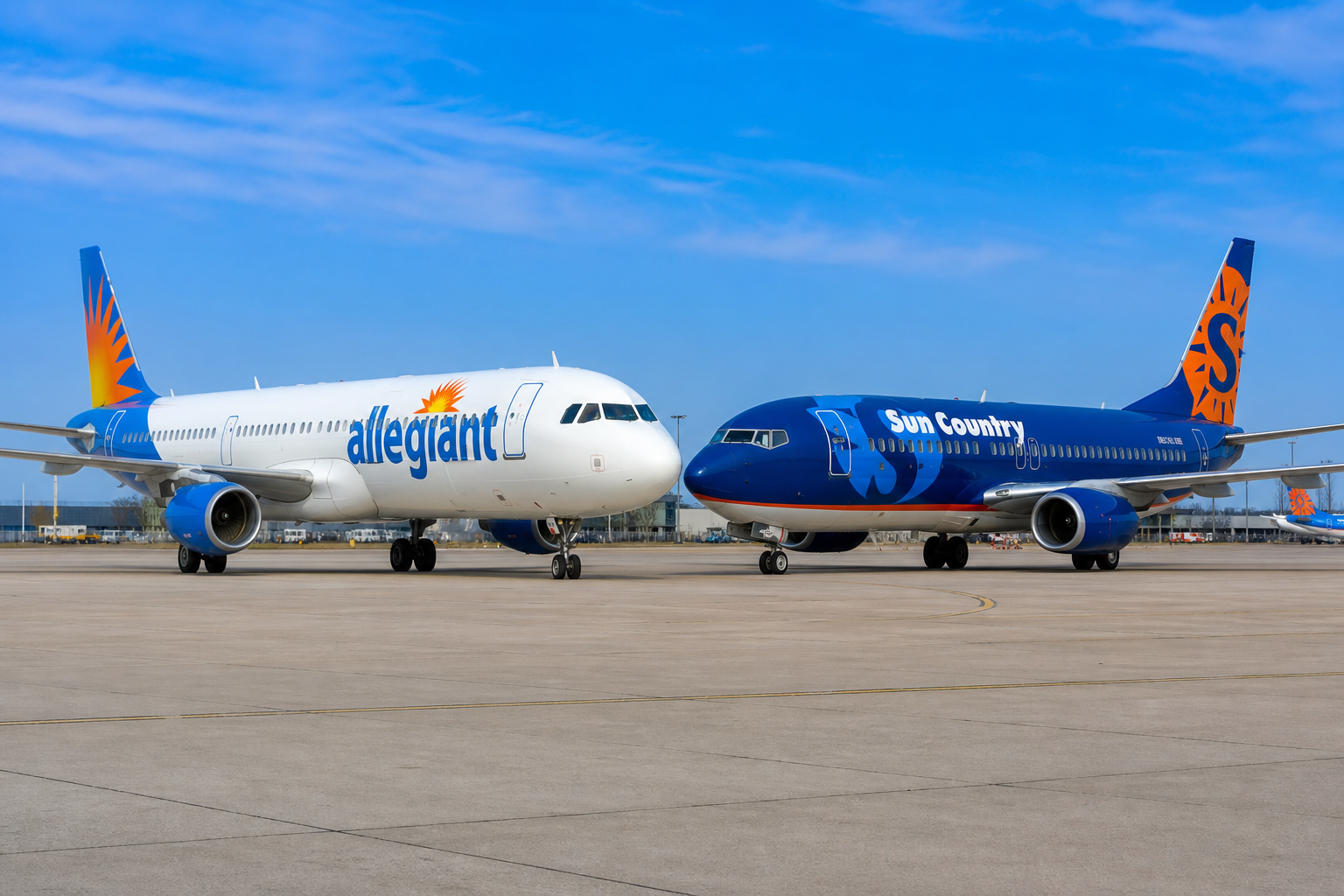
The completion of Allegiant Travel Company's acquisition of Sun Country Airlines has reshaped the landscape for affordable leisure travel across the United States.
The $1.5 billion cash-and-stock transaction closed on May 13, 2026, following shareholder and regulatory approvals. The combined carrier now operates 195 aircraft, connects nearly 175 cities through more than 650 routes, and serves 22 million customers each year.
Gregory C. Anderson, CEO of Allegiant Travel Company, called the closing a defining moment. "Today marks a defining moment in Allegiant's history as we officially join forces with Sun Country to create the leading leisure-focused airline in the United States," he said.
The transaction was first announced on January 11, 2026. It arrived shortly after Spirit Airlines ceased operations, opening a clear opportunity for the new entity to capture leisure passengers seeking low fares on routes previously dominated by ultra-low-cost carriers.
Allegiant will serve as the primary operating name. Sun Country's brand identity and its loyalty program will continue separately for the initial integration phase. The company projects $140 million in annual cost synergies within three years through combined purchasing, maintenance, and network planning.
Headquarters remain in Las Vegas. Minneapolis-St. Paul continues as a major operational hub for northern and seasonal leisure routes. The merged fleet mixes Allegiant's Airbus narrowbodies with Sun Country's Boeing 737s, giving schedulers greater flexibility across seasonal demand peaks.
Passengers will see immediate additions in cities that previously had limited nonstop options. Allegiant's model of point-to-point service from smaller airports pairs with Sun Country's established leisure destinations in Mexico, the Caribbean, and domestic resort markets.
Analysts note the timing strengthens the carrier's position against remaining competitors. With Spirit gone, the combined operation gains scale in price-sensitive segments while maintaining the focus on underserved secondary airports that both airlines have long served.
Route overlap remains modest, limiting immediate capacity reductions. Management instead plans measured growth, adding frequencies on high-demand leisure corridors and introducing new city pairs that leverage the larger aircraft pool.
Customer service channels and booking platforms will run in parallel during the first year. Frequent flyers can continue earning and redeeming in their existing programs without immediate changes to earning rates or award availability.
Employees from both carriers received communications emphasizing job stability. Integration teams are now mapping training standards, crew bases, and maintenance procedures to achieve the targeted synergies without service disruption.
Industry observers expect the merged airline to file new route applications with the Department of Transportation in coming months. Several mid-sized markets previously served only seasonally by one carrier may gain year-round flights.
The deal structure included assumption of Sun Country debt. Allegiant funded part of the purchase with cash on hand and issued shares to Sun Country shareholders, preserving balance-sheet flexibility for future fleet orders.
Revenue management teams are already aligning fare structures. Early indications point to competitive pricing on overlapping city pairs while protecting margins on routes where the combined carrier holds stronger market share.
Travel agents and corporate booking tools will receive updated content feeds reflecting the single operating certificate. Leisure packages that bundle flights with hotels and car rentals remain available under both legacy brands.
Regulatory filings confirmed no major antitrust concerns arose during review. The Department of Justice and Transportation Department focused on ensuring continued service to smaller communities that rely on Allegiant and Sun Country for essential air access.
Maintenance hangars in both Las Vegas and Minneapolis will handle the combined fleet. Parts inventories and vendor contracts are being consolidated to capture the bulk of the projected $140 million savings.
Marketing campaigns launching this summer will highlight the expanded network. Advertisements emphasize more nonstop choices from hometowns that previously required connections through major hubs.
Financial guidance issued alongside the closing projects modest capacity growth in the second half of 2026. Unit revenue is expected to benefit from higher load factors on the integrated schedule.
Customer feedback channels remain open for both brands. Allegiant and Sun Country continue to operate separate websites and mobile apps while backend systems are aligned over the next 18 to 24 months.
The merger positions the carrier to respond quickly to shifts in leisure demand. With a larger fleet and broader route map, schedule recovery after weather or mechanical issues improves across the network.
Executives reiterated commitment to the core business model of low fares and direct flights to leisure destinations. No immediate changes to seat selection policies or baggage fees are planned beyond routine annual adjustments.