
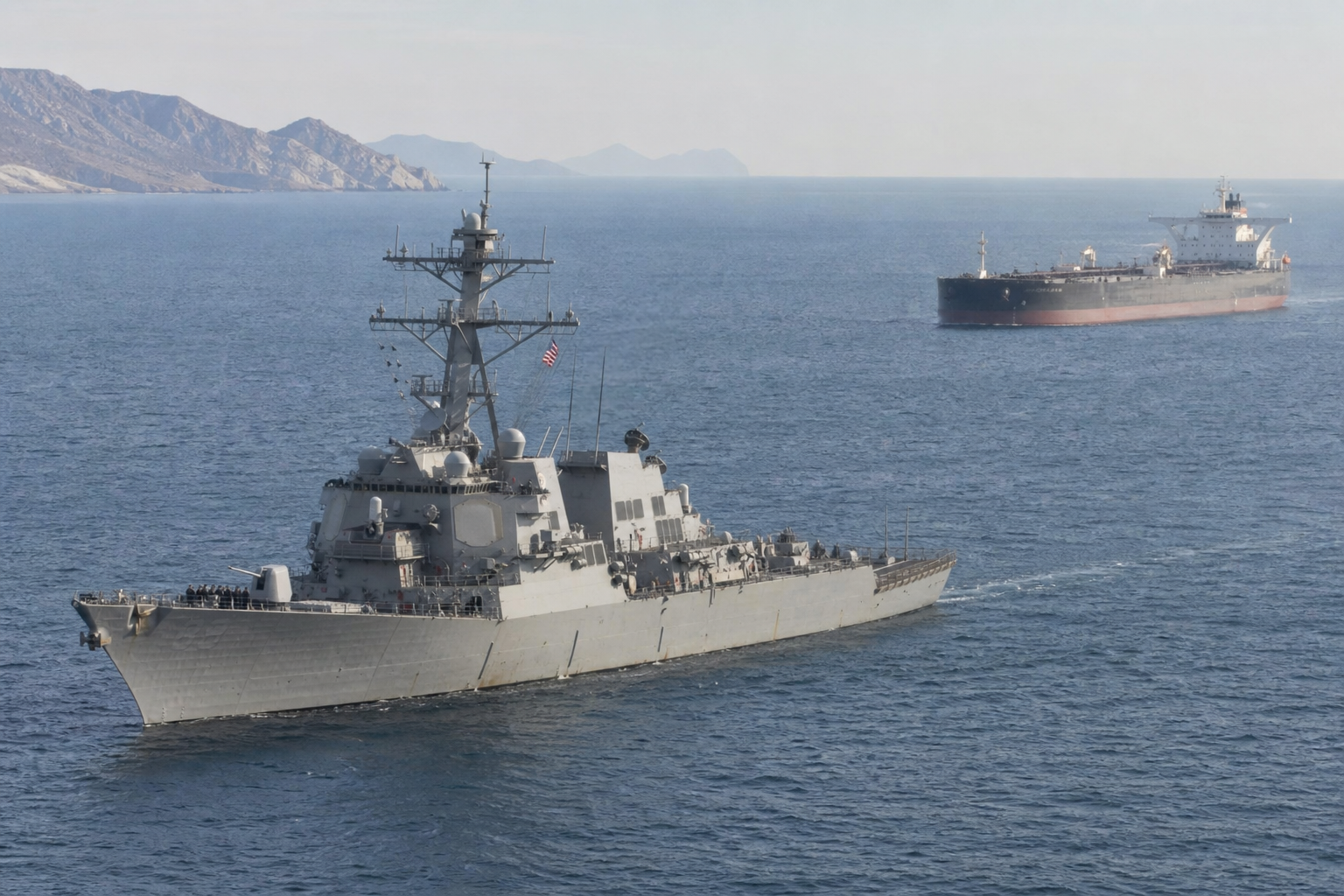
A U.S.-flagged commercial vessel completed its transit of the Strait of Hormuz without incident in mid-May 2026 as tensions persisted in the Persian Gulf.
Viral posts on X captured the event and quickly circulated among American and Middle Eastern observers. The safe passage stood in contrast to earlier escorted movements that faced direct threats.
The New York Times reported that on May 4 two U.S.-flagged commercial vessels, one a Maersk vehicle carrier, sailed the same route under U.S. Navy escort. During that transit U.S. warships shot down Iranian cruise missiles and drones aimed at the guided ships.
Maersk confirmed the successful movement of its U.S.-flagged vessel. The earlier operation highlighted the risks that commercial traffic can encounter in the narrow chokepoint.
U.S. Defense Secretary Pete Hegseth addressed the situation on May 5. He stated, "But right now we know we have a lane of safe passage that commercial shipping can flow through."
Adm. Brad Cooper, CENTCOM Commander, added that the command had begun establishing a new passage. He said, "Today, we began the process of establishing a new passage and we will share this safe pathway with the maritime industry soon."
Yahoo News and Pentagon briefings carried those remarks the following day. Officials emphasized that the protected lane would allow continued commercial traffic despite the surrounding tensions.
By May 16 and 17 fresh X threads focused on a later vessel that encountered no interception at all. Users posted photographs and AIS tracking data showing the ship exiting the strait into the Gulf of Oman without challenge.
The posts gained traction in American newsrooms and regional media. Commentators compared the uneventful transit to the missile engagements of May 4 and questioned what had changed in Iranian decision-making.
Analysts noted that the Strait of Hormuz remains the route for roughly one-fifth of global oil trade. Any sustained closure would affect energy prices from Europe to Asia.
Maritime security firms tracked the May 16-17 transit using open-source intelligence. They reported no Iranian Revolutionary Guard naval activity in the immediate vicinity of the vessel.
Some observers suggested the lack of response reflected Iranian caution after the earlier intercepts. Others pointed to possible U.S. force posture adjustments that raised the cost of interference.
The New York Times followed the story with additional reporting on May 17. It confirmed the vessel's identity remained undisclosed for security reasons but verified its U.S. registry and safe arrival.
Pentagon sources told Yahoo News that additional U.S. Navy assets remained on station to deter future threats. The presence of those warships continued to shape Iranian calculations.
Regional shipping companies monitored the developments closely. Several firms adjusted insurance premiums downward after the second successful transit.
Israeli security analysts viewed the events through the lens of broader U.S.-Iran friction. They noted that stable Hormuz access benefits energy markets that indirectly support Israeli economic resilience.
Tehran issued no immediate public comment on the May 16-17 passage. State media instead replayed footage from earlier naval exercises in the Gulf.
Industry trackers recorded at least four additional commercial transits in the days that followed. None reported hostile approaches.
The combination of escorted protection on May 4 and the unhindered movement later in the month created a mixed picture. Shipping executives now weigh both outcomes when planning voyages.
Adm. Cooper's pledge to publish coordinates for the safe lane has yet to be fulfilled in full. Maritime organizations await the formal notice.
Defense Secretary Hegseth reiterated that American forces would continue to guarantee freedom of navigation. He stressed that commercial vessels retain the option to use the protected corridor.
Observers in Washington and Tel Aviv continue to debate whether the recent quiet reflects temporary restraint or a lasting shift. The next transit will provide further data points.
Oil traders in Singapore and Rotterdam watched the developments for any sign of supply disruption. Prices remained stable through the third week of May.
The viral X threads served as the initial public alert for many readers. They turned a routine commercial movement into a talking point across multiple time zones.
Journalists at The New York Times and regional outlets cross-checked the posts against official statements. The reporting confirmed the vessel's safe exit from the strait.
Maritime unions representing American crews expressed relief at the outcome. They credited the Navy escort and improved coordination for the result.
Future transits will test whether the pattern of safe passage holds. Both U.S. officials and shipping lines remain vigilant.