
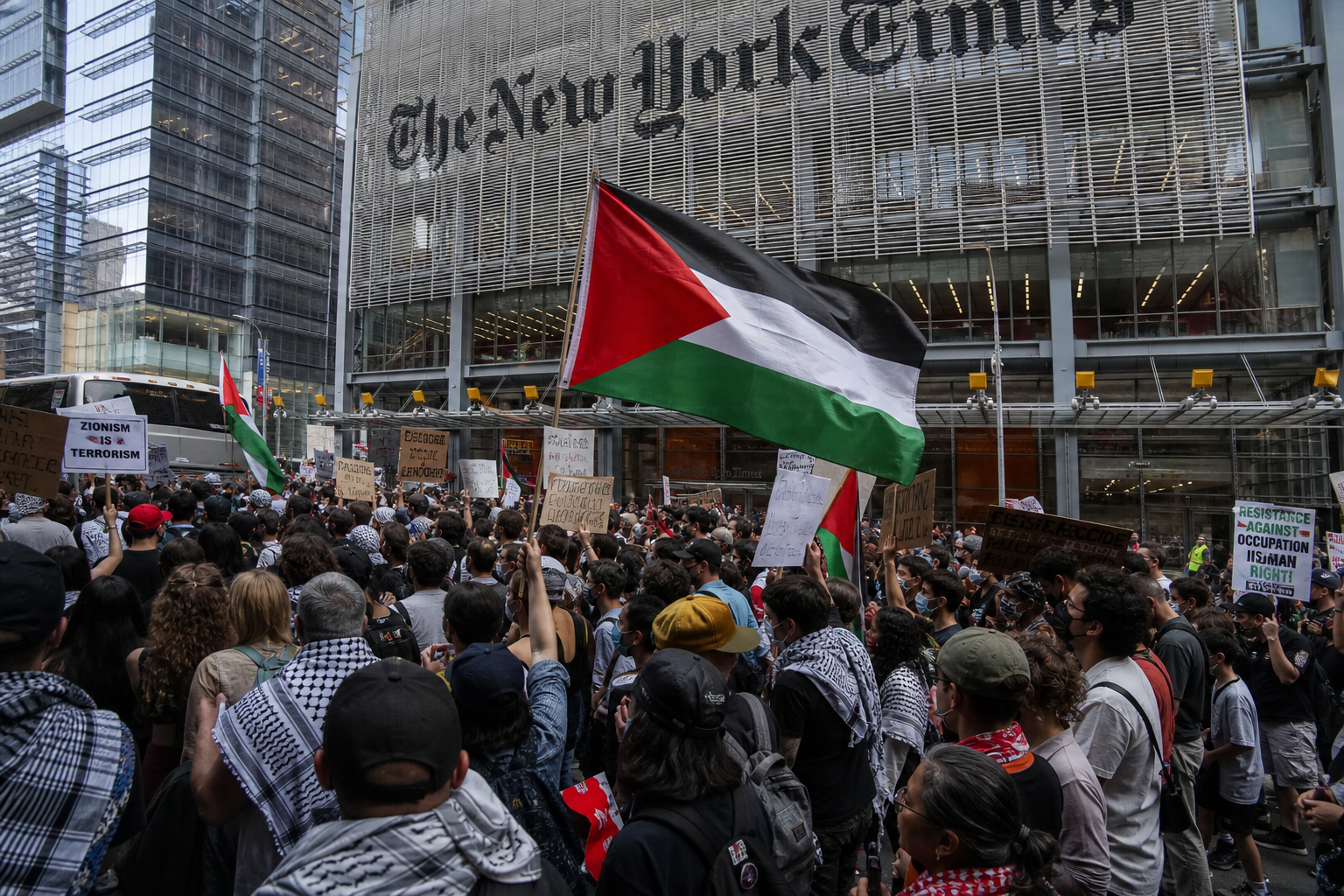
Hundreds of demonstrators gathered outside the New York Times headquarters in New York City on May 14, 2026, to protest a recent column by Nicholas Kristof that accused Israeli forces of widespread sexual abuse of Palestinian detainees.
The protest began at 5 p.m. ET and was organized by EndJewHatred, Stop Antizionism, Hineni, and the Movement Against Antizionism. This marked the first major coordinated action by these groups over coverage of the Gaza conflict. Participants carried signs and chanted messages calling for an end to what they described as biased reporting.
Viral videos of the demonstration quickly spread across social media platforms. They showed large crowds assembled directly in front of the newspaper's offices while counter-narratives circulated in real time from supporters of the column. The timing of the protest followed Nicholas Kristof's May 12 column by just two days.
Organizers stated the column appeared deliberately scheduled to overshadow an Israeli NGO report detailing sexual violence committed by Hamas during the October 7, 2023 attacks. They argued the piece relied on sources that had previously praised Hamas activities. The groups viewed the publication as part of a pattern of coverage that distorts Israeli actions while downplaying threats from Palestinian militant organizations.
Join us to rally and let NYT know they must stop the antizionist libels! - Spokesperson for EndJewHatred.
The demonstration drew participants from multiple Jewish organizations that have tracked New York Times coverage of Israel for months. Speakers at the event highlighted specific passages in the Kristof column and contrasted them with verified documentation of Hamas atrocities. Several attendees described the piece as contributing to an environment of hostility toward Jewish communities in the United States.
According to reporting by the Times of Israel, the protest focused specifically on Kristof's allegations against Israeli forces and the column's sourcing. The newspaper had previously faced criticism from Jewish leaders over its framing of events in Gaza and the West Bank. The May 14 action represented an escalation in public pushback against that framing.
JNS.org covered statements from Jewish leaders who called for readers to boycott the New York Times in response to the column. Those leaders pointed to what they described as repeated instances of unbalanced reporting that presents Israeli self-defense measures as disproportionate while minimizing the role of groups like Hamas and Islamic Jihad in prolonging the conflict. The boycott calls gained traction among communities that closely follow both American and Israeli political developments.
The Post Millennial detailed how the coalition of Jewish groups framed the Kristof column as relying on sources with documented ties to Hamas sympathizers. Organizers distributed materials at the protest that compared the column's claims with evidence collected by Israeli authorities and independent investigators regarding October 7 sexual violence. Demonstrators emphasized that accurate reporting requires context about Hamas's documented tactics of embedding military operations within civilian areas.
Participants noted that the New York Times has maintained significant influence over how American audiences understand the Israel-Gaza conflict. They argued that columns like Kristof's shape policy debates in Washington by presenting contested allegations as established fact. The protest therefore served as a direct message to editors and reporters that such coverage carries real-world consequences for Jewish security and U.S.-Israel relations.
Social media engagement with videos from the event reached high levels within hours. Users shared footage of the crowd size and specific chants while others posted rebuttals defending the newspaper's editorial choices. The rapid spread of the content reflected heightened attention among audiences that track both Israeli security developments and American media coverage of Middle East policy.
EndJewHatred, Stop Antizionism, Hineni, and the Movement Against Antizionism issued a joint statement underscoring their commitment to continued monitoring of New York Times reporting. They indicated that additional actions would follow if the newspaper failed to address concerns about sourcing and framing in its Gaza coverage. The groups positioned the May 14 protest as the start of a sustained campaign rather than an isolated event.
The demonstration occurred against the backdrop of ongoing debates in American Jewish communities about media responsibility during wartime. Many participants referenced earlier controversies involving New York Times headlines and story selection that they believe minimized Hamas's role while amplifying unverified claims against Israel. The protest provided a visible outlet for those accumulated frustrations.
Local authorities maintained a visible presence to ensure the event remained peaceful. Demonstrators stayed within designated areas outside the newspaper building and dispersed after several hours of speeches and chanting. Organizers expressed satisfaction with turnout and the attention the protest generated across multiple platforms.
The New York Times has not issued a formal response to the demonstration as of the latest reports. The newspaper's previous statements on its Gaza coverage have emphasized commitment to independent journalism and verification processes. Critics at the protest maintained that those processes have fallen short when covering allegations against Israeli personnel.
Communities following Israeli and American news developments continue to circulate additional videos and commentary related to the protest. The event highlighted divisions over how media outlets should handle competing claims of sexual violence in the conflict. It also underscored the determination of organized Jewish groups to challenge coverage they view as harmful to Israel's position in public discourse.