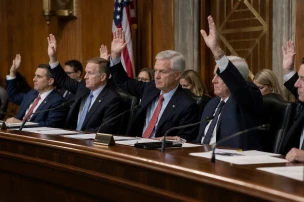

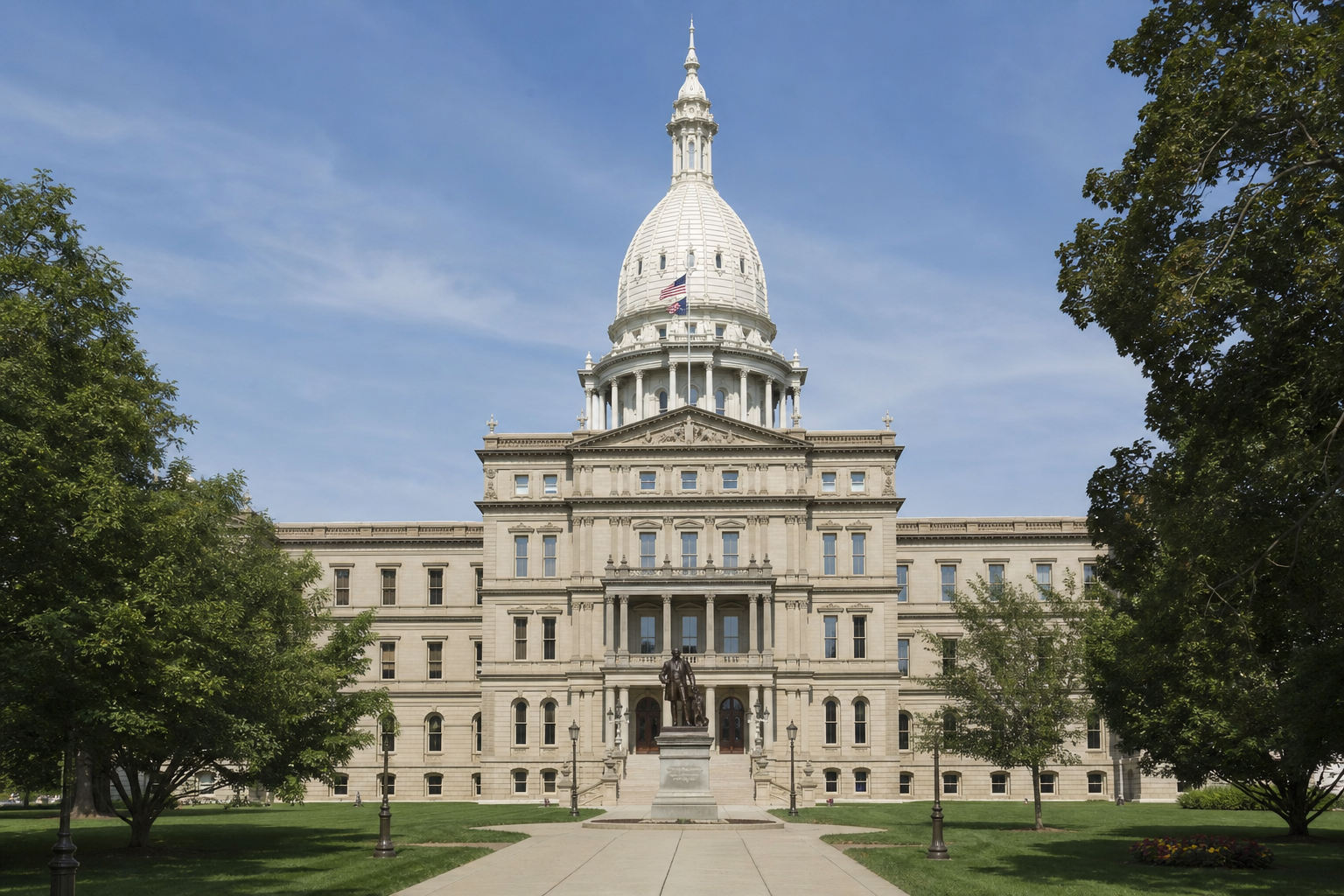
The Michigan House of Representatives delivered a direct challenge to the state's renewable energy future Tuesday when it approved legislation to repeal clean energy standards that require utilities to reach 100 percent clean power by 2040.
House Bill 5710 passed 58-47 and House Bill 5711 passed 57-48, both along largely partisan lines. The measures eliminate mandatory clean energy portfolio requirements for utilities and were sponsored by Rep. Pauline Wendzel of Watervliet and Rep. Pat Outman of Six Lakes.
One Democrat crossed party lines to support the repeal package in each vote. Republican leaders framed the action as necessary relief for households facing rising utility bills, while Democrats warned the change would halt investments in the lowest-cost energy sources now available.
The original clean energy standard was designed to accelerate Michigan's transition away from coal and toward wind, solar and other non-emitting resources. It set intermediate targets and required utilities to demonstrate steady progress toward the 2040 goal. Tuesday's repeal would remove those obligations entirely, leaving utilities free to select generation sources based solely on cost and reliability considerations.
Republican supporters argued the mandates have driven up electricity prices at a time when many families already struggle with inflation and higher living costs. They pointed to recent rate hikes approved by the Michigan Public Service Commission and claimed the forced shift to renewables has added unnecessary expenses for ratepayers across the state.
At a time when energy costs are skyrocketing and Michiganders are struggling to pay their utility bills, the House voted to sabotage legislation that is pushing Michigan to invest in the cheapest, fastest energy sources available.
Ben Poulson, state government affairs director for the Michigan League of Conservation Voters, issued that statement immediately after the votes. He and other environmental advocates contend that wind and solar projects already under development would have lowered long-term costs while creating construction and maintenance jobs in rural communities.
Rep. Wendzel defended the repeal during floor debate, stating that families in her southwest Michigan district cannot afford continued increases in their monthly electric bills. She said the clean energy mandates ignored practical realities about grid reliability during extreme weather events.
Rep. Outman echoed those concerns, noting that northern Michigan residents have experienced both high summer cooling costs and winter heating spikes. He argued that removing the mandates would give utilities flexibility to maintain affordable baseload power from natural gas and other sources while still pursuing renewables where they make economic sense.
Democratic leaders in the House countered that the repeal represents a step backward at a moment when renewable technology costs have fallen sharply. They cited data showing that new wind and solar installations now frequently beat the cost of new fossil fuel plants on a levelized basis. Without the portfolio requirements, they said, utilities may delay or cancel projects already in the permitting pipeline.
The package now moves to the Democratic-controlled Senate. Senate Majority Leader Winnie Brinks has indicated the bills will not receive a vote, describing them as unnecessary and out of step with Michigan's long-term economic and environmental interests. Because the Senate is not expected to act, the repeal effort is widely viewed as symbolic for the current legislative session.
Even if the Senate were to pass the measures, Democratic Gov. Gretchen Whitmer has signaled strong opposition and would likely veto any repeal. The governor's office has repeatedly highlighted clean energy as a driver of job growth and a tool to attract manufacturing investments tied to electric vehicles and battery production.
Utility companies operating in Michigan have offered mixed reactions. Some executives have said they support keeping the existing targets because long-term contracts for renewables provide price stability. Others have welcomed greater flexibility to balance their generation mix according to market conditions and customer demand.
Business groups focused on manufacturing warned that repealing the standard could complicate efforts to secure federal incentives tied to clean energy production. Michigan has positioned itself as a hub for electric vehicle and battery supply chains, many of which require suppliers to demonstrate progress toward lower carbon footprints.
Environmental organizations plan to use the House action as a rallying point for the 2026 midterm elections. They argue the votes demonstrate a clear difference between the two parties on energy affordability and climate policy. Republican candidates, meanwhile, are expected to campaign on the need to control household energy expenses.
University analysts note that Michigan's average residential electric rates have risen in recent years, though they attribute the increases to a combination of infrastructure upgrades, fuel price volatility and extreme weather rather than the clean energy standard alone. The debate over how much the renewable mandates contribute to those costs remains contentious.
Local governments and economic development agencies in rural counties have expressed concern that canceling the clean energy targets could slow the development of large-scale solar and wind farms that have brought lease payments to landowners and construction jobs to small communities. Several projects already under contract would face uncertain futures if the repeal ultimately succeeds.
Energy policy experts at Michigan universities have pointed out that the state's grid operator, MISO, continues to approve new renewable capacity because of its low operating costs and improving reliability through battery storage. Removing state-level requirements would not necessarily stop all new projects but would eliminate the guaranteed demand that has accelerated investment.
Residents in southeast Michigan, where much of the state's population lives, have seen their bills climb steadily. Some community groups have organized around the issue, arguing that low-income households are disproportionately affected by any increase in energy costs regardless of the underlying cause.
Republican lawmakers said they will continue to press the issue in future sessions if the current repeal package stalls in the Senate. They view the clean energy mandates as government overreach that distorts energy markets and ultimately harms the very families it was intended to protect.
Democratic lawmakers responded that the real threat to affordability comes from volatile fossil fuel prices and aging infrastructure, not from the predictable costs of wind and solar. They pledged to defend the existing standard and to highlight its role in attracting new industry to the state.
The outcome of the Senate's expected inaction leaves Michigan's clean energy trajectory unchanged for now. Utilities will continue working toward the 2040 target while monitoring political developments that could alter the requirements before the decade ends.
Stakeholders on both sides acknowledge that the broader national conversation about energy reliability, affordability and emissions will continue to shape Michigan's policy choices. Tuesday's House votes simply underscored how sharply divided the state's elected leaders remain on the best path forward.