
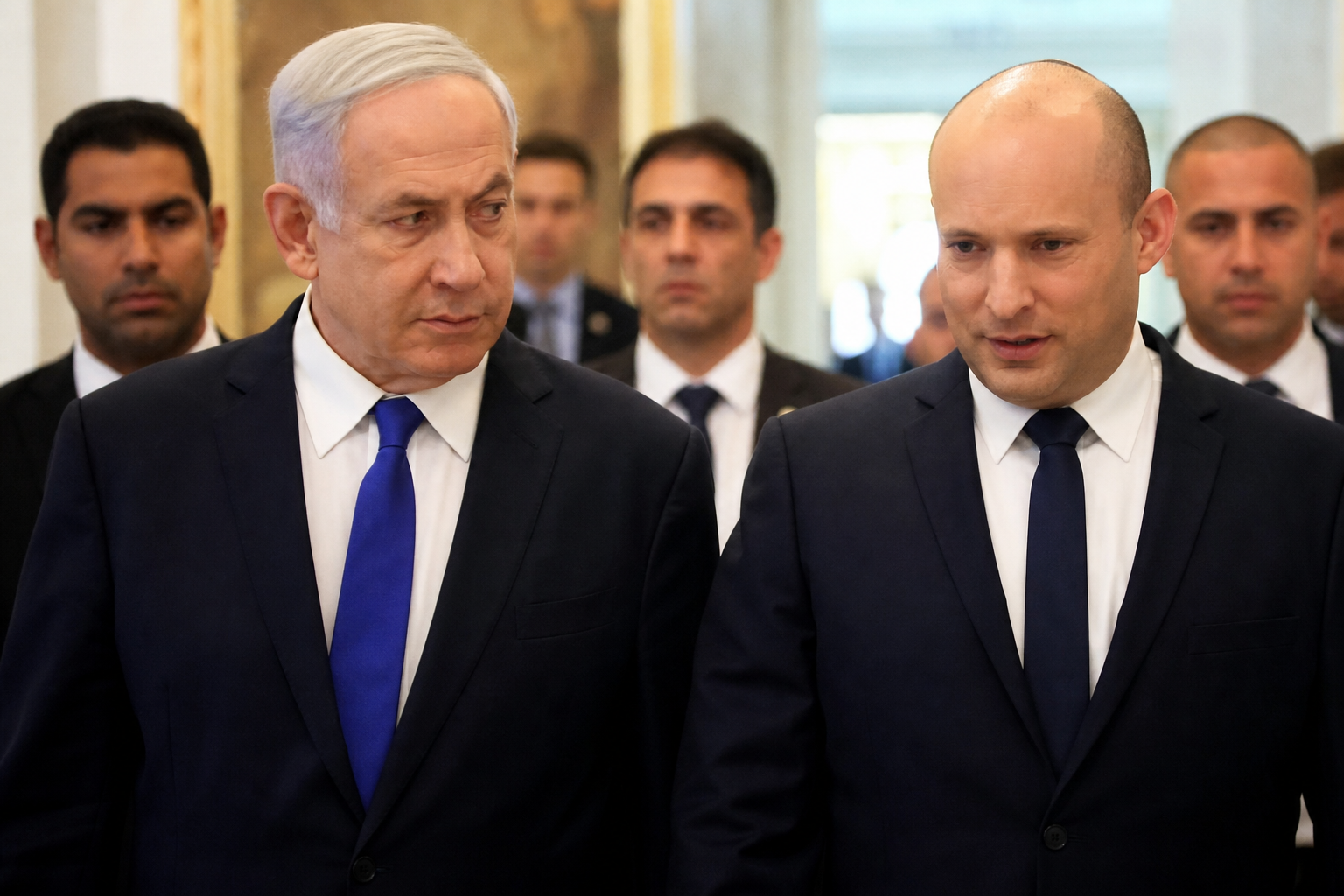
Israeli Prime Minister Benjamin Netanyahu abruptly publicized a secret wartime trip to the United Arab Emirates to prevent his political rival from claiming the diplomatic spotlight.
According to a report by Channel 12 cited in the Times of Israel on May 17, 2026, Netanyahu's office learned that former prime minister Naftali Bennett intended to meet Emirati President Sheikh Mohammed bin Zayed Al Nahyan the following day. Netanyahu then directed his staff to release details of his own May 13 visit, framing it as a historic breakthrough in wartime diplomacy. This move came as part of broader efforts to maintain visibility in regional affairs during a period of heightened tensions across the Middle East.
The announcement came amid Israel's ongoing conflict with Iran. Netanyahu's office described the meeting as advancing security coordination and economic ties between the two nations under the Abraham Accords framework established in 2020. Officials emphasized how such engagements could bolster mutual interests in technology, trade, and defense despite external pressures from ongoing regional instability.
Yet the United Arab Emirates moved quickly to reject the entire account. The UAE Foreign Ministry issued a statement declaring all reports of the visit baseless and stressing that no such meeting had occurred on Emirati soil. This swift rebuttal highlighted the sensitivity surrounding any public claims involving high-level interactions during sensitive times.
Diplomatic observers noted the unusual speed of the Israeli disclosure. Normally such wartime travel by a sitting prime minister remains classified for security reasons until after the fact. The decision to publicize it immediately appeared driven by domestic political calculations rather than strategic messaging to Gulf allies. Analysts pointed out that timing often plays a critical role in how such events are perceived both locally and internationally.
Netanyahu and Bennett have long competed for leadership of Israel's right-wing camp. Bennett served as prime minister from 2021 to 2022 in a coalition that briefly displaced Netanyahu before the latter returned to power. Both men have positioned themselves as architects of Israel's expanding ties with Arab states, each seeking to build legacies around normalization efforts that reshaped regional dynamics in recent years.
Wall Street Journal analysis highlighted the limits of those ties. While trade and technology cooperation have grown since the Abraham Accords, the UAE has maintained careful distance from overt security commitments that could draw it into Israel's regional conflicts. The reported denial fits this pattern of calibrated engagement that prioritizes stability over dramatic public gestures.
Israeli opposition figures seized on the episode as evidence of Netanyahu prioritizing personal political advantage over national interests. They argued that revealing operational details of a prime ministerial trip during active hostilities exposed unnecessary risks to ongoing operations and diplomatic channels alike. Critics suggested this approach could undermine trust with key partners in the long term.
Supporters of Netanyahu countered that the visit demonstrated his continued ability to conduct high-level diplomacy even while managing a complex military campaign. They pointed to previous unannounced meetings with Arab leaders as proof of his unique access and influence in forging connections that others might struggle to replicate.
The episode also exposed strains in the personal relationship between Israeli and Emirati officials. Abu Dhabi's swift and categorical rejection suggested irritation at being drawn into Israeli domestic politics without consent, potentially affecting future private discussions on shared concerns like economic development and security matters.
Regional analysts described the episode as a reminder of how domestic electoral pressures in Israel can intersect with sensitive Gulf diplomacy. Bennett's own record of advancing normalization during his premiership made him a natural rival for credit on any new breakthrough, intensifying the competition for recognition in these areas.
Further reporting indicated that Netanyahu's team had initially intended to keep the trip confidential. Only after receiving intelligence about Bennett's scheduled itinerary did the prime minister authorize the public statement claiming credit for the diplomatic opening, shifting the narrative in real time to influence public perception.
The UAE has hosted several Israeli leaders since normalization. Previous visits by Netanyahu himself occurred under tighter information control. The contrast with the May 13 announcement underscored the unusual circumstances surrounding this particular trip and the political motivations behind its disclosure.
Israeli security officials expressed concern that the public dispute could complicate future coordination channels with Gulf partners. Quiet cooperation on intelligence sharing and technology has proven more durable than headline-grabbing summits, allowing for sustained progress without unnecessary fanfare or controversy.
Netanyahu's office stood by its account of the meeting. A statement reiterated that the prime minister had held substantive discussions with Sheikh Mohammed bin Zayed on regional security and bilateral economic projects, maintaining that the engagement yielded positive outcomes despite external pushback.
The episode illustrates the tight coupling between Israeli foreign policy and electoral politics. With Bennett actively positioning himself as an alternative leader, any diplomatic achievement carries immediate domestic value that can sway voter opinions and coalition dynamics in significant ways.
Emirati officials have continued to emphasize their preference for low-profile engagement. Public denial of the visit serves to reassert control over the narrative and avoid appearing as props in Israeli political theater, preserving their independent stance on international matters.
Observers in Washington noted that the United States has encouraged quiet Israel-Gulf coordination without forcing public alignments that could destabilize internal Emirati politics. The reported denial aligns with that preference for discretion and measured responses to unfolding events.
Netanyahu's long political career has featured numerous instances of leveraging foreign policy for domestic advantage. Critics argue this pattern has sometimes come at the expense of sustainable diplomatic relationships that require careful nurturing over time.
Bennett, for his part, has not directly commented on the reported sequence of events. His associates have suggested that any planned travel was routine and unrelated to Netanyahu's actions, downplaying any direct connection to the unfolding controversy.
The May 13 announcement and subsequent denial have become a case study in how quickly secret diplomacy can become entangled in partisan competition. Both Israeli leaders have histories of claiming credit for normalization breakthroughs that have transformed Israel's position in the region.
Future visits by Israeli officials to the UAE will likely face even stricter confidentiality protocols. Emirati authorities appear determined to prevent their country from becoming a venue for Israeli political point-scoring, ensuring greater control over information flows.
The episode leaves open questions about the actual substance of any discussions that may have taken place. Without confirmation from Abu Dhabi, the precise outcomes remain unverifiable, leaving room for speculation among media and political circles.
Israeli media outlets across the political spectrum devoted extensive coverage to the conflicting accounts. The story reinforced existing narratives about Netanyahu's tactical instincts and Bennett's lingering influence in shaping public discourse around foreign policy successes.
Ultimately the episode highlights the persistent tension between Israel's need for discreet regional diplomacy and the intense personal rivalry at the heart of its political system, a dynamic that continues to influence decision-making at the highest levels.