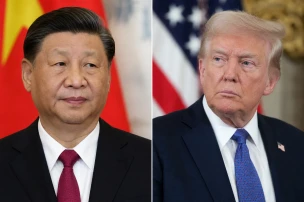

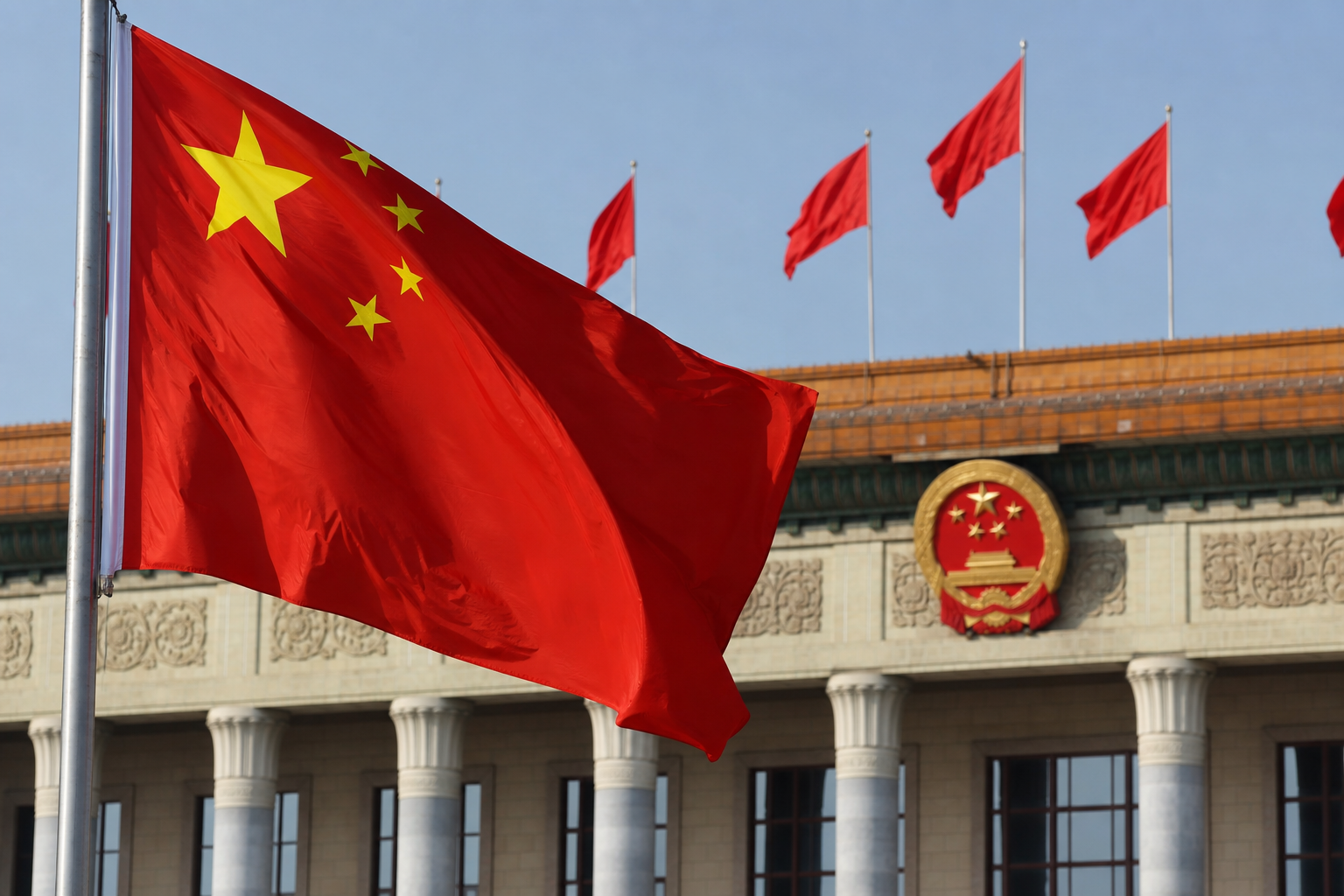
Beijing issued a clear warning to Washington on Tuesday against any arms sales to Taiwan, setting the stage for tense discussions during the upcoming summit between US President Donald Trump and Chinese President Xi Jinping.
Chinese Foreign Ministry spokesperson Zhang delivered the statement during a regular press briefing in the capital. The remarks come on the first day of the leaders' meetings scheduled to run through May 15.
Zhang emphasized China's consistent position. "We firmly oppose the United States engaging in any form of military ties with China’s Taiwan region, and firmly oppose the United States selling weapons to China’s Taiwan region. This position is consistent and unequivocal," he said.
He further stressed the importance of the issue. "Taiwan is the core of China’s core interests," Zhang added.
The timing of the statement coincides with reports of a pending US arms package to Taiwan valued at approximately $14 billion. This deal remains uncertain as the two leaders prepare to engage in direct talks.
US officials have not confirmed the status of the package. However, sources indicate it includes advanced fighter aircraft, missile systems, and other defensive equipment intended to bolster Taiwan's military capabilities.
The Trump administration has previously approved significant arms sales to Taiwan during its first term. Those transactions drew sharp criticism from Beijing at the time as well.
Analysts note that arms sales form a key component of US policy toward Taiwan under the Taiwan Relations Act. This 1979 legislation requires the United States to provide Taiwan with means to defend itself.
China views all such transfers as interference in its internal affairs. Beijing maintains that Taiwan is a breakaway province that must eventually reunify with the mainland, by force if necessary.
The upcoming summit represents the first face-to-face meeting between Trump and Xi since the US leader returned to office. Both sides have signaled a desire to stabilize bilateral relations following years of tensions.
Trade and technology issues are expected to dominate the agenda. Yet the Taiwan question looms large as a potential flashpoint that could derail any progress.
Chinese officials have urged the United States to honor previous commitments regarding Taiwan. They argue that past US administrations have pledged to limit or reduce arms sales over time.
Washington has rejected that interpretation. US policymakers maintain that the level of support for Taiwan should reflect the evolving security situation in the region.
Taiwanese authorities have not issued an immediate response to the Chinese statement. The island's government typically seeks to avoid escalating rhetoric during sensitive periods.
Regional experts suggest the arms package could be delayed or modified depending on the outcome of the Beijing talks. A successful summit might lead to a pause in new approvals.
Conversely, if discussions falter, the United States might accelerate deliveries to demonstrate resolve. This approach has characterized previous periods of heightened cross-strait friction.
The $14 billion figure represents one of the largest proposed packages in recent years. It would include upgrades to Taiwan's air defense network and naval assets.
China has responded to similar sales in the past with sanctions on US defense firms. Those measures have had limited practical impact but serve to signal displeasure.
Diplomats from both nations have been preparing for the summit for weeks. Lower-level talks have focused on establishing guardrails to prevent accidental conflict.
One key area of discussion involves military-to-military communications. These channels were disrupted during the previous administration and are now being restored.
Despite the planned dialogue, fundamental differences over Taiwan persist. China insists on the one-China principle as a precondition for improved ties.
The United States maintains a policy of strategic ambiguity regarding its response to any Chinese use of force against Taiwan. This stance allows flexibility while deterring aggression.
Business communities in both countries are watching the developments closely. Uncertainty over Taiwan could affect investment decisions and supply chain planning.
Semiconductor production in Taiwan remains critical to global technology industries. Any disruption there would have worldwide economic consequences.
Zhang's remarks serve as a reminder that Beijing will not compromise on what it considers core sovereignty issues. The spokesperson repeated familiar language used in previous statements.
US State Department officials have declined to comment directly on the Chinese statement. They instead pointed to the president's upcoming visit as an opportunity for constructive engagement.
Observers in Washington expect Trump to raise the arms sales issue privately with Xi. Public confrontation could undermine the summit's goals.
Xi is likely to press Trump for concessions on Taiwan in exchange for cooperation on other matters. Such trade-offs have characterized past US-China negotiations.
The meetings are taking place against a backdrop of increased Chinese military activity around Taiwan. Daily incursions by aircraft and naval vessels have become routine.
Taiwan has responded by increasing its own defense spending. The island aims to extend conscription and acquire asymmetric capabilities to deter invasion.
American lawmakers from both parties generally support strong ties with Taiwan. Congressional approval would be required for any major arms deal to proceed.
Some members have advocated for even larger assistance packages. Others caution against provoking China unnecessarily.
The outcome of the Trump-Xi encounter could set the tone for US policy toward Asia for the remainder of the term. Taiwan remains the most sensitive element in that equation.
International allies are monitoring the situation as well. Japan and Australia have expressed concern over rising tensions in the Taiwan Strait.
European nations have also urged restraint on all sides. They fear that conflict would disrupt vital trade routes and global stability.
Zhang concluded his briefing by calling on the United States to cease all forms of military support for Taiwan. He warned that such actions only embolden separatist forces on the island.
Whether the summit produces any breakthrough on this issue remains to be seen. Both leaders face domestic pressures that limit their room for compromise.
Trump must balance his desire for a deal with China against Republican support for Taiwan. Xi cannot appear weak on sovereignty matters before the Chinese public.
The next two days of meetings will test whether personal diplomacy can bridge these deep divisions. The world will be watching closely as events unfold in Beijing.
Historical patterns show that US arms sales to Taiwan have fluctuated with the political climate. Sales increased during periods of Democratic administrations and also under Trump.
China has developed its own military modernization program partly in response to perceived US encirclement. The People's Liberation Army now possesses advanced capabilities that could challenge US forces in the region.
Experts estimate that a Chinese invasion of Taiwan would carry enormous costs even if successful. The economic fallout alone could trigger a global recession.
Therefore, deterrence through arms sales serves US interests in maintaining peace across the strait. This calculation underpins the current policy approach.
Nevertheless, Beijing argues that such sales create a security dilemma. They claim the weapons encourage Taiwan to resist unification rather than negotiate.
Cross-strait dialogue has been frozen for years. No formal talks between Taipei and Beijing have occurred since 2016.
The election of pro-independence figures in Taiwan has further complicated matters. China refuses to engage with the current leadership in Taipei.
US policy seeks to encourage dialogue while supporting Taiwan's democracy. This dual approach has defined American strategy for decades.
Whether the Trump-Xi meeting can restart any form of communication remains uncertain. The arms sales issue could block even preliminary steps.
Financial markets have reacted cautiously to the news. Stocks in defense companies rose slightly on expectations of continued sales.
Taiwanese equities dipped amid concerns over rising tensions. Investors prefer stability in the region.
The Chinese yuan also showed minor fluctuations following the ministry statement. Currency traders are pricing in potential volatility.
Overall, the reiteration of opposition serves multiple purposes for Beijing. It reassures domestic audiences of resolve while signaling to Washington the limits of acceptable behavior.
As the summit begins, the world awaits signs of whether this latest exchange will lead to confrontation or cautious cooperation on the Taiwan issue.