
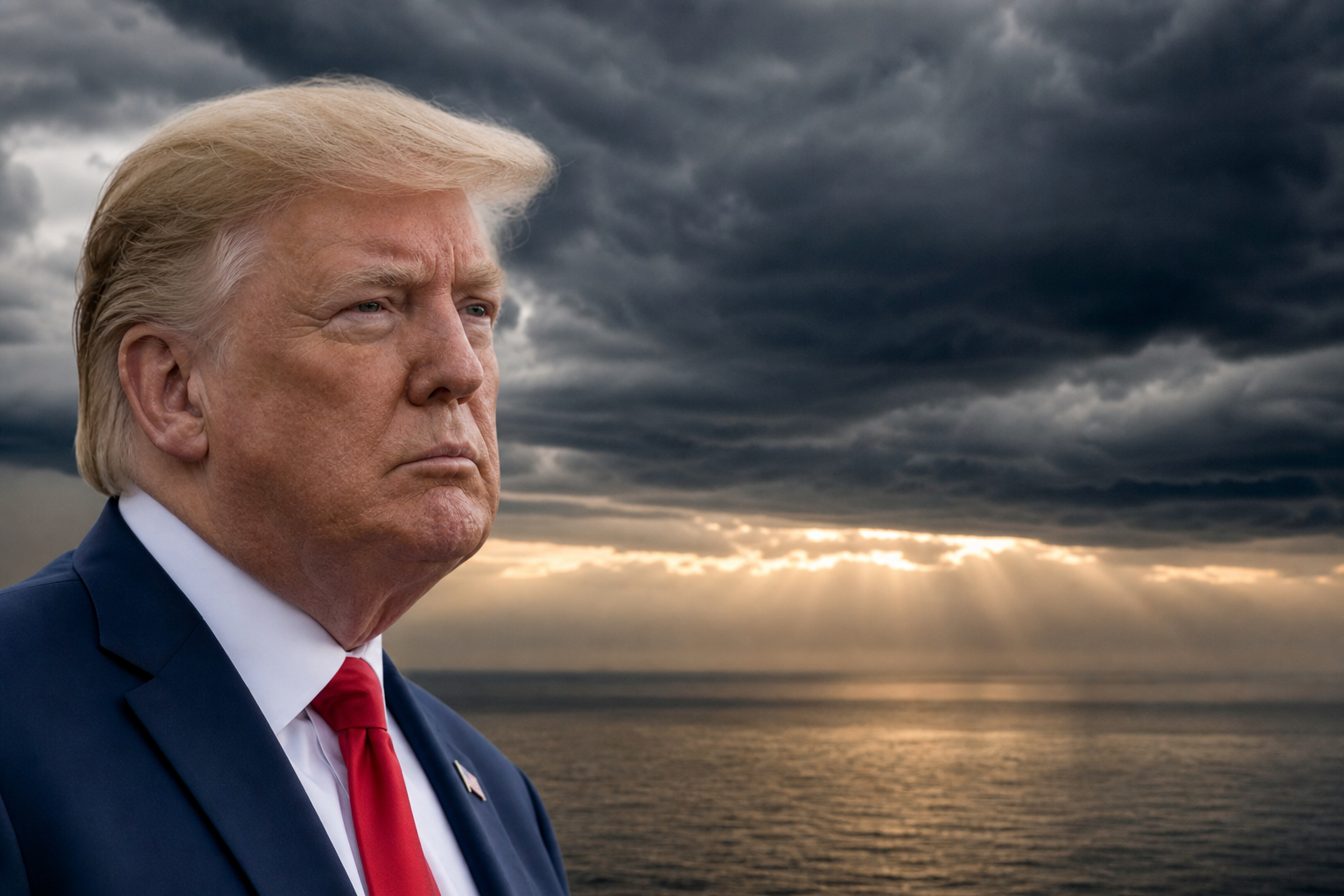
President Donald Trump has posted an AI-generated image on Truth Social depicting himself alongside a U.S. Navy admiral on stormy seas surrounded by Iranian-flagged vessels, captioned "It was the calm before the storm."
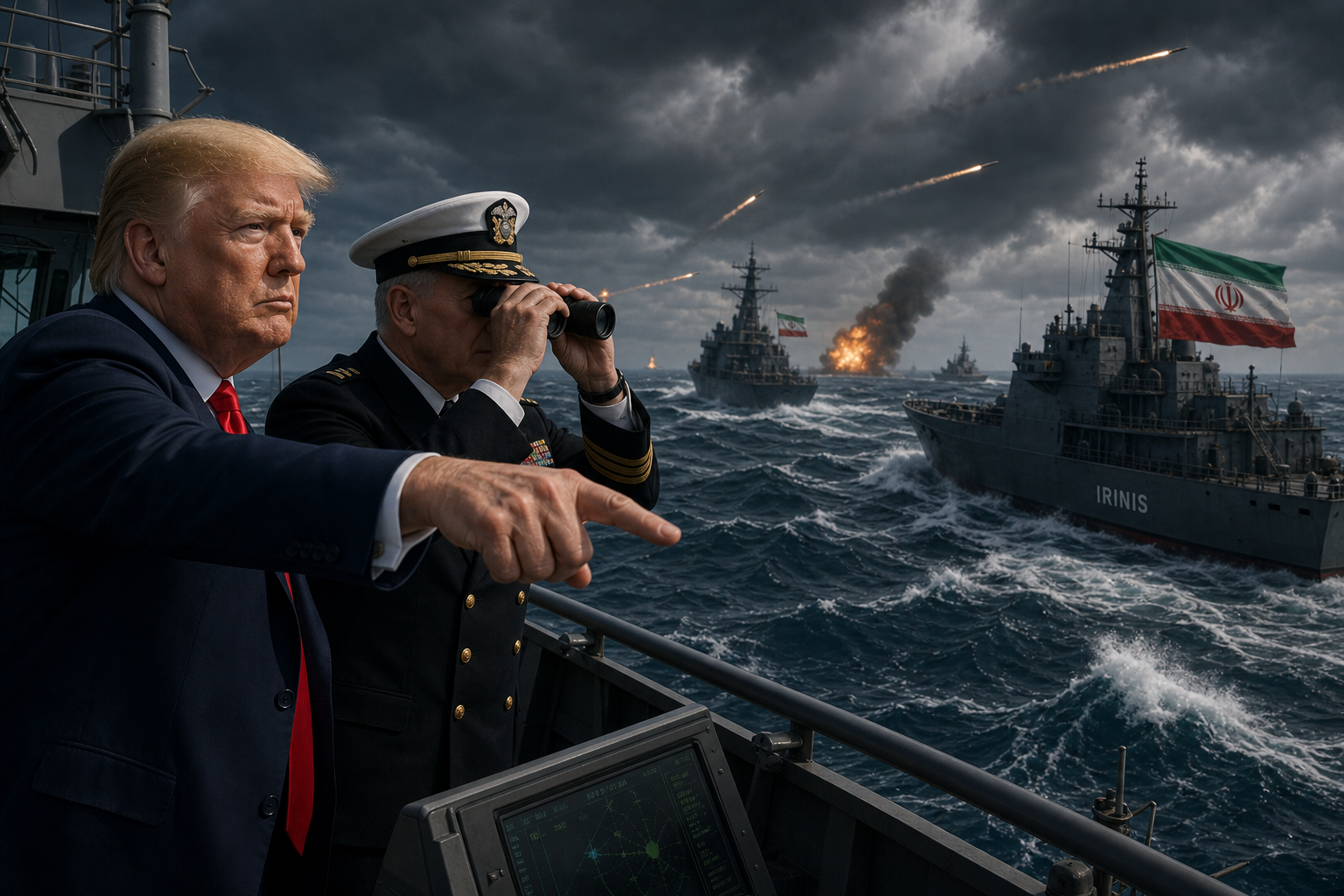
The May 16 post came as reports circulated of a roughly 50-50 chance that U.S. and Israeli forces could resume air strikes on Iranian targets as early as next week. Stalled diplomatic efforts have left both sides preparing for renewed confrontation, according to multiple U.S. officials tracking the situation.
One day later, the Israel Defense Forces confirmed they intercepted several rockets fired by Hezbollah toward Israeli troops operating in southern Lebanon. No injuries or damage resulted from the attempted attack.
Hezbollah separately claimed responsibility for launching a drone swarm toward an IDF base in northern Israel, though Israeli authorities have not confirmed whether those drones were successfully intercepted or caused any impact.
Trump has made clear that Iran will face severe consequences if negotiations collapse. "It will have a 'very bad time' if a peace deal is not reached soon," President Donald Trump stated in remarks tied to the ongoing discussions.
Iranian Parliament Speaker Mohammed Bagher Ghalibaf responded by framing the current standoff in sweeping terms. "The world stands at the cusp of a new order," he declared in a statement reported by regional outlets.
The combination of the social media post and fresh border incidents has heightened concerns that the fragile pause in direct U.S.-Israel operations against Iran may be ending. Military planners in Washington and Jerusalem are reportedly reviewing target lists and strike packages that could be activated within days if intelligence indicates Iranian advances toward nuclear breakout capacity.
Israeli forces have maintained a steady presence along the Lebanon border since the previous round of exchanges. Troops there came under rocket fire on May 17, prompting the IDF to activate its defense systems and return fire at launch sites inside Lebanon. The military stressed that all targeted positions belonged to Hezbollah and that civilian areas were avoided.
The drone claim from Hezbollah adds another layer to the northern front. The group asserted that multiple unmanned aerial vehicles approached an Israeli military facility, testing air defenses already stretched by simultaneous threats from Gaza and Lebanon. Israeli officials have so far offered no public confirmation or denial of the specific incident.
Analysts note that the Strait of Hormuz remains a critical pressure point. Any escalation involving Iranian forces could threaten tanker traffic through the narrow waterway, which carries a significant share of global oil supplies. U.S. Navy assets positioned in the region have conducted additional patrols in recent days, signaling readiness to respond to any attempt to close or disrupt passage.
Trump's image carries echoes of earlier rhetoric from his first term, when he used similar language to describe military movements in the Pacific. The new version substitutes Iranian naval vessels for previous imagery and arrives at a moment when his administration is again balancing diplomatic overtures with explicit military threats.
Israeli security officials continue to monitor Hezbollah's rocket stockpiles and drone capabilities closely. The May 17 rocket barrage, though limited in scale, demonstrated that the group retains the ability to strike at will despite ongoing IDF operations. Defense sources said the interception rate remains high, but commanders warned that sustained barrages could overwhelm systems if multiple fronts activate simultaneously.
Regional diplomats have urged both Tehran and Washington to return to the table before calculations on either side shift toward preemptive action. European capitals in particular have expressed alarm that a fresh round of strikes could draw in additional actors and destabilize energy markets already sensitive to supply disruptions.
Inside Iran, hard-line voices have used the Trump post to rally domestic support. State media highlighted the image as evidence that Washington seeks confrontation rather than genuine negotiation. Ghalibaf's reference to a new global order reflects the narrative that Tehran is prepared to withstand pressure and emerge stronger.
U.S. military sources indicated that naval and air assets remain on heightened alert. Carrier strike groups in the region have adjusted patrol patterns to maintain rapid response options should the president authorize fresh operations. Logistics planners are reviewing munitions stockpiles and forward positioning of aircraft to support potential sustained campaigns.
The events of the past forty-eight hours illustrate how quickly the situation can deteriorate. A single social media post combined with cross-border fire has refocused attention on the risk that limited skirmishes could expand into wider conflict involving multiple countries and critical maritime routes.
Israeli communities near the northern border have been placed on elevated alert. Residents received updated instructions on shelter procedures, and schools in some areas adjusted schedules as a precaution. The IDF has reinforced positions and increased surveillance flights over suspected Hezbollah launch zones.
Trump's warning arrives against a backdrop of previous direct exchanges between U.S., Israeli, and Iranian forces. Earlier rounds of strikes targeted Iranian military infrastructure and proxy facilities, with each side claiming tactical successes while avoiding full-scale war. The current pause appears increasingly fragile as deadlines for diplomatic progress slip.
Observers in Washington noted that the president has consistently used public messaging to shape adversary expectations. The AI-generated image, while theatrical, aligns with a pattern of signaling resolve through unconventional channels before formal policy announcements.
Whether the post foreshadows imminent action or serves as leverage in back-channel talks remains unclear. What is certain is that both the Israeli military and U.S. forces stand ready to respond to any further provocations from Hezbollah or Iranian-aligned groups in the coming days.