
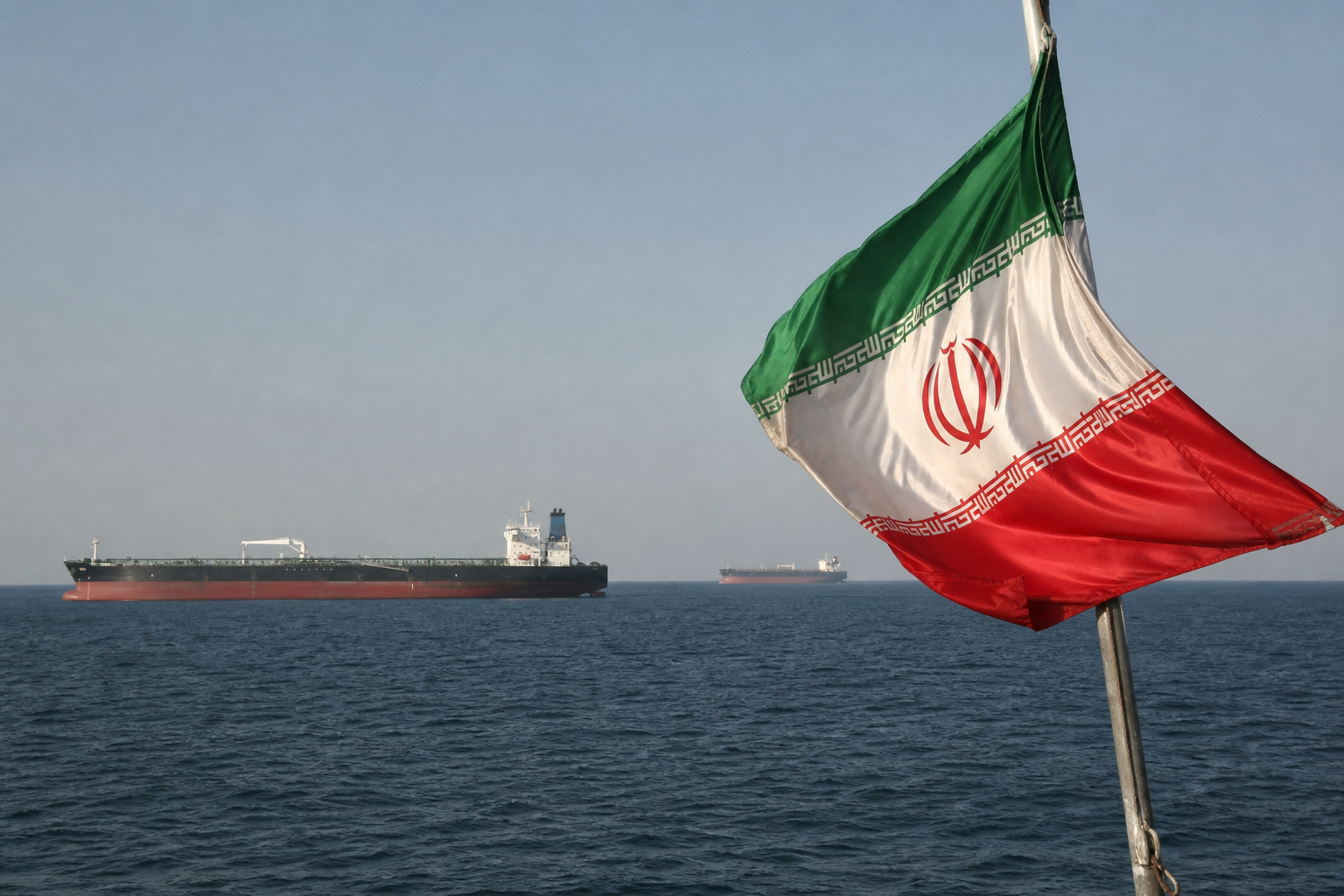
Iran has begun imposing fees on ships transiting the Strait of Hormuz, a move that directly challenges free passage through the waterway that carries twenty percent of global oil trade.
The announcement came on May 16, 2026, when Iranian officials described the new system as a professional mechanism to enforce sovereignty and security. Fees will reach up to two million dollars per vessel or one dollar per barrel depending on ship size, cargo volume and type. Lawmakers confirmed that collection started earlier, with the first payments deposited in central bank accounts on April 23, 2026.
The policy emerged from ongoing ceasefire talks involving the United States, Israel and Iran. Under the proposed protocol, Iran and Oman will jointly administer permits required for safe passage, turning a long-contested chokepoint into a regulated revenue stream.
Geopolitics analyst Ameena Akthar stated that Iran has prepared a professional mechanism to control traffic and slap fees on vessels passing through the Strait of Hormuz, and it will be unveiled soon. Iranian lawmaker Abbas Papizadeh added that lawmakers said Thursday the Islamic republic has begun collecting fees from commercial ships traveling through the Strait of Hormuz.
Washington responded cautiously. Senior State Department officials confirmed that the fee structure was raised during recent indirect talks but stressed that any restriction on navigation would violate long-standing international norms. Israeli energy officials, speaking on condition of anonymity, warned that higher transit costs could push Brent crude above ninety-five dollars a barrel within weeks if major Gulf exporters shift routes.
The Strait of Hormuz remains the sole maritime outlet for oil from Saudi Arabia, Iraq, Kuwait and the United Arab Emirates. Roughly eighteen million barrels move through the narrow waterway daily. Any sustained toll risks immediate price spikes that would reach American refineries on the Gulf Coast and European heating markets by late summer.
Revenues are expected to fund Iranian security operations and infrastructure projects. Officials in Tehran declined to disclose exact figures but indicated that collections already exceed several hundred million dollars from the initial vessels processed under the new permit regime.
Oman, which shares jurisdiction over the southern approaches to the strait, agreed to co-manage the permit system. Muscat views the arrangement as a way to stabilize regional shipping lanes while generating modest income for its own ports and coast guard services.
Shipping executives reported that insurance premiums for Hormuz transits have risen fifteen percent since the first fees were collected. Major operators including Maersk and COSCO are rerouting some empty tankers around the Cape of Good Hope to avoid the new charges, adding twelve days to voyages from the Persian Gulf to Asia.
US Energy Secretary Jennifer Granholm, during a briefing on May 15, noted that American strategic reserves remain sufficient to offset short-term disruptions. She emphasized that Washington continues to monitor Iranian compliance with the ceasefire framework and will respond to any attempt to block neutral shipping.
Israeli Prime Minister’s office released a statement underscoring Jerusalem’s interest in stable energy markets. Defense officials privately assessed that higher oil prices could indirectly strengthen Iran’s proxy financing networks across Lebanon and Syria, prompting renewed calls for tighter sanctions enforcement.
Analysts at the International Energy Agency calculated that a sustained two-dollar-per-barrel transit fee would add roughly thirty-six billion dollars annually to global oil costs. The figure assumes no immediate diversion of cargoes and steady demand from China and India, which together purchase more than half of Hormuz oil exports.
Tehran framed the fees as compensation for security services it provides in the waterway. Iranian Revolutionary Guard naval units have increased patrols since March 2026, coinciding with parliament approval of the toll legislation. Officials claim the patrols deter piracy and smuggling that previously threatened commercial traffic.
European Union foreign policy chief Josep Borrell urged all parties to maintain open navigation during the ceasefire period. Brussels offered to mediate technical discussions on fee transparency and dispute resolution mechanisms to prevent escalation.
Market reaction was immediate. Front-month Brent futures climbed four percent on May 16 to close at ninety-one dollars and forty cents. Traders cited uncertainty over long-term Iranian enforcement as the primary driver rather than any physical blockage.
US Central Command confirmed that American warships continue routine transits without paying the new fees, relying on existing freedom-of-navigation protocols. Officials declined to say whether commercial vessels flying the American flag would receive similar exemptions or be expected to comply.
Israeli energy firms have accelerated plans to increase imports of American liquefied natural gas through Mediterranean terminals. Government sources indicated that two additional regasification units could come online by early 2027 to reduce dependence on Gulf crude routed through Hormuz.
The toll system remains tied to the broader ceasefire negotiations. Both Washington and Tehran have signaled that continued fee collection could serve as leverage in final status talks scheduled for Geneva next month. Diplomats described the mechanism as one of several confidence-building measures under discussion.
Regional analysts expect Oman to play a growing role as honest broker. Muscat maintains open channels with all sides and has hosted several rounds of discreet talks since the March 2026 parliamentary vote that authorized the fees.
Global shipping associations called for urgent clarification on fee schedules and appeal procedures. The International Chamber of Shipping warned that opaque collection practices could lead to arbitrary detentions and higher litigation costs for operators.
Oil ministers from Gulf Cooperation Council states met in Riyadh on May 17 to coordinate a unified response. A joint communiqué condemned any unilateral restriction on Hormuz traffic while stopping short of threatening retaliatory measures against Iranian exports.
Tehran has not yet published the full tariff table. Sources close to the Iranian Oil Ministry indicated that very large crude carriers carrying more than two million barrels will face the maximum two-million-dollar charge, while smaller product tankers will pay scaled amounts based on cargo value.
American lawmakers on Capitol Hill introduced bipartisan legislation that would authorize sanctions on any entity assisting Iran in fee collection. The bill, if passed, could target Omani port operators and insurance companies that underwrite Hormuz voyages.
Israeli officials expressed concern that the fees could embolden Iran to expand similar demands to other strategic waterways, including the Bab el-Mandeb strait near Yemen. Defense assessments now include contingency planning for prolonged high-price environments.
Despite the tensions, commercial traffic through the strait has not decreased. More than one hundred tankers completed permitted transits in the first ten days of the new regime, according to tracking data from maritime intelligence firms.
The long-term impact hinges on whether Iran maintains the ceasefire and whether the United States accepts the fee mechanism as a permanent feature of regional navigation. Both capitals face domestic pressure to demonstrate strength while avoiding renewed open conflict.