
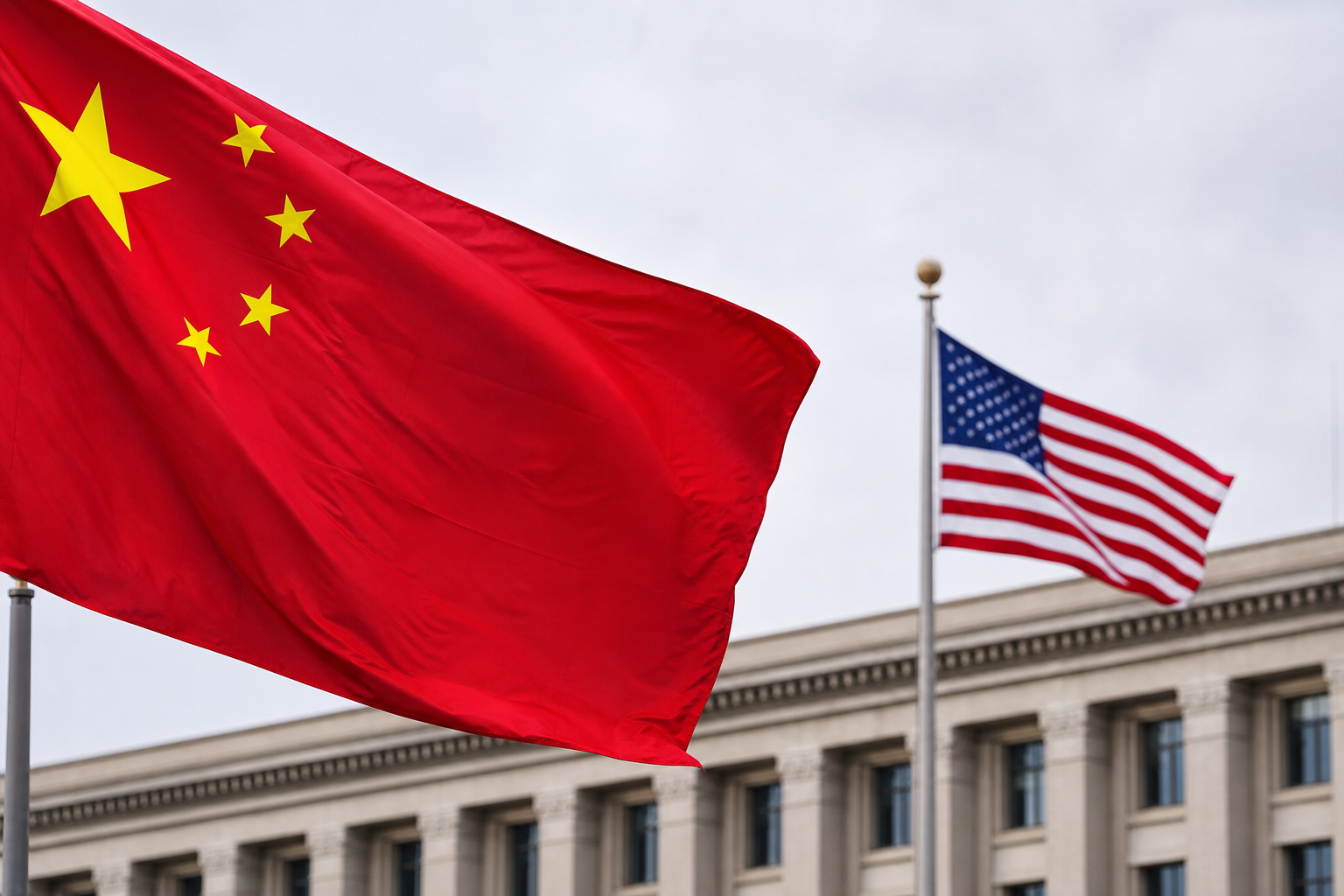
China sanctioned twenty American defense companies and ten executives for their involvement in arms sales to Taiwan.
The announcement on December 26, 2025, marked a significant escalation in Beijing's response to U.S. support for the self-governing island.
Targeted firms include Boeing's St. Louis branch, Northrop Grumman Systems Corporation, and L3Harris Maritime Services, among others.
The sanctions freeze company assets in China and ban all dealings by Chinese entities with the listed firms and individuals.
Beijing urged the U.S. to cease its dangerous efforts to arm the island, the Chinese Foreign Ministry stated.
They will be barred from engaging in China-related import or export activities, and are forbidden to make new investments in China, Xinhua reported.
The U.S. has long provided defensive arms to Taiwan under the Taiwan Relations Act.
This policy aims to maintain peace across the Taiwan Strait.
However, China sees any arms sales as a violation of its sovereignty claims over the territory.
The latest package approved during the Trump presidency included advanced weapons systems that prompted this strong Chinese reaction.
Executives from the companies are also personally sanctioned, meaning they cannot enter China or conduct business there.
Such personal sanctions add pressure on corporate decision makers.
China's sanctions toolkit has grown more sophisticated in recent years.
Beijing has used similar measures against officials in other countries over issues like Hong Kong and Xinjiang.
Now the focus has turned to commercial entities involved in military support for Taiwan.
For Boeing, the St. Louis operations are crucial for military jet production.
Yet the company relies heavily on commercial sales to Chinese carriers for revenue.
This creates a direct conflict between defense contracts and market access.
Northrop Grumman faces similar dilemmas with its technology and systems divisions.
L3Harris Maritime Services could see disruptions in any supply chain links to Chinese ports or vessels.
The ban on import and export activities will sever many business ties.
New investments in China are completely off the table for these entities.
Analysts expect the companies to absorb the hit while seeking alternative markets.
The U.S. government has condemned the sanctions as unjustified.
Officials in Washington argue that the arms sales are purely defensive in nature.
Taiwan faces increasing military pressure from Chinese forces in the region.
Therefore, the U.S. believes it has a responsibility to help the island maintain its security.
This cycle of action and reaction highlights the fragile state of U.S.-China relations.
Both sides have much at stake in the global economy.
Disruptions in defense supply chains could have ripple effects worldwide.
Israel, as a close U.S. ally, watches these developments closely due to its own defense procurement needs.
Any instability in American defense manufacturing could indirectly affect allied nations.
Beijing's move signals a readiness to enforce its sanctions toolkit more aggressively.
Future arms deals with Taiwan may trigger even broader measures.
International observers note that economic tools are becoming primary weapons in geopolitical conflicts.
The Wall Street Journal reported on the context of the Trump-approved arms package.
AP News provided details on the exact number of companies and executives targeted.
Al Jazeera covered the story as part of ongoing cross-strait tensions.
Chinese state media like Xinhua emphasized the prohibitions on import, export, and investments.
The full list of sanctioned parties includes other lesser-known firms in the defense sector.
Each faces the same restrictions on Chinese operations.
Company spokespeople have yet to issue detailed public responses.
They are likely consulting legal teams on compliance strategies.
The sanctions take effect immediately upon announcement.
Chinese banks and businesses must cease all transactions with the targeted entities.
Violations could lead to secondary sanctions on Chinese firms themselves.
This creates a strong deterrent effect.
Over time, the U.S. defense industry may diversify away from reliance on Chinese components or markets.
Such shifts could accelerate trends already underway due to earlier trade disputes.
The executive bans add a personal dimension to the corporate penalties.
Individuals cannot travel to China for business or pleasure under the measures.
Their families might also face indirect restrictions in some cases.
Beijing aims to make the cost of supporting Taiwan clear to decision makers.
Whether this will deter future sales remains to be seen.
The U.S. Congress has shown strong bipartisan support for Taiwan in recent years.
Legislators may push for additional measures to counter China's sanctions.
This could include new export controls or diplomatic initiatives.
The situation remains fluid as both nations navigate the complex relationship.
Global markets reacted with caution to the news of the sanctions.
Defense stocks saw minor fluctuations while Asian markets monitored developments.
Investors seek clarity on the long-term implications for U.S.-China trade.
Taiwan itself expressed appreciation for continued American support.
Officials on the island reaffirmed their commitment to self-defense.
They called for peaceful resolution of differences with the mainland.
China's actions underscore its determination to isolate Taiwan diplomatically and economically.
The sanctions represent one tool in a larger strategy.
Military exercises around the island have also increased in frequency.
These combined pressures test Taiwan's resilience.
The international community calls for restraint from all parties involved.
Dialogue remains the preferred path to avoid miscalculation.
Yet with sanctions now in play, the stakes have risen considerably.
Future responses from Beijing could target more sectors if tensions persist.
The technology and finance industries might be next if provocations continue.
U.S. policymakers must weigh the benefits of Taiwan support against these economic risks.
The balance is delicate and requires careful management.
History shows that sanctions can sometimes backfire by strengthening resolve.
American firms may find ways to mitigate the damage through restructuring.
Time will reveal the true effectiveness of this latest move by China.
Additional details show the sanctions apply equally to subsidiaries and parent operations tied to the listed activities.
Compliance monitoring by Chinese authorities will be strict and ongoing.
Defense industry analysts predict contract reviews and possible diversification efforts within months.
Supply chain audits have already begun at several targeted firms to identify exposure points.
The personal sanctions on executives extend to their immediate professional networks as well.
Board members and key project leads now operate under heightened scrutiny from compliance departments.
Beijing's approach combines economic pressure with clear political messaging.
The goal is to raise the perceived cost of continued arms support for Taiwan.
Whether allied nations adjust procurement strategies in response remains an open question.
American defense production capacity continues to face global demand from multiple partners.
Shifts in Chinese market access could accelerate existing plans to onshore critical manufacturing.
Executives at the sanctioned firms are expected to brief shareholders on mitigation steps in upcoming earnings calls.
The broader U.S.-China strategic competition shows no signs of easing despite these specific measures.
Both capitals continue to develop tools to protect core interests in the Indo-Pacific region.