
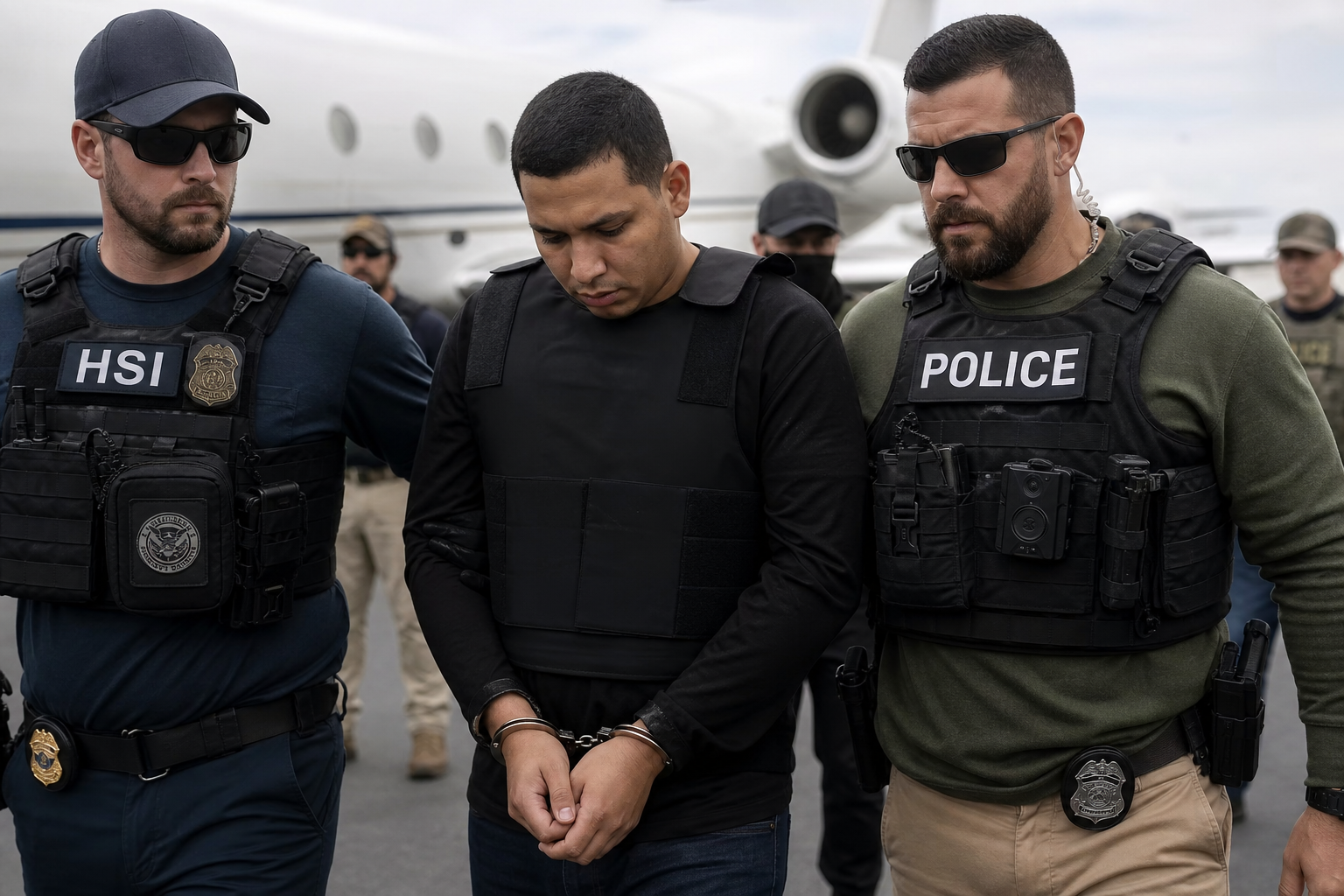
Authorities took custody of Jose Enrique Martinez Flores in Houston on May 15, 2026, marking the first extradition of a Tren de Aragua member on terrorism charges. The process involved careful coordination between multiple agencies to ensure safe transfer and compliance with international protocols.
The 24-year-old, known by the alias Chuqui, arrived from Bogota after Colombian police arrested him on March 31 under a U.S. warrant. He now stands accused of material support to a terrorist organization and international drug trafficking. Additional background checks confirmed his long-standing involvement with the group.
Federal prosecutors say Martinez Flores held a senior position within the gang's operations in Colombia's capital. The charges detail his alleged role directing drug shipments, extortion rackets, and murder operations tied to the Venezuelan-origin criminal group. Investigators compiled extensive evidence from surveillance and informant testimony.
U.S. officials describe the case as a milestone. FBI Director Kash Patel stated, "This is the first time ever that a TdA member has been charged with terrorism-related crimes and been extradited to the U.S." The statement highlights the significance of this legal action in ongoing efforts against organized crime.
The Department of Justice outlined the full scope of allegations in its May 14 press release. Prosecutors charged Martinez Flores with providing material support to a designated foreign terrorist organization, a count added after the U.S. formally labeled Tren de Aragua a Foreign Terrorist Organization in 2025. This designation expanded prosecutorial options significantly.
Additional counts include conspiracy to distribute cocaine and other controlled substances into the United States. Court documents also reference extortion schemes and violent enforcement actions carried out under his direction in Bogota. These activities reportedly spanned several years of operation.
If convicted on all counts, Martinez Flores faces a maximum sentence of life imprisonment along with fines reaching ten million dollars. The combination of terrorism and narcotics charges places the case among the most serious extraditions involving the gang to date. Legal experts anticipate a lengthy trial process ahead.
Colombian authorities cooperated closely with U.S. investigators throughout the process. The March 31 arrest followed months of intelligence sharing between the FBI's Houston field office and Colombian national police units focused on transnational crime. Joint task forces played a key role in gathering actionable intelligence.
Officials in Houston confirmed the defendant's initial appearance before a federal magistrate on May 15. He was ordered detained pending further proceedings, with the case assigned to the U.S. District Court for the Southern District of Texas. Bail was denied due to flight risk concerns and the severity of allegations.
The extradition underscores expanding American efforts against Tren de Aragua cells that have spread from Venezuela into Colombia, Peru, and several U.S. cities. Law enforcement agencies have tracked the gang's involvement in migrant smuggling, retail theft rings, and large-scale narcotics distribution. Monitoring continues across multiple jurisdictions.
Prosecutors emphasize that Martinez Flores ranked higher than any previous Tren de Aragua figure handed over to U.S. custody. His position allegedly allowed him to coordinate cross-border drug routes and enforce internal discipline through violence. This level of authority sets the case apart from prior prosecutions.
The FBI Houston division continues to investigate additional Tren de Aragua networks believed to operate in Texas and neighboring states. Agents expect the current case to yield further leads on both the gang's leadership structure and its financial operations. Ongoing probes may uncover more connections.
Defense attorneys have not yet filed detailed motions, but early court records indicate they may challenge the terrorism designation's application to their client. Hearings on those issues are scheduled for later this summer. Preparation for these arguments is already underway.
Justice Department officials stress that the extradition sends a clear signal to other Tren de Aragua members. They note that the 2025 terrorist designation opened new legal avenues for charging facilitators and leaders who previously faced only traditional criminal counts. This shift in policy has broad implications.
Colombian officials have publicly welcomed the outcome. The cooperation reflects ongoing bilateral work to disrupt criminal organizations that exploit porous borders and weak institutions in the region. Future collaborations are expected to build on this success.
Community groups in Houston that monitor gang activity say the arrival of a high-ranking figure could affect local dynamics. Some fear retaliation or leadership changes inside remaining cells, while others view the extradition as a deterrent. Public safety briefings have been scheduled accordingly.
Federal investigators continue to examine Martinez Flores's communications and financial records seized during the Colombian arrest. Those materials are expected to play a central role at trial. Analysis of digital evidence is progressing steadily.
The case remains in its early stages, with arraignment and discovery proceedings still ahead. Prosecutors have indicated they will seek to present evidence of both the defendant's operational authority and the gang's broader terrorist designation. Timelines for key milestones are being established.
Additional updates are anticipated as the Department of Justice and FBI Houston release further details through official channels. Stakeholders across law enforcement and diplomatic circles are following developments closely.