
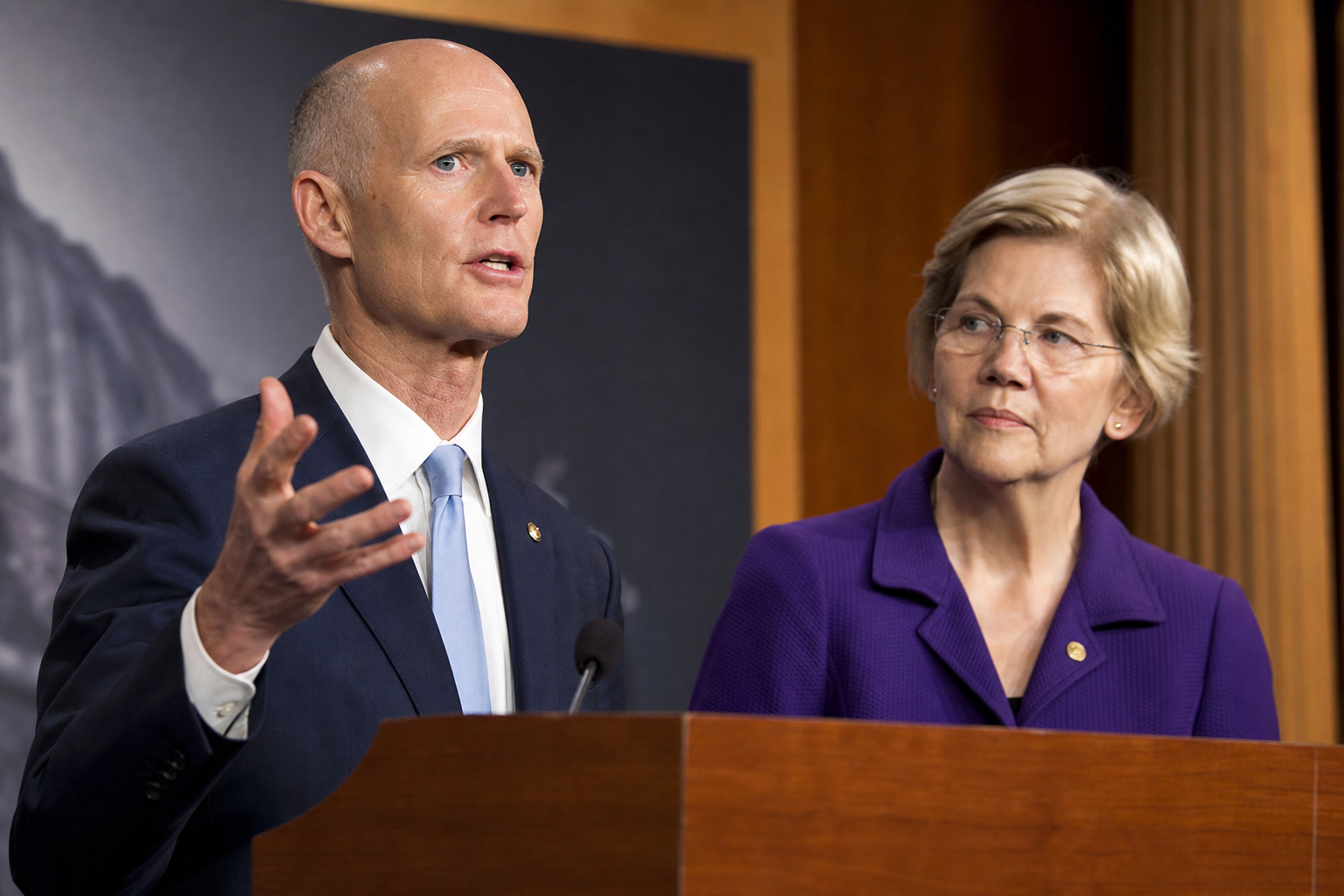
Senators Rick Scott and Elizabeth Warren have joined forces to introduce legislation that would impose a lifetime ban on former members of Congress from lobbying their ex-colleagues.
The Banning Lobbying and Safeguarding Trust Act, introduced on May 14, 2026, targets the revolving door between Capitol Hill and K Street. Current rules permit House members to lobby after one year and senators after two years. The new bill eliminates those waiting periods entirely for former lawmakers and elected officers.
Under the proposal, violators would face fines of fifty thousand dollars for each offense or prison terms of up to five years. The legislation also closes existing loopholes that permit unregistered contacts with former colleagues on policy matters.
Senator Rick Scott described the measure as essential to the original vision of public service. He stated that founders never intended public service to become a training ground for a lifetime of lobbying. Senator Warren and I are working to end this practice once and for all, Senator Rick Scott added.
Scott further noted that trust in institutions has reached historic lows. The revolving door between Capitol Hill and K Street is a big part of that, Senator Rick Scott said during the bill announcement.
Supporters argue that temporary cooling-off periods have proven insufficient. Many former members transition directly into high-paying lobbying roles once the short waiting periods expire. The permanent ban seeks to remove any financial incentive tied to future access.
The bill applies to both representatives and senators as well as certain elected officers. It covers direct lobbying contacts and attempts to influence legislation through former staff networks. Enforcement would rest with the Department of Justice and congressional ethics committees.
Ethics reform advocates have long documented the flow of former lawmakers into lobbying firms. Data from recent election cycles shows dozens of departing members joining K Street within months of leaving office. The BLAST Act would end that pattern by making such employment illegal for life.
Critics of stronger restrictions contend that lifetime bans could discourage qualified individuals from seeking office. They argue that former lawmakers possess valuable expertise that benefits the legislative process when shared appropriately. Backers of the bill counter that public confidence outweighs those concerns.
Similar proposals have surfaced in prior Congresses but failed to advance. The current measure carries bipartisan sponsorship, which may improve its prospects in a closely divided chamber. Senate leadership has not yet scheduled the bill for committee review.
Public opinion surveys consistently show widespread frustration with special interest influence. A permanent ban addresses one concrete channel through which that influence operates. Passage would require lawmakers to forgo a lucrative post-congressional career path that many have followed.
Warren has emphasized rebuilding institutional credibility. She described the revolving door as corrosive to democratic accountability and said the legislation represents a necessary reset. The Massachusetts senator noted that voters expect representatives to serve the public rather than prepare for private sector compensation tied to their former positions.
Implementation details remain under discussion among cosponsors. The bill would apply prospectively to members who leave office after enactment. Existing former members would continue under current cooling-off rules.
Capitol Hill observers expect lobbying organizations to mobilize against the measure. Trade associations and law firms that employ former members have historically opposed expanded restrictions. Their arguments focus on free speech considerations and the value of experienced policy counsel.
Scott and Warren plan to seek additional cosponsors from both parties. They have circulated the text among colleagues and ethics staff for feedback. Early indications suggest modest support beyond the initial sponsors.
The legislation builds on earlier ethics measures such as the Honest Leadership and Open Government Act of 2007. That law established the existing cooling-off periods but left the door open after those windows closed. The BLAST Act closes the door permanently.
Enforcement mechanisms include civil and criminal penalties. The fifty thousand dollar fine per violation would apply to both the former member and any firm directing the prohibited contact. Prison time would be reserved for repeated or egregious cases.
Advocates note that unregistered lobbying already violates existing disclosure laws. The new bill strengthens those provisions by removing any ambiguity about lifetime eligibility. Former members would face clear boundaries rather than temporary restrictions.
Washington watchdogs welcomed the introduction while cautioning that passage remains uncertain. They pointed to past reform efforts that stalled amid partisan disagreements. The bipartisan nature of this bill offers a potential path forward.
Scott represents Florida and Warren represents Massachusetts. Their collaboration highlights rare common ground on government integrity issues. Both senators have previously supported measures targeting special interest influence.
The bill text specifies that the ban covers oral, written, or electronic communications intended to influence legislation. It also prohibits former members from serving as lobbyists on behalf of foreign entities or domestic corporations seeking favorable treatment.
Staff members who worked closely with departing lawmakers would remain subject to shorter cooling-off rules under current law. The BLAST Act focuses its lifetime prohibition on the elected officials themselves.
Passage would mark a significant shift in congressional ethics policy. No prior Congress has approved a lifetime lobbying ban for its own members. The measure tests whether lawmakers are willing to impose permanent limits on their future employment options.