
Israeli democracy enters a decisive phase as fresh data shows limited willingness among citizens to fully embrace whatever government emerges from the October elections.
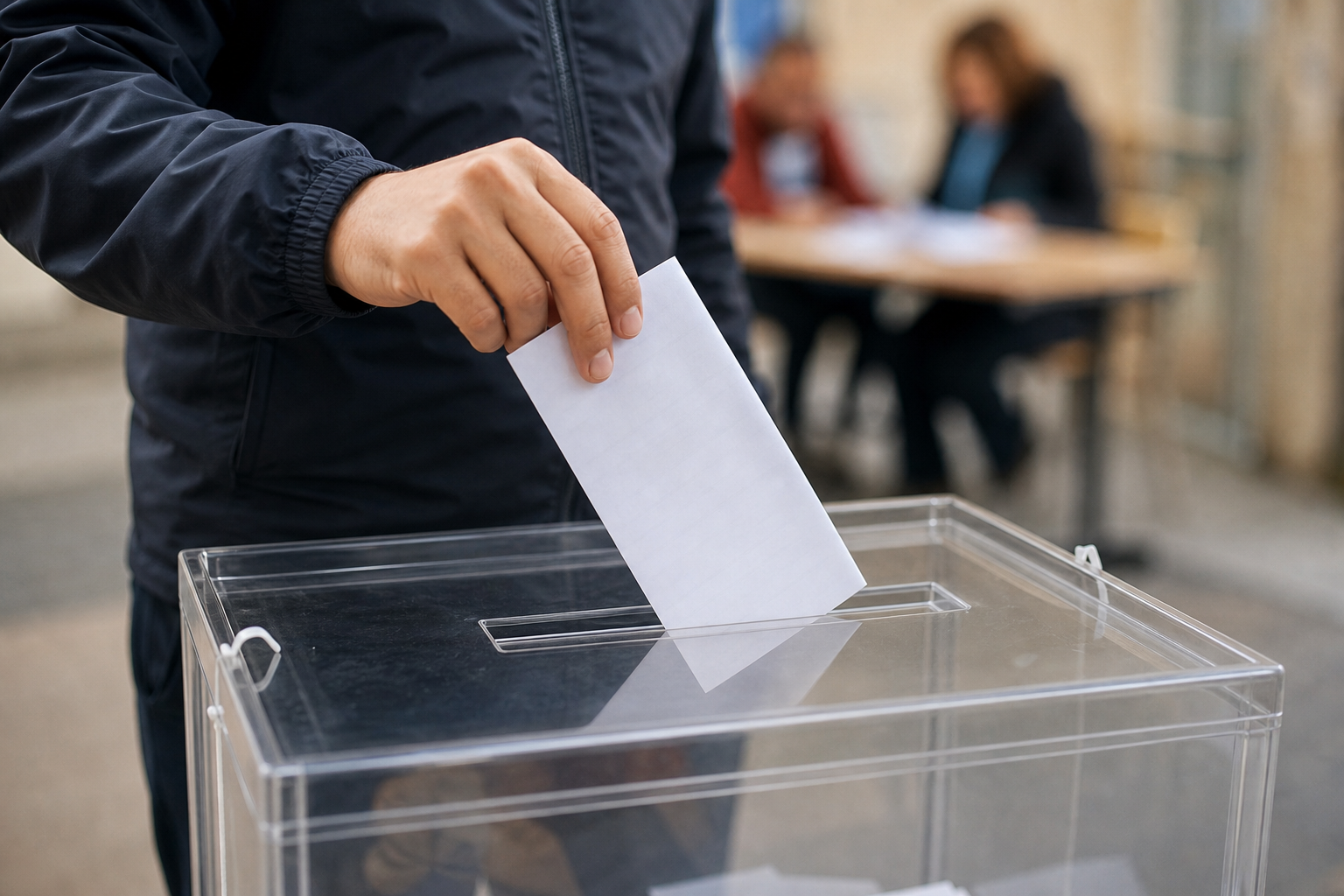
The Jewish People Policy Institute released its Israeli Society Index for May 2026 this week, documenting that just 27 percent of respondents say they will respect any decision the public delivers at the ballot box. That figure marks a modest rise from 23 percent recorded in the institute's March survey.
Overall acceptance numbers sit higher when partial forms of compliance are included, yet the core finding remains stark: nearly three-quarters of the population harbors reservations about honoring results that run counter to their preferences.
Breakdowns by political camp illustrate the depth of these divisions. Among right-wing and center-right respondents, 47 percent described an unfavorable outcome as regrettable but ultimately acceptable as part of life, while only 30 percent expressed full respect for the public's choice.
Left-wing voters displayed markedly higher commitment to democratic norms, with 81 percent indicating they would accept any election decision without reservation.
Arab Israeli respondents registered 40 percent full respect for the public verdict, compared with 24 percent among Jewish citizens, highlighting another layer of variance tied to communal identity and historical experience with state institutions.
These figures arrive as parties across the spectrum finalize lists and strategies for the legislative contest slated for late October. The Jerusalem Post editorial published alongside the poll data argues that citizens have a fundamental duty to permit the resulting government to function once votes are counted.
Failure to extend that basic legitimacy risks repeated cycles of paralysis that have already cost Israel years of stable policy-making in recent decades.
Analysts note that low baseline trust complicates coalition formation, especially when smaller parties sense they can leverage street pressure to overturn unfavorable arithmetic.
Dr. Shmuel Rosner, a senior fellow at the Jewish People Policy Institute who oversaw the survey design, explained that the ideological split reflects differing conceptions of what constitutes legitimate authority.
"Right-leaning voters often view institutions through a lens of accumulated grievances, while left-leaning cohorts maintain higher confidence that the system ultimately delivers fair outcomes," Rosner stated during a briefing in Tel Aviv.
Similar patterns surfaced in earlier JPPI indices, yet the current numbers arrive at a moment when external security pressures make prolonged domestic friction particularly costly.
Former National Security Council head Yaakov Amidror warned that adversaries monitor Israeli internal cohesion closely and adjust operational plans accordingly when they perceive weakness.
"Any signal that election results will face sustained domestic sabotage invites testing along the borders and in regional theaters," Amidror said in an interview this month.
Arab Israeli leaders have voiced their own concerns about acceptance. MK Mansour Abbas of the United Arab List stressed that minority communities have historically shouldered the burden of proving loyalty to state institutions even when policies disadvantage them.
"We participate in elections because we believe the democratic framework offers the best path to improve our situation," Abbas remarked at a joint forum with Jewish civic groups in Haifa.
His comments underscore why Arab respondents showed higher baseline respect than the Jewish average despite lower absolute trust in many state functions.
Center party strategists meanwhile emphasize practical governance needs. Former finance minister Yair Lapid argued that repeated challenges to electoral mandates have already damaged Israel's credit rating and deterred long-term investment.
"Businesses require predictability, and predictability begins with knowing who will hold power after the votes are tallied," Lapid told reporters outside the Knesset.
Right-wing figures counter that skepticism stems from concrete past experiences rather than abstract ideology. Coalition whips from the Likud party point to multiple instances in which judicial or media interventions altered the effective outcome of voter mandates between 2019 and 2022.
They insist that genuine acceptance requires reciprocal confidence that all branches of government will respect the electoral verdict.
The editorial in The Jerusalem Post frames the issue as a civic obligation that transcends partisan disappointment. It calls on citizens to channel disagreements into parliamentary debate and future elections rather than extra-institutional disruption.
Survey data suggests education and income levels also correlate with acceptance rates, though ideology remains the dominant variable.
Respondents in central urban districts registered modestly higher respect levels than those in peripheral development towns, a pattern consistent with earlier JPPI findings on institutional trust.
Security officials have privately conveyed alarm that sustained post-election friction could divert intelligence resources and delay critical budget approvals for defense programs.
With regional tensions elevated, even short delays carry operational consequences.
International observers have begun noting the poll numbers as well. A European Union delegation monitoring democratic standards in candidate and partner countries cited the JPPI index in its latest regional assessment.
The delegation urged all Israeli factions to reaffirm commitment to peaceful power transfer as a cornerstone of shared democratic values.
Domestic civil society organizations plan a series of public campaigns in the coming weeks aimed at reinforcing election legitimacy. Groups spanning the political spectrum have pledged joint statements emphasizing that governance must proceed once results are certified by the Central Elections Committee.
Historians of Israeli politics recall that the country endured five elections in under four years during the last prolonged impasse, producing policy gridlock on issues from infrastructure to national security doctrine.
Public fatigue with that period remains palpable in focus groups conducted by the same institute.
Economists at the Bank of Israel have modeled scenarios in which post-election protests lasting more than two months could shave 0.8 percentage points off annual growth, primarily through delayed capital expenditure and tourism cancellations.
Those projections assume moderate-scale demonstrations rather than widespread civil disobedience.
Religious Zionist leaders have called for reciprocal commitments from state institutions, arguing that acceptance flows more readily when governments demonstrate equal application of the law across sectors.
They reference disputes over military draft exemptions and land policy as examples where perceived double standards erode confidence.
Left-leaning academics respond that institutional reforms should occur through legislation, not through conditioning acceptance of electoral outcomes.
The debate illustrates how quickly technical disagreements slide into fundamental questions of democratic reciprocity.
JPPI researchers plan follow-up surveys after the final candidate lists are published in September to track whether campaign rhetoric further shifts acceptance levels.
Early indications suggest that tone from party leaders will prove decisive in either narrowing or widening the current gaps.
Regardless of the eventual coalition arithmetic, the editorial concludes that the true test of Israeli resilience lies not in who wins but in whether the loser accepts the result long enough for the new government to address urgent national priorities.
Those priorities include inflation control, hostage return negotiations, and northern border stabilization, none of which tolerate extended domestic paralysis.
Citizens on all sides of the spectrum will soon face a concrete choice between continued contestation and the routine transfer of power that underpins stable governance in any democracy.