
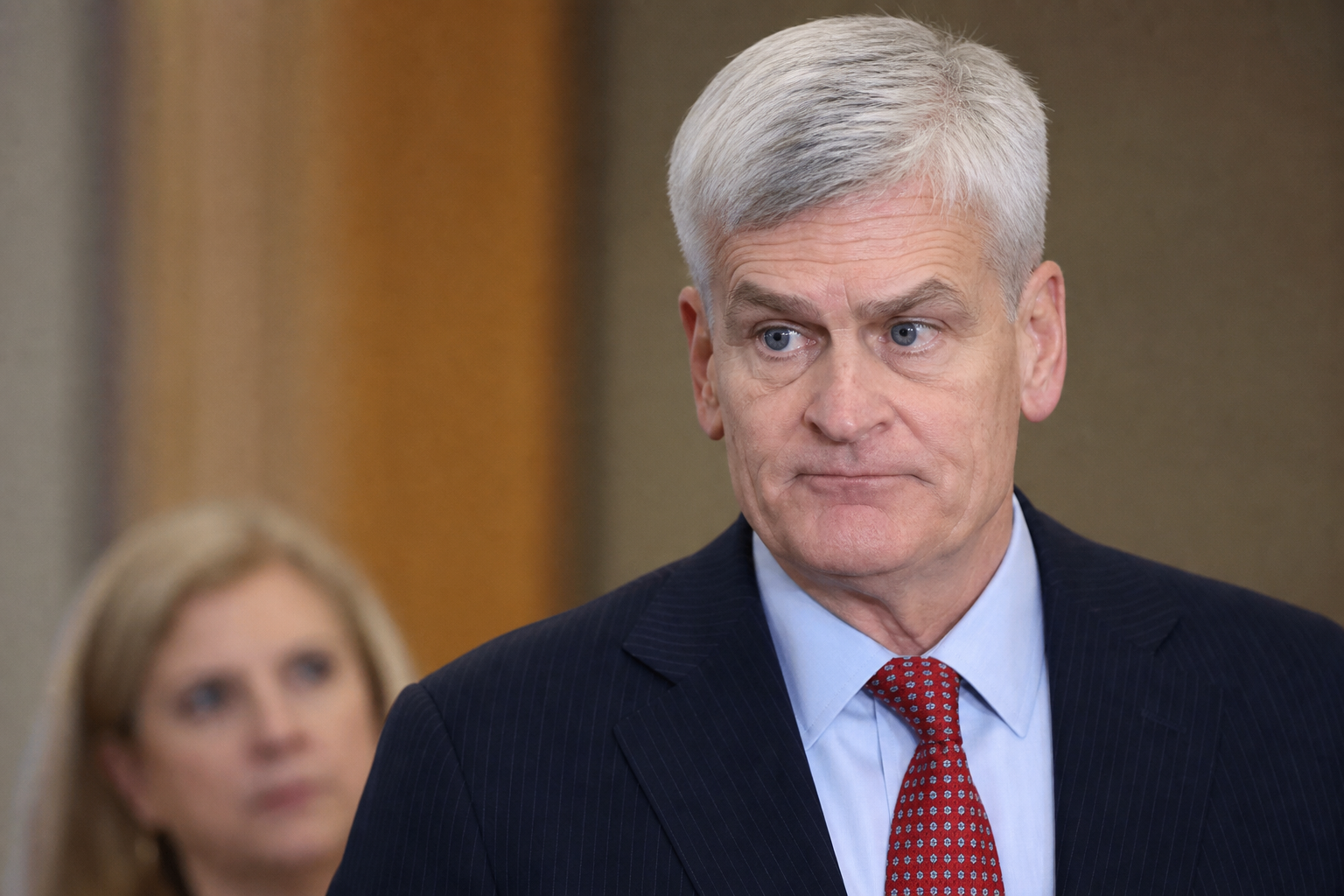
Bill Cassidy's stunning primary defeat delivers a clear message to any Republican who has incurred President Trump's displeasure.
The Louisiana senator failed to advance in the May 16 primary, finishing behind two Trump-endorsed candidates. Rep. Julia Letlow and former congressman John Fleming will compete in the June 27 runoff. Cassidy's ouster follows directly from his 2021 vote to convict Trump during the Senate impeachment trial over the January 6 Capitol riot.
Trump celebrated the result on social media with characteristic bluntness. He declared that disloyalty to the man who got him elected is now a part of legend, and it’s nice to see that his political career is OVER!
The president has treated Cassidy's impeachment vote as an unforgivable breach. Five years later, that single action defined the senator's fate in a state Trump carried decisively in recent elections. Trump-backed challengers poured resources into the race and mobilized voters who prioritized loyalty above all else.
U.S. Senator Lindsey Graham of South Carolina put the outcome in plain terms. He stated that Sen. Bill Cassidy lost his Louisiana primary because he 'tried to destroy' President Trump.
The Louisiana contest followed an earlier pattern. In early May, Trump-backed candidates defeated Indiana state senators who had resisted the president's preferred redistricting maps. Those victories showed how quickly organized opposition can remove sitting Republicans when the White House targets them.
Attention has shifted immediately to Kentucky. Rep. Thomas Massie will face voters on Tuesday in a primary Trump has already framed as another test of loyalty. Massie has drawn repeated criticism from the president for opposing certain spending packages and foreign aid requests that the White House supported.
Massie built his record on consistent skepticism toward expansive federal budgets and interventions abroad. That independence once helped him win comfortable reelections in his western Kentucky district. It now places him directly in the path of the same forces that ended Cassidy's Senate career.
Trump has urged Kentucky Republicans to replace Massie with a candidate who will support the administration's full agenda. The president has used social media and public appearances to remind voters of past disagreements, echoing the tactics that worked against Cassidy.
Observers view these races as part of a deliberate strategy to reshape the Republican conference. Lawmakers who once calculated that policy differences could be managed now confront well-funded primary opponents who campaign almost exclusively on loyalty to Trump.
Cassidy entered the Senate in 2014 after serving as a physician and Louisiana state legislator. He focused on health care and energy policy during his tenure. None of those accomplishments offset the damage from his impeachment vote among the president's core supporters.
The state's jungle primary system placed every candidate on a single ballot. Cassidy could not consolidate enough support to reach the runoff despite his name recognition and fundraising. Letlow, a sitting House member, and Fleming, a veteran conservative, split the pro-Trump vote but still left the incumbent far behind.
Both runoff candidates have pledged full alignment with Trump's priorities on border security, trade policy, and judicial selections. Their presence guarantees the eventual nominee will carry an explicit pro-administration message into the general election against Democrats.
Political operatives across Washington watched the Louisiana results closely. They noted heavy outside spending from groups aligned with Trump that hammered Cassidy's record on impeachment and subsequent legislative disagreements. Similar advertising is already prepared for the Kentucky contest.
Massie has not altered his public stance. He continues to emphasize fiscal restraint and limited government even as the president mobilizes against him. His campaign will test whether those principles can withstand a direct challenge from the White House and its allies.
The broader Republican Party now operates under different rules. Primary voters have repeatedly demonstrated willingness to punish incumbents who break with Trump on high-profile issues. This reality affects every calculation about upcoming legislation and committee assignments.
State-level officials have also felt the pressure. The Indiana redistricting fights showed that even legislators far from Washington can become targets when they resist Trump-backed maps or policies. Success there encouraged further interventions at the federal level.
For senators and representatives who voted for impeachment or opposed later Trump priorities, the lesson is unambiguous. Past service and local popularity offer limited protection once the president decides to settle scores in a primary.
Cassidy's defeat removes one voice from the Senate who occasionally diverged from the administration. The June runoff will produce a nominee far less likely to repeat that pattern if elected.
Massie's Tuesday primary will provide the next data point. Kentucky voters will decide whether to retain an independent conservative or select a replacement more closely aligned with the president's direction for the party.
Other potential targets remain on watch lists inside and outside Congress. Any Republican who has criticized Trump-backed spending, questioned administration foreign policy, or voted against key priorities now weighs the same risks Cassidy faced.
The pattern of enforced loyalty is reshaping incentives throughout the party. Members who once prized independence now face organized campaigns that frame disagreement as betrayal rather than legitimate policy debate.
Trump has shown he can sustain these efforts across multiple states and levels of government. His early involvement in races like Cassidy's and the Indiana contests has produced measurable results that encourage repetition elsewhere.
Louisiana Republicans who supported Cassidy for years ultimately placed greater weight on the impeachment vote. That shift reflects the lasting power of grievances the president has kept alive since leaving office the first time.
The outcome also affects the general election landscape. A Trump-aligned nominee in Louisiana will likely face a Democratic opponent in a state that has trended Republican in federal contests but still requires attention to local issues.
Massie enters his primary with a record of winning previous challenges through grassroots support. The scale of opposition this time, however, exceeds anything he confronted before.
Trump's ability to define the terms of these fights gives him a structural advantage. Challengers receive endorsements, donor lists, and activist energy that incumbents who have crossed the president struggle to match.
Cassidy's political career now appears finished, exactly as the president predicted in his victory message. The warning to others remains in force as additional primaries approach.
Republicans in safe districts and states must decide how much independence they can afford. The Louisiana result provides one concrete example of the cost when that calculation proves wrong.