
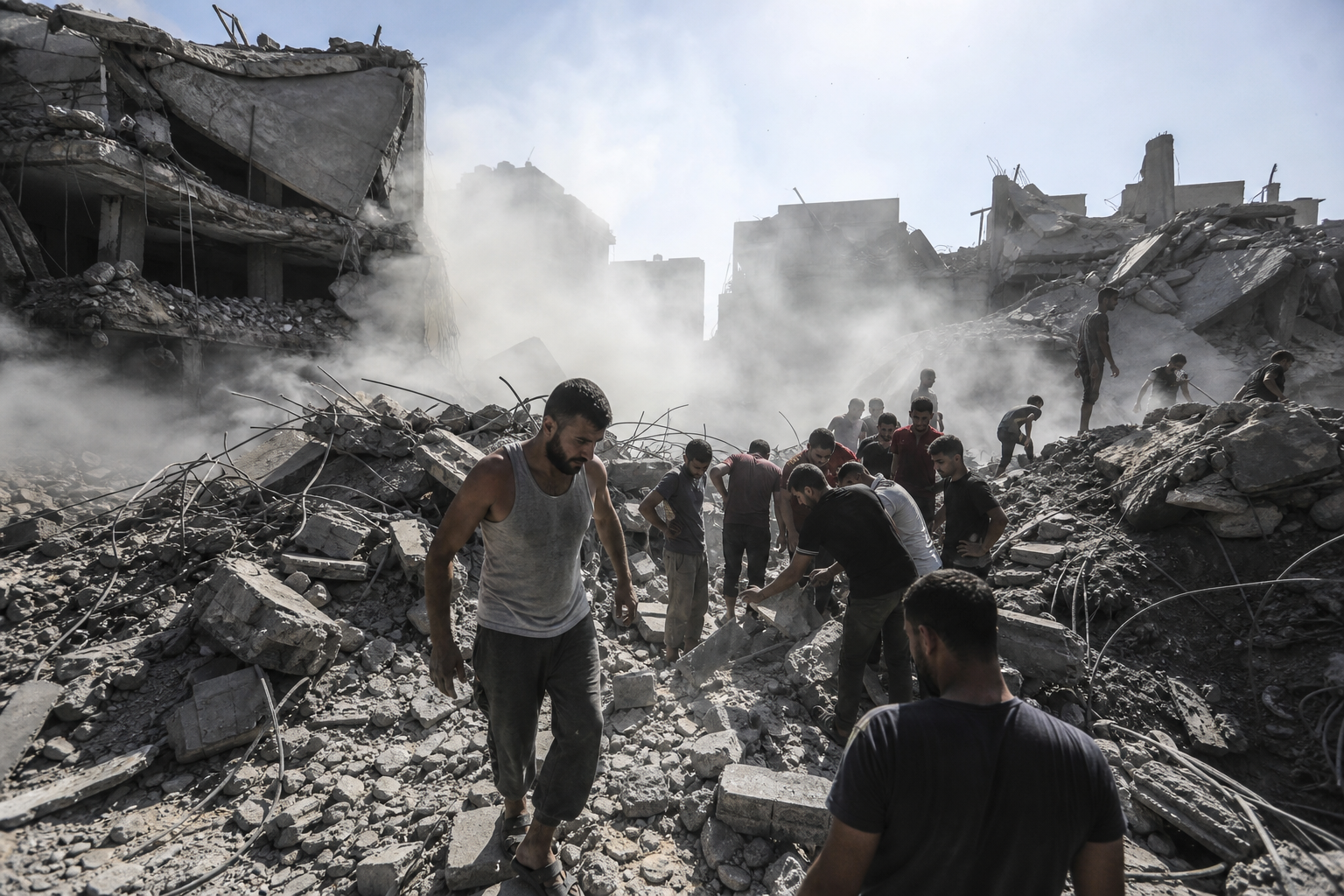
Israeli airstrikes killed 18 people and wounded 124 others across southern Lebanon over the past 24 hours.
Lebanon’s Health Ministry released the figures on May 16, 2026, marking another deadly day in an escalation that began on March 2. The strikes hit wide areas of the south, with local media reporting Israeli ground troops present in several zones near the border.
The Israel Defense Forces said the operation focused on Hezbollah infrastructure. Military officials stated that airstrikes struck militants who were preparing to launch rockets toward Israeli troops positioned in southern Lebanon. The IDF also issued evacuation orders for residents of nine villages ahead of further strikes.
These actions represent the first major airstrikes on Hezbollah targets since a 45-day ceasefire extension took effect. The military described the targets as active rocket-launch sites and command positions used by the group.
Haaretz reported the Lebanese Health Ministry’s daily update without independent verification of the individual strike locations. The newspaper noted that the casualties occurred in multiple villages but provided no breakdown by site.
L’Orient Today updated the cumulative toll since the escalation began on March 2, 2026. As of May 16 the total stood at 2,969 killed and 9,112 wounded across Lebanon.
Times of Israel reporter Emanuel Fabian wrote that the IDF launched a wave of airstrikes on Hezbollah infrastructure in southern Lebanon. He added that the military issued fresh evacuation warnings for civilians in the affected zones.
One strike reportedly landed near Harouf, where residents described hearing multiple explosions followed by secondary blasts consistent with stored munitions. Local accounts mentioned thick smoke rising from several ridges overlooking the Litani River.
Israeli ground forces maintained a visible presence in at least three sectors along the border fence. Armored vehicles and engineering units conducted route-clearance operations while drones provided overhead cover.
The IDF said the ground activity was limited to defensive measures and did not constitute a broader invasion. Spokespersons emphasized that troops remained inside Lebanese territory only to neutralize immediate threats to Israeli communities.
Lebanese officials condemned the strikes as violations of the ceasefire framework. They called for international intervention to restore the November 2024 agreement that ended the previous round of fighting.
Residents in the targeted villages received evacuation notices through automated phone calls, text messages, and loudspeaker announcements from nearby mosques. Many families left before dawn, carrying minimal belongings in private cars and shared taxis.
Medical teams in nearby hospitals worked through the night to treat the wounded. Facilities in Tyre and Nabatiyeh received the majority of the casualties, according to ministry updates.
The strikes came hours after Hezbollah fired several salvos of rockets toward northern Israel. The Israeli military said those projectiles were intercepted or fell in open areas, causing no injuries.
Analysts tracking the conflict noted that both sides appear to be testing the limits of the current ceasefire extension. Each side accuses the other of initiating the latest round of exchanges.
United Nations peacekeepers stationed in the area reported increased patrols but said they had not observed large-scale movements by either army. The peacekeeping force urged restraint from all parties.
Israeli communities near the border remained under partial evacuation orders issued earlier in the month. Schools in several towns stayed closed while families continued to live in temporary housing farther south.
Lebanese Prime Minister Najib Mikati convened an emergency security meeting to discuss the rising casualty count. He instructed diplomats to raise the issue at the United Nations and with key European capitals.
Israeli Defense Minister Yoav Gallant stated that operations would continue as long as Hezbollah maintained rocket capabilities near the border. He described the current actions as necessary to prevent future attacks on Israeli civilians.
Local Lebanese media circulated videos showing destroyed buildings and cratered roads in the affected villages. The footage could not be independently verified in real time.
The cumulative death toll of 2,969 since March 2 includes both civilians and combatants, according to Lebanese authorities. The ministry does not release separate figures for Hezbollah fighters.
Israeli officials maintain that the majority of those killed have been Hezbollah members. They cite intelligence assessments that the group has lost several senior commanders in the recent strikes.
Humanitarian organizations operating in southern Lebanon warned of worsening conditions for displaced families. Many residents have now spent more than two months away from their homes.
Food and medicine supplies in some border villages are running low, aid workers said. Access remains restricted due to ongoing military activity and damaged roads.
The 45-day ceasefire extension was agreed upon in early April after weeks of indirect negotiations. Both sides committed to halting major offensive operations while talks on a longer-term settlement continued.
Despite the extension, low-level exchanges have persisted almost daily. Hezbollah has continued to fire anti-tank missiles and rockets at Israeli positions, while Israel has responded with artillery and occasional airstrikes.
The latest wave of airstrikes began shortly after midnight on May 15 and continued intermittently through the following afternoon. The IDF said more than 20 targets were hit.
Residents who remained in the villages despite warnings described spending the night in basements or shelters. Several reported power outages after strikes damaged local electricity infrastructure.
Israeli troops positioned near the border fired illumination rounds throughout the night to monitor movement. The flares created an eerie glow visible from several kilometers away.
Lebanon’s Health Ministry appealed for blood donations to meet demand at hospitals treating the wounded. Officials said the number of injured exceeded the capacity of some smaller clinics.
International diplomats continued efforts to broker a more durable cease-fire. U.S. and French envoys held separate calls with officials in Beirut and Jerusalem over the weekend.
The situation remains fluid, with both militaries maintaining high alert levels along the border. Further strikes cannot be ruled out if Hezbollah attempts to launch additional rockets, Israeli officials warned.