
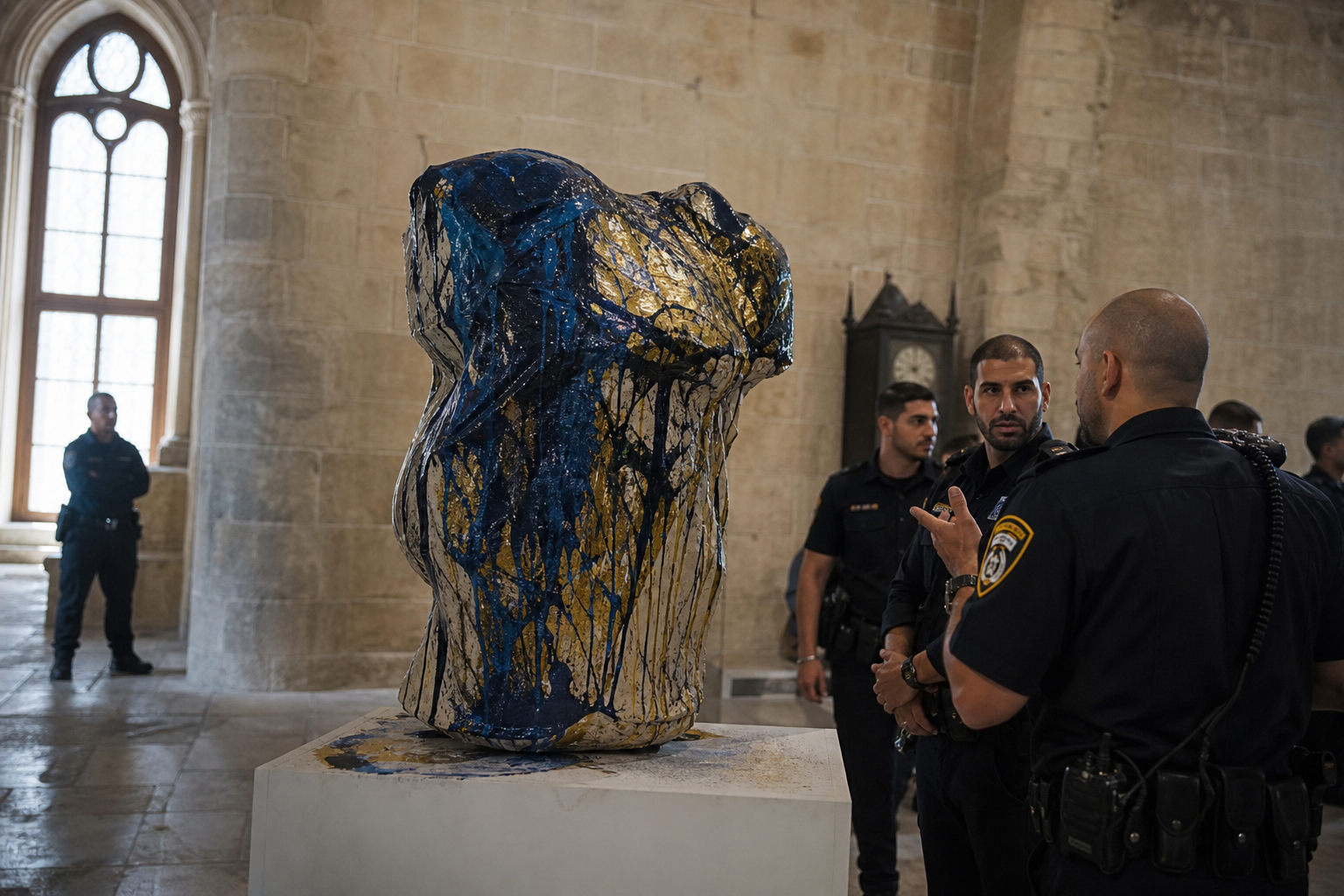
Tensions over Israel's participation in major cultural events have escalated dramatically this month, turning art itself into a battleground from Venice to Jerusalem.
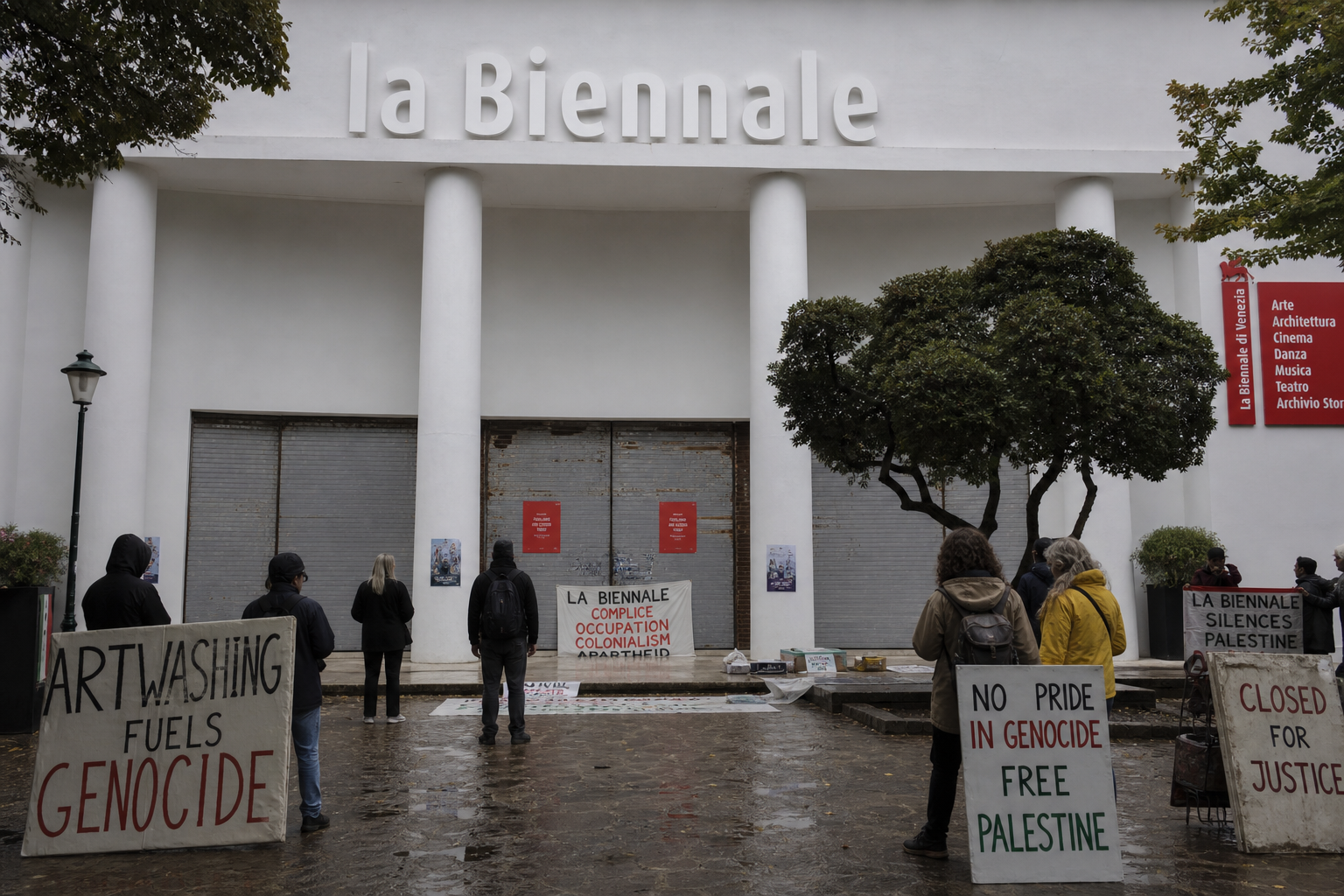
The Venice Biennale, long regarded as a premier platform for international artistic exchange, opened under extraordinary strain. A five-judge jury resigned in late April after demanding the exclusion of both Israel and Russia, citing International Criminal Court arrest warrants issued for Prime Minister Benjamin Netanyahu and Russian President Vladimir Putin. Organizers postponed the awards from May until November, leaving the competition without official recognition during its initial weeks.
A coordinated artist strike closed roughly a dozen national pavilions on May 8 and 9. Pro-Palestinian participants shuttered their spaces to protest Israel's continued presence. The action created visible gaps along the Giardini and Arsenale sites, forcing visitors to confront empty halls where works would normally be displayed.
The New York Times reported that the strike drew participation from artists across multiple countries and left several pavilions completely inaccessible during peak visiting hours. AP News described the opening days as tense, with demonstrations outside the grounds and limited programming inside due to the absences.
Israeli officials maintained that such measures contradict the Biennale's founding principles of open dialogue. Culture editor Jessica Steinberg noted in her May 15 briefing that the events illustrate how political disputes now routinely reach into artistic spaces once considered insulated from state conflicts.
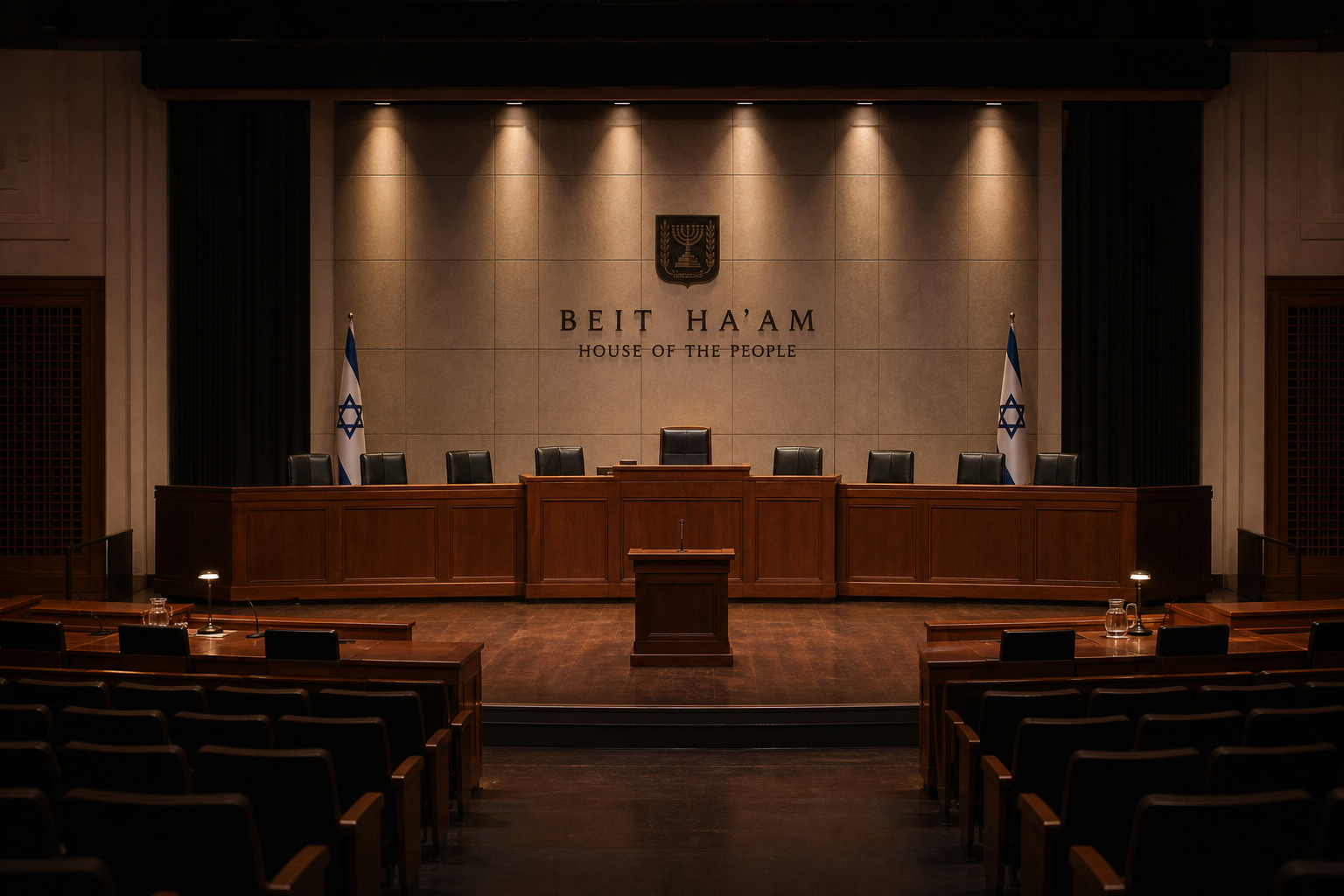
Across the Mediterranean, Jerusalem's Beit Ha'am theater hosts a different form of historical reckoning. Playwright Motti Lerner has staged "The Eichmann Trial," which runs through May 2026 on the precise platform where the 1961 proceedings against Adolf Eichmann occurred. The production places audiences in the same hall where the Nazi official faced charges for his central role in organizing the deportation and murder of millions of Jews.
Lerner drew directly from trial transcripts to construct the script. Performances recreate the testimony of survivors and the arguments presented by prosecutor Gideon Hausner, allowing contemporary viewers to experience the legal confrontation that helped establish foundational narratives of the Holocaust for Israeli society and the wider world.
The choice of venue amplifies the production's impact. Every performance occurs beneath the same high ceilings and before the same wooden benches that framed Eichmann's glass booth more than six decades earlier. Theatergoers report a heightened sense of immediacy as the drama unfolds in its authentic location.
While the play examines past accountability, another ceremony in Jerusalem affirmed ongoing creative achievement. On April 20, Yaacov Agam received the 2026 Israel Prize for Visual Arts. The 96-year-old artist, renowned for pioneering kinetic and optical works that shift with viewer movement, accepted the nation's highest cultural honor in a ceremony attended by government and artistic leaders.
Agam's career spans more than seventy years and includes major installations at museums worldwide. His geometric compositions and interactive pieces emphasize perception and change, themes he has linked to Jewish philosophical traditions. The Israel Prize committee cited his lifelong contribution to expanding the boundaries of Israeli visual expression.
Steinberg connected these threads in her briefing, observing that artistic spaces continue to serve as arenas where Israel's place in the world is contested and affirmed simultaneously. The Biennale disruptions, the Eichmann reenactment, and Agam's recognition together reveal culture's persistent role in processing national memory and current conflicts.
The Times of Israel coverage throughout early May documented each development with on-site reporting from Venice and Jerusalem. Journalists tracked the jury's departure, the strike's scope, the play's sold-out runs, and the prize ceremony's proceedings. Their accounts provide a continuous record of how Israeli artists navigate external pressure and internal reflection.
Observers note that the Venice protests reflect broader patterns seen at other international festivals this year. Pavilions representing nations under ICC scrutiny have faced similar calls for removal, testing the Biennale's commitment to universal participation. Israeli artists whose works address universal themes rather than politics have nevertheless found their exhibitions affected by the closures.
In Jerusalem, the Eichmann production arrives at a moment when public interest in Holocaust education remains high. Schools and community groups have booked blocks of seats, extending the play's reach beyond regular theater audiences. Directors report post-show discussions that link the trial's legal questions to contemporary debates over justice and remembrance.
Agam's award underscores Israel's ongoing investment in visual arts despite external controversies. The artist, who has lived and worked in Paris and New York as well as Tel Aviv, represents a generation that established Israel's presence on the global art map. His acceptance speech emphasized creativity as a core Jewish value, a message that resonates with supporters seeking to separate artistic achievement from political disputes.
These parallel stories illustrate the dual pressures facing Israeli culture in 2026. International forums apply political litmus tests while domestic institutions use performance and prizes to preserve historical memory and honor living creators. The result is a cultural landscape where art functions simultaneously as target, witness, and affirmation.