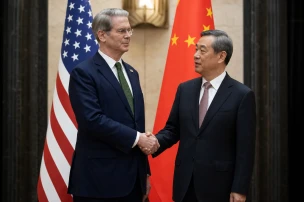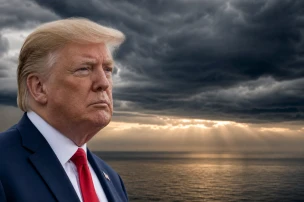

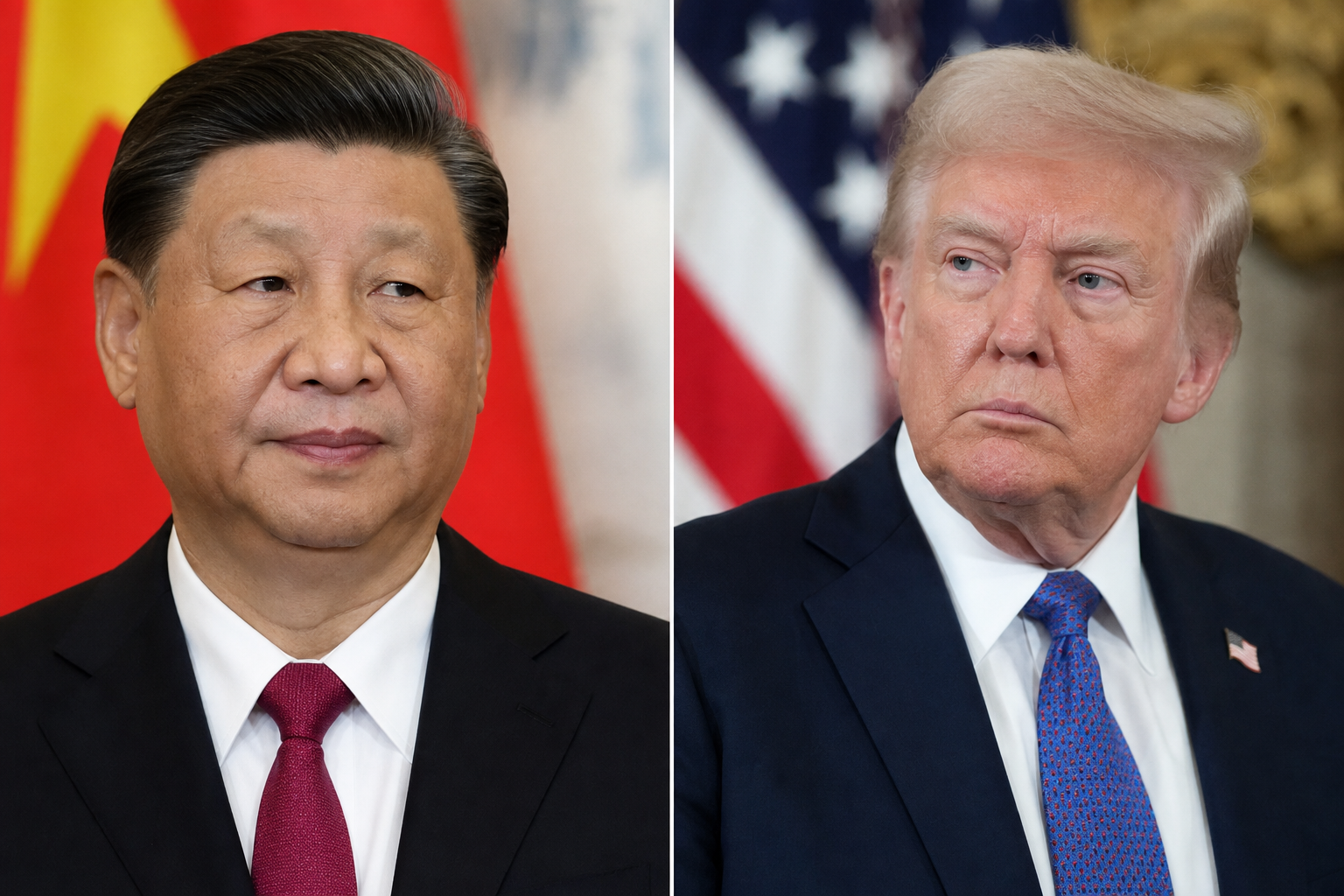
Chinese President Xi Jinping delivered a blunt message to President Donald Trump in Beijing that mishandling Taiwan could drive the two powers toward open conflict.
The warning came during private talks on May 14, 2026, focused primarily on trade, technology restrictions, and Iran's nuclear program. Xi described Taiwan as the single most important issue dividing the two nations.
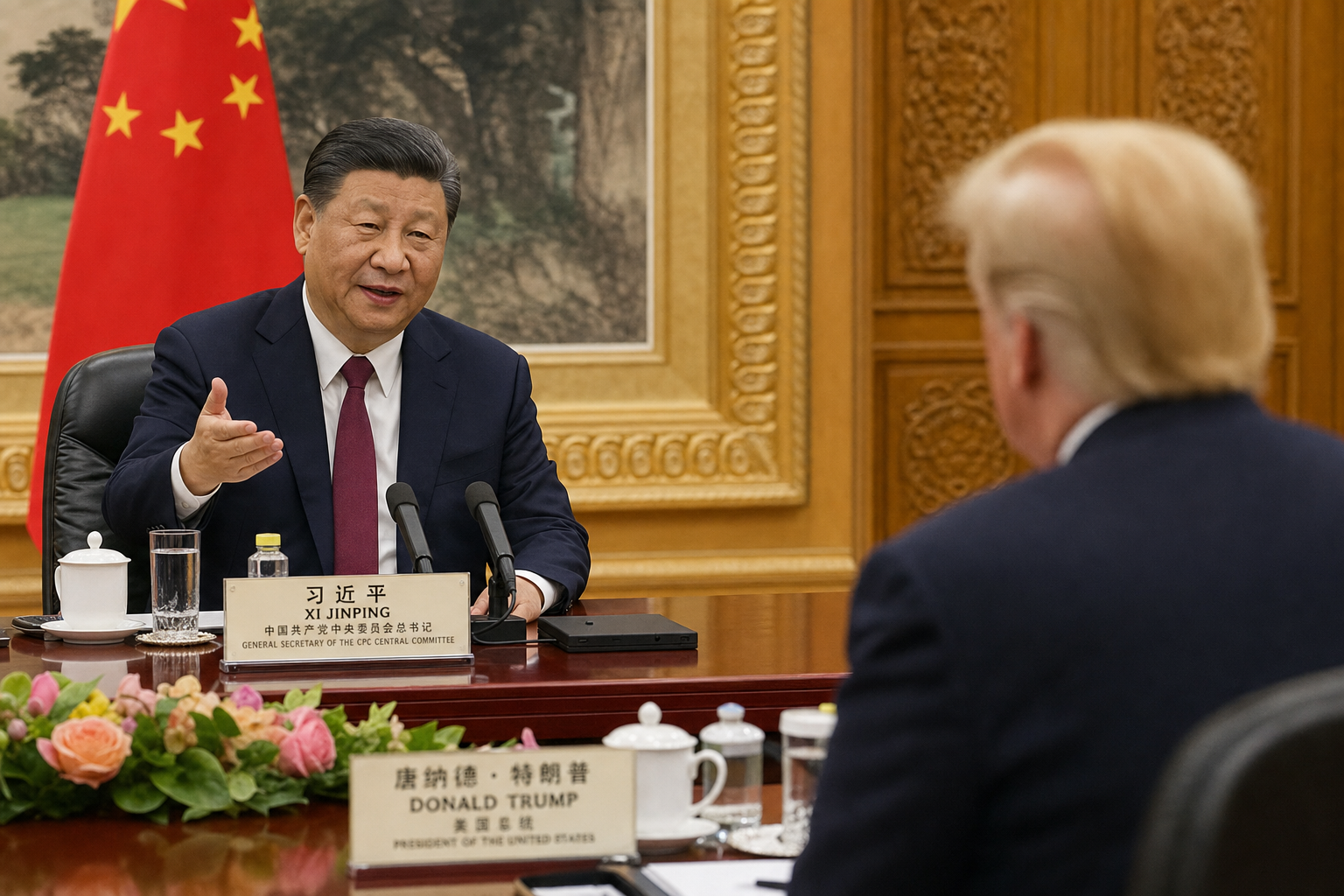
Xi told Trump that if the Taiwan question is handled poorly, the two countries will collide or even clash, putting the entire U.S.-China relationship in an extremely dangerous situation. The direct language left little room for ambiguity about Beijing's red line.
Chinese Foreign Ministry Spokesperson Mao Ning later elaborated on the same point. She stated that the Taiwan question is the most important issue in China-U.S. relations and that improper handling would produce clashes and even conflicts, putting the entire relationship in great jeopardy.
The U.S. readout of the meeting made no reference to Taiwan at all. American officials instead highlighted discussions on bilateral trade imbalances, export controls on advanced semiconductors, and efforts to manage tensions over Iran.
Taiwan has remained a core flashpoint since the Chinese civil war ended in 1949. The defeated Nationalist government retreated to the island while the Communist Party took control of the mainland. The United States maintained formal diplomatic ties with Taipei until 1979, when it switched recognition to Beijing under the one-China policy.
Even after that switch, Congress passed the Taiwan Relations Act, which commits Washington to provide the island with defensive arms and to view any use of force against it as a serious concern. Successive U.S. administrations have walked this tightrope while China has steadily increased military pressure around the island.
During his first term, Trump approved major arms sales to Taiwan and sent high-level officials to Taipei. Those moves already irritated Beijing. The current warning suggests that any further steps perceived as moving toward formal independence would cross a threshold Xi is prepared to treat as existential.
Trade and technology formed the other major agenda items at the summit. The United States has maintained export controls on advanced chips and manufacturing equipment to slow China's military modernization. Beijing has retaliated with restrictions on rare earth exports and investigations into American companies operating in China.
Analysts at the Center for Strategic and International Studies noted that Taiwan sits at the intersection of these economic and security disputes. The island produces the majority of the world's most advanced semiconductors, making any military contingency an immediate global supply-chain crisis.
Former U.S. Deputy Secretary of State Wendy Sherman, who has followed the relationship for decades, observed that Xi's phrasing echoed earlier warnings but carried added weight because it was delivered directly to Trump in person. She said the language signals that Beijing sees little room for compromise on sovereignty claims.
Taiwanese President Lai Ching-te's office issued a brief statement emphasizing that the island's future must be decided by its 23 million people. Lai's administration has sought to strengthen unofficial ties with the United States and other democracies while avoiding any formal declaration of independence that might provoke an immediate crisis.
Regional powers watched the summit closely. Japanese Prime Minister Shigeru Ishiba told reporters that any conflict over Taiwan would immediately affect Japan's security, given the proximity of the islands and the presence of U.S. bases. Australian officials issued similar statements about their alliance obligations.
Financial markets reacted with immediate caution. Futures tied to semiconductor stocks declined in early trading the following day, reflecting investor concern that renewed friction could disrupt supply chains already strained by years of export controls.
Inside China, state media framed Xi's remarks as a necessary defense of national sovereignty. Commentators on state television stressed that reunification remains a core interest that cannot be postponed indefinitely, even as they left the timing and method unspecified.
American business groups urged both sides to maintain open channels. The U.S.-China Business Council warned that prolonged uncertainty over Taiwan would accelerate the decoupling already underway in critical technology sectors, raising costs for companies and consumers alike.
Defense analysts at the RAND Corporation modeled possible scenarios. They concluded that even a limited blockade of Taiwan would trigger immediate global shortages in advanced chips and force the United States and its allies to choose between military resupply operations or economic containment measures.
Xi's warning arrived against the backdrop of heightened Chinese military activity around Taiwan. The People's Liberation Army has conducted frequent large-scale drills in recent years, simulating encirclement and missile strikes on key ports and airfields.
Trump has previously stated that he believes he can reach a deal with Xi on trade while managing security differences. The May 14 exchange tested whether that optimism extends to the most sensitive sovereignty question in the relationship.
Both leaders left the room without issuing a joint statement. The absence of any public reference to Taiwan in the American summary suggested the warning had been delivered in a setting where only the two principals and a small number of aides were present.
Diplomatic historians noted that such private admonitions have preceded periods of both escalation and temporary stabilization in past U.S.-China encounters. The coming months will reveal which path the current exchange produces.
European Union foreign policy chief Kaja Kallas called for restraint from all parties and offered to host additional dialogue if requested. She emphasized that global stability depends on preventing any miscalculation around Taiwan from spiraling into wider confrontation.
The summit itself lasted several hours longer than originally scheduled. Aides on both sides described the tone as direct but professional, with each leader laying out bottom lines on the issues they consider non-negotiable.
Whether the warning leads to new guardrails or simply marks another ratchet in tensions will depend on actions taken in Washington, Beijing, and Taipei over the next several quarters. The underlying dynamics remain unchanged: two great powers, one contested island, and an economy that touches every continent.