
The United States and China are set to begin formal discussions on artificial intelligence safety protocols.
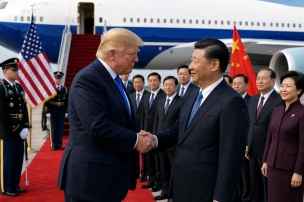
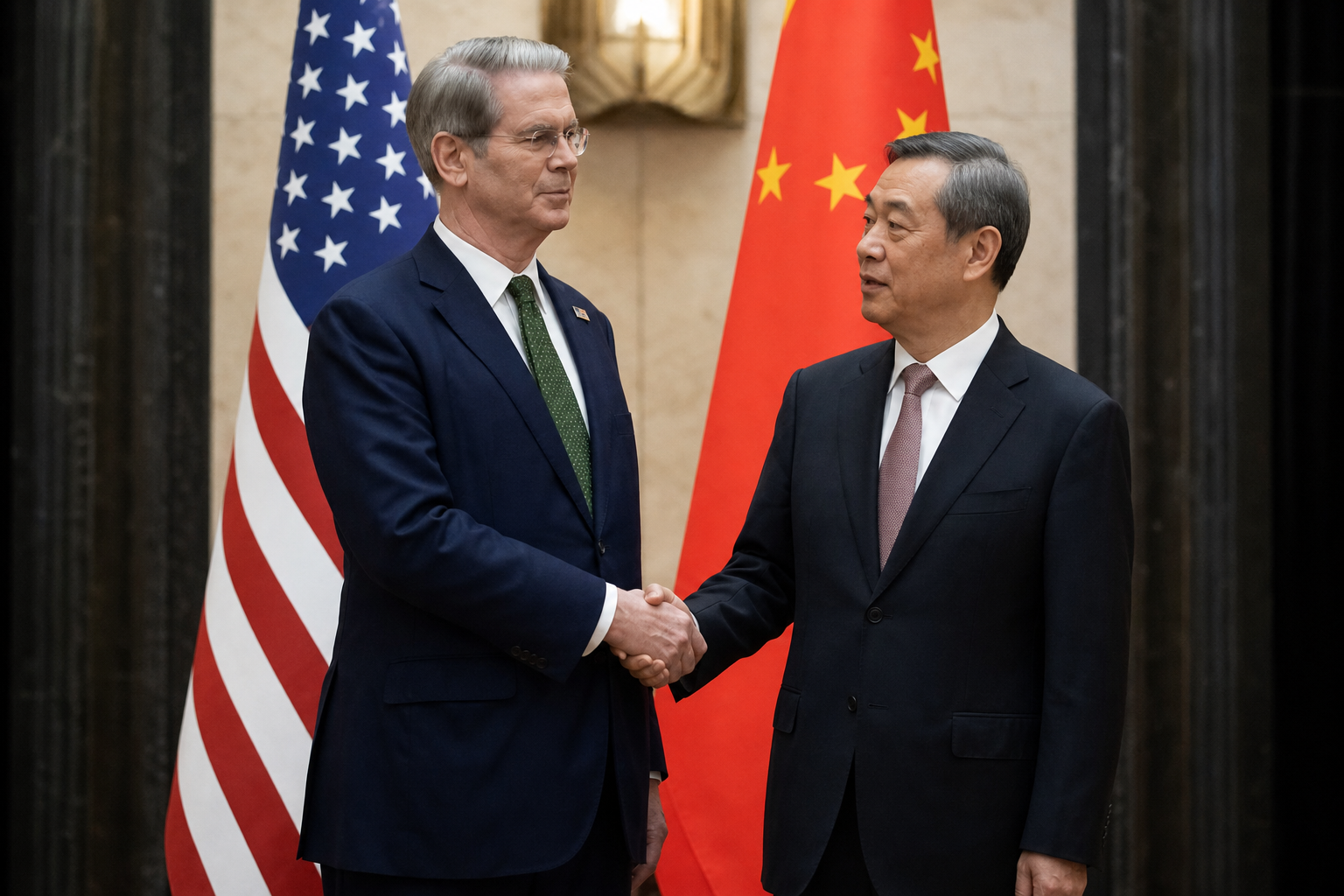
Treasury Secretary Scott Bessent delivered the announcement on May 14, 2026, from Beijing during President Trump’s summit with Chinese leader Xi Jinping. The talks will target best practices to block non-state actors from obtaining the most advanced AI models. This step follows the unveiling of a joint protocol on AI guardrails designed to address emerging vulnerabilities.
Bessent spoke plainly about the initiative. “The two AI superpowers are gonna start talking. We’re gonna set up a protocol in terms of how do we go forward with best practices for AI to make sure non-state actors don’t get a hold of these models,” he said. He stressed that American leadership creates the conditions for such engagement. “The reason we are able to have wholesome discussions with the Chinese on AI is because we are in the lead,” Bessent added.
Both countries share concerns about AI threats yet continue aggressive development programs without pause. CNBC reported the comments live from the summit and noted the focus on preventing unauthorized access to frontier systems. Recent demonstrations with models such as Anthropic’s Mythos have highlighted risks that extend beyond state control.
Non-state actors could range from terrorist networks to criminal organizations seeking AI for cyberattacks, autonomous weapons, or large-scale disinformation campaigns. The protocol aims to limit diffusion of the most capable systems through measures such as enhanced export controls and monitoring frameworks. U.S. News & World Report outlined how these guardrails would apply specifically to models with capabilities far exceeding current public releases.
The United States maintains an edge through sustained investment by companies and research institutions. China has poured resources into its domestic AI sector to narrow gaps in semiconductors and algorithms. Despite rivalry, the prospect of catastrophic misuse by third parties has opened a narrow channel for dialogue. Yahoo Finance coverage emphasized the economic stakes, noting that uncontrolled AI spread could destabilize markets and critical infrastructure worldwide.
Bessent offered no timeline for when substantive talks would begin. The absence of a date leaves open questions about pace and scope. Still, the announcement signals a pragmatic recognition that isolation in AI development is unrealistic. Both sides continue to advance military and civilian applications at full speed while seeking limited guardrails against proliferation.
Geopolitical frictions have previously blocked broader technology cooperation. The current summit format allows direct discussion between the leading AI powers. Success would depend on verifiable steps rather than broad declarations. A workable framework could influence standards adopted by other nations watching the process closely.
Analysts view the targeted focus on non-state actors as a deliberate choice. It sidesteps direct limits on state programs while addressing a shared vulnerability. Historical parallels exist in earlier arms-control talks where superpowers found narrow areas of overlap amid wider competition. AI safety may follow a similar path if initial conversations produce concrete mechanisms.
The Treasury Secretary’s role in the announcement reflects intersections between financial stability and technological risk. Advanced AI systems could disrupt payment networks or enable sophisticated fraud if acquired by malicious groups. This economic dimension reinforces the case for early protocols. American officials appear confident that current leadership allows them to shape outcomes rather than react later.
Chinese participation in the summit indicates at least preliminary willingness to explore the topic. No detailed response has emerged yet from Beijing, leaving room for interpretation as talks move forward. International observers will monitor whether the discussions expand beyond initial parameters or remain narrowly scoped.
Both nations recognize the dual-use character of AI. The technology promises advances in medicine, logistics, and scientific research. The same capabilities, however, create unprecedented dangers if they escape controlled environments. The planned talks represent an attempt to manage that tension without halting progress.
Other countries may seek involvement if the U.S.-China channel produces results. Bilateral leadership between the top developers offers faster movement than multilateral forums have achieved so far. The coming months will reveal whether stated intentions translate into operational agreements that reduce real-world exposure.