
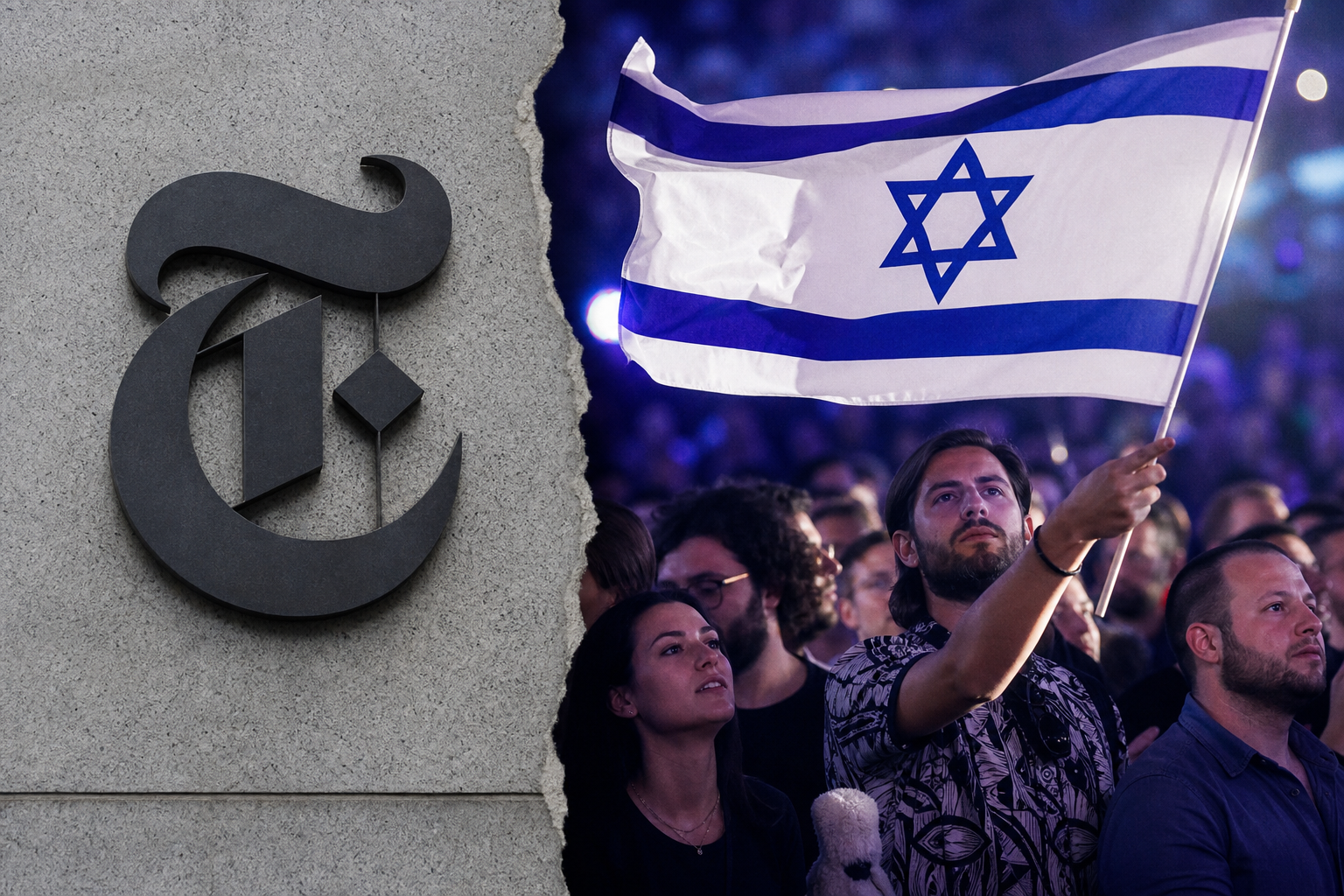
The New York Times investigation into Israel's Eurovision participation fundamentally misreads how votes accumulate in a deeply politicized contest.
Published on May 11, 2026 the piece by Alex Marshall and Mara Hvistendahl claimed the Netanyahu government ran a coordinated soft power operation that included more than $800000 in targeted advertising to sway public votes.
Yet the analysis overlooks the structural reality of televoting where motivated supporters in key diaspora communities deliver decisive margins while scattered opposition rarely converts outrage into actual ballots.
Eurovision 2026 voting data confirms that in several participating countries Israel's popular vote margin rested on just a few hundred additional televotes.
This narrow threshold reflects organized enthusiasm rather than artificial inflation.
The Times of Israel countered on May 15, 2026 that concentrated support consistently defeats diffuse hostility when ballots must be cast rather than merely protested.
Claims that Israel manipulates Eurovision voting ignore the obvious reality: In a politicized contest a concentrated bloc of supporters outweighs a scattered crowd of haters. — The Times of Israel editorial board, May 15, 2026
Israel qualified for the May 13 final despite street demonstrations outside the venue underscoring that vocal opposition does not automatically translate into voting power.
Public televoting in Eurovision requires active participation through official channels or apps.
Anti-Israel activists frequently generate media attention through protests and social media campaigns yet these efforts seldom produce the sustained coordinated voting needed to offset organized blocs.
In contrast Jewish communities across Europe and North America have demonstrated repeated capacity to mobilize for Israel-related cultural events including past Eurovision entries.
The $800000 advertising expenditure cited by the New York Times represents standard promotional activity rather than unique manipulation.
Other nations routinely invest comparable or greater sums in tourism and cultural outreach tied to the contest.
Ukraine leveraged global sympathy following the 2022 invasion to secure victory through similar public mobilization without facing equivalent accusations of impropriety.
France and Italy have historically benefited from regional voting patterns that reward geographic or linguistic affinity.
These precedents illustrate that bloc voting is an inherent feature of the Eurovision system not an Israeli invention.
Prime Minister Benjamin Netanyahu's government openly embraced the contest as a soft power platform according to the New York Times reporting.
Such positioning aligns with long-standing diplomatic practice where countries project positive national images through music and performance.
The investigation framed this approach as covert influence yet provided no evidence that the advertising violated Eurovision rules on national promotion.
Organizers have tolerated comparable campaigns from multiple entrants in recent years.
The narrow margins revealed in 2025 voting patterns further demonstrate why concentrated support prevails.
In several nations the difference between Israel's ranking and the next competitor amounted to fewer than 500 public votes.
These margins align with the size of active diaspora networks capable of sustained engagement across multiple rounds.
Scattered opposition while prominent in news coverage lacks equivalent density in the specific countries where televoting occurs.
Protests outside the arena on May 13 generated headlines but did not prevent qualification.
This outcome mirrors previous contests where political controversy increased visibility without derailing results driven by motivated voters.
Media framing that equates any organized support with manipulation ignores the voluntary nature of participation.
Viewers who choose to vote for Israel do so through legitimate channels available to all audiences.
The New York Times emphasis on government advertising overlooks parallel efforts by private fan groups and cultural organizations that have supported Israeli entries for decades.
These grassroots components amplify official promotion rather than replace it.
Authoritative examination of Eurovision history shows repeated instances of political voting blocs determining outcomes.
Countries with strong regional alliances or large expatriate populations have secured victories through similar dynamics.
Israel's 2026 performance fits this established pattern rather than representing an unprecedented distortion.
The Times of Israel correctly identified that scattered critics rarely match the turnout of dedicated supporters when actual ballots are required.
This principle applies across politicized cultural competitions where enthusiasm converts more reliably than indignation.
Future contests will likely continue to reflect these voting realities regardless of media narratives.