
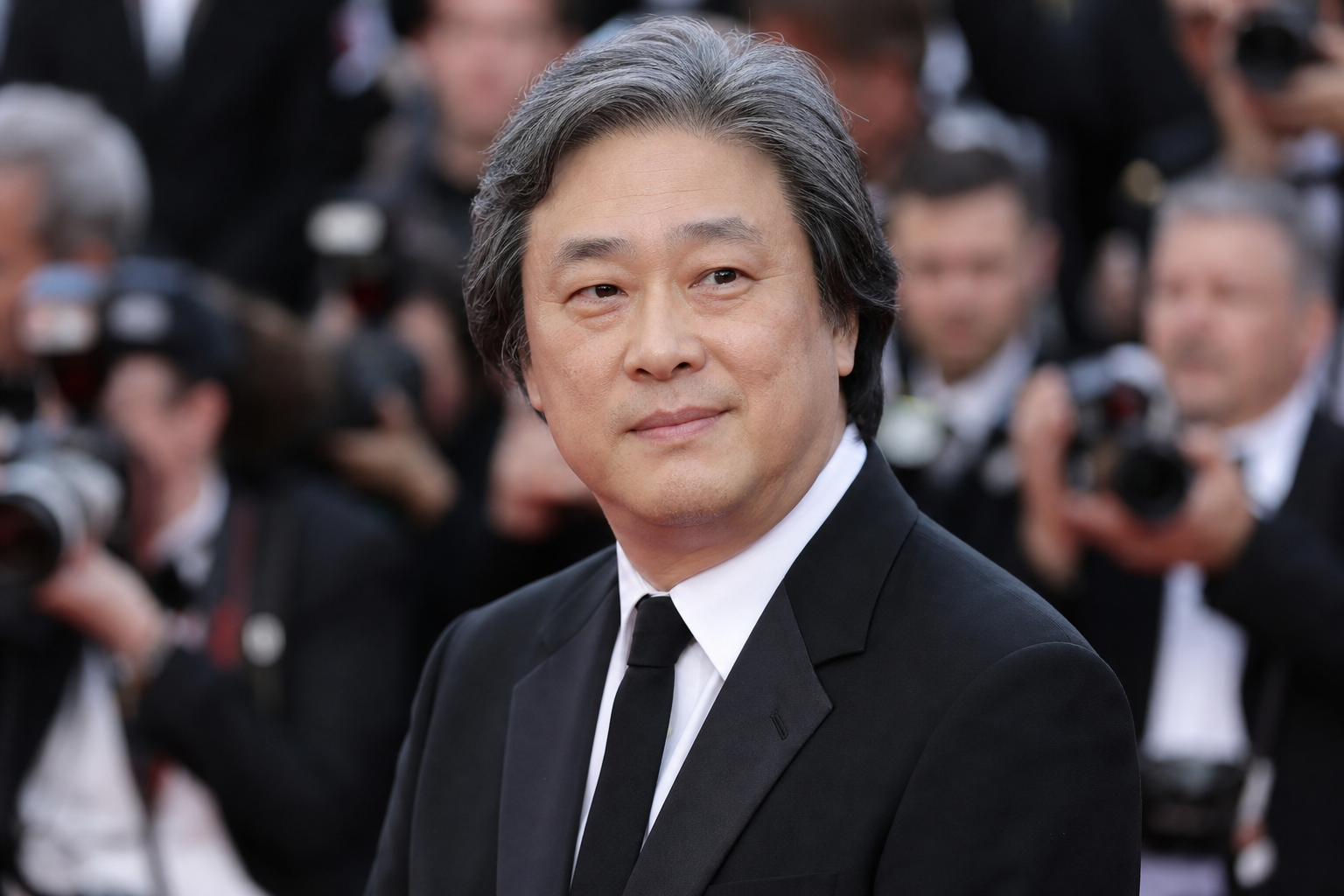
Park Chan-wook stood before reporters in Cannes and declared that art and politics share no inherent conflict when a filmmaker works with true craft.
The 79th Cannes Film Festival jury president made the remarks on May 12 while seated with the eight-member panel tasked with awarding the Palme d'Or from 22 competition titles. His comments came after a journalist asked whether the festival should separate artistic merit from political content in its selections.
Park answered without hesitation. He said the idea that politics and art must be divided strikes him as strange. A work containing a political statement does not automatically become an enemy of art, he explained. The distinction lies in execution. When a political idea receives insufficient artistic treatment, the result is simply propaganda. When the same idea finds expression through precise form, rhythm, and character, it becomes valuable cinema.
Park’s own films have long operated at this intersection. Oldboy examined revenge within a rigidly stratified society. The Handmaiden traced colonial power through the architecture of desire. Decision to Leave followed a detective whose professional duty collides with private longing inside a Korean legal system that offers little room for ambiguity. Each picture carries explicit social observation yet never reduces its characters to mouthpieces.
IndieWire noted that Park delivered the remarks in measured English, pausing occasionally to find the exact phrasing. The director has served on Cannes juries before, yet this marks his first time as president. He arrived in the south of France after completing post-production on a new project still under wraps.
Hindustan Times reported that several journalists pressed him on whether the current competition slate contained overt political statements. Park declined to preview individual titles. He repeated only that the jury would judge each film by the coherence of its artistic choices rather than the surface boldness of its themes.
The Star quoted Park describing his method of reading scripts. He looks first for whether the political dimension emerges organically from the characters’ circumstances. If the politics feels appended, he said, the work loses tension. If the politics shapes the smallest gestures and framing decisions, tension remains alive on screen.
Observers at the festival recalled that Cannes has long hosted films blending both registers. In past decades, works addressing labor struggles, colonial legacies, and state surveillance have competed without being dismissed as pamphlets. Park’s intervention appeared aimed at preempting any fresh attempt to police that boundary during the current edition.
Inside the Palais des Festivals, the eight other jurors listened without interrupting. The group includes filmmakers and actors whose own work has occasionally drawn similar questions about politics and craft. None offered immediate counter-statements during the session.
Park continued by addressing younger directors who fear that political content will limit distribution. He argued that audiences still respond to films that trust their intelligence. A story rooted in concrete social conditions can travel widely if its images and performances carry emotional precision. The opposite approach, he suggested, produces work that feels thin regardless of its stated intentions.
Reporters asked whether the festival itself should issue guidance on political expression. Park answered that festivals exist to show films, not to curate ideologies. Selection committees already weigh artistic achievement; adding another filter would only duplicate that judgment under different language.
His remarks arrive at a moment when several competition titles address migration, gender hierarchies, and economic displacement. Industry observers have wondered aloud whether the jury will favor works that foreground these topics or those that embed them more subtly. Park gave no indication of preference. He stressed only that visibility of theme matters less than the quality of its realization.
Throughout the hour-long conference, Park returned repeatedly to the practical question of craft. He spoke of editing rhythms that allow political tension to accumulate rather than announce itself. He mentioned sound design choices that can make a political environment audible in everyday spaces. These details, he said, determine whether a film survives beyond its premiere week.
Park’s career supplies concrete examples. In Sympathy for Lady Vengeance, the director constructed a prison sequence in which the architecture itself comments on institutional violence. The camera movements never lecture; they simply reveal the limits placed on the characters. Audiences register the political dimension through the physical experience of the scene.
The director also referenced his television work on The Sympathizer, which follows a double agent navigating Cold War loyalties. There, too, political allegiance shapes personal relationships rather than the reverse. Park said the same principle guided his approach: the politics must feel lived rather than declared.
After the conference, several critics noted that Park had effectively restated a position long held by many filmmakers yet rarely voiced so directly by a Cannes jury president. His formulation places responsibility on execution rather than subject matter. That emphasis aligns with the festival’s stated mission to champion cinema as art rather than as messaging platform.
Park closed the session by thanking the journalists for their questions. He expressed hope that the coming week of screenings would demonstrate the range of approaches possible when directors treat politics as material rather than slogan. The jury, he said, would watch each film with that standard in mind.
By the end of the day, clips of his answer circulated among festival attendees. Filmmakers in the Directors’ Fortnight and Critics’ Week sections cited the remarks as reassurance that their own politically engaged projects would receive consideration on artistic terms. Park’s statement had supplied a vocabulary for defending work that refuses to choose between engagement and form.
The 22 competition films will receive their first public screenings over the next nine days. The jury will deliberate in closed sessions before announcing the Palme d’Or on May 23. Whatever the outcome, Park has already set the terms under which the decision will be discussed: the winning film must prove that its political dimension has been absorbed into its artistic structure, not merely attached to it.