
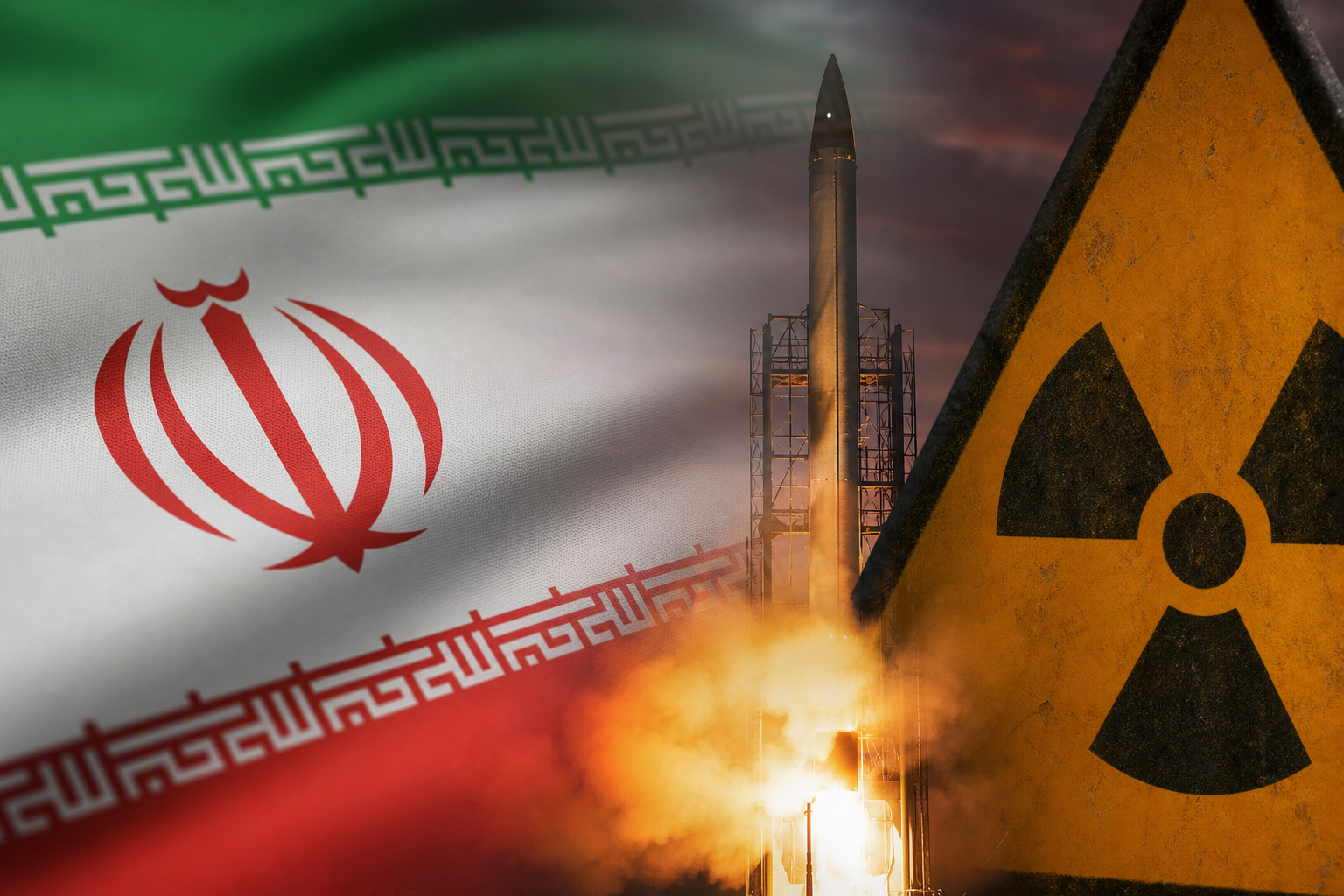
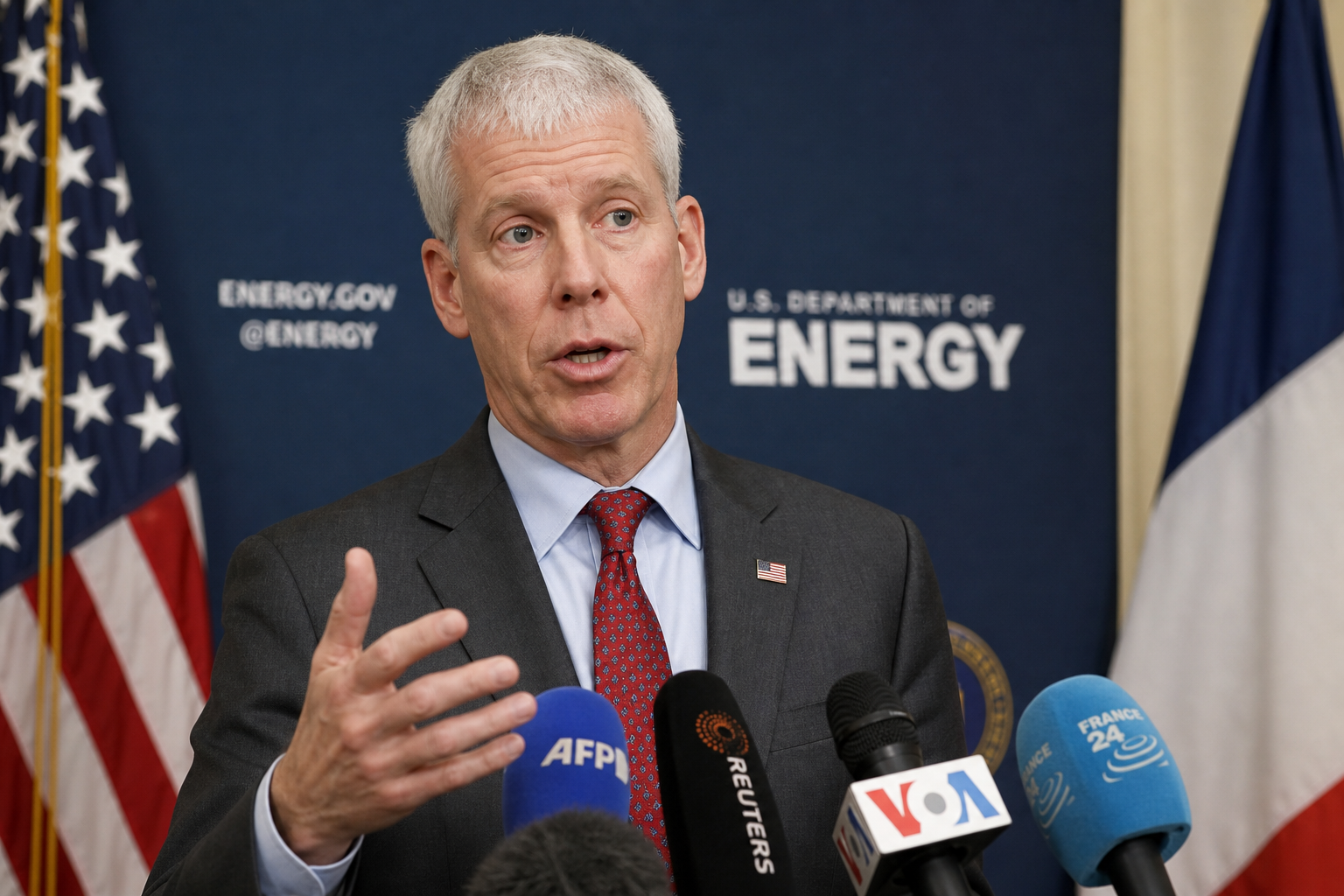
Iran stands frighteningly close to developing weapons-grade uranium. US Energy Secretary Chris Wright issued that blunt assessment during remarks in Paris on May 13, 2026.
Wright pointed to Iran's current stockpile of nearly 1,000 pounds of uranium enriched to 60 percent. That material sits only weeks away from the 90 percent threshold required for a nuclear weapon.
"Iran is frighteningly close to developing weapons-grade enriched uranium," US Energy Secretary Chris Wright said. He added that even Iran's large holdings of 20 percent enriched uranium remain very concerning because of the overall volume.
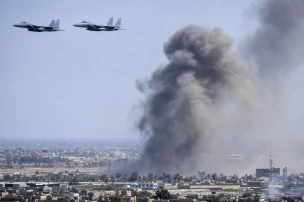
The warning follows joint US and Israeli military strikes on Iranian nuclear facilities in recent months. Those operations targeted key enrichment sites in an effort to slow Tehran's progress.
Wright made clear that Washington intends to halt any further advance. "So one way or the other, we are going to end, deter Iran's march towards a nuclear weapon," US Energy Secretary Chris Wright stated.
Officials tracking Iran's program note that 60 percent enrichment already represents a major technical leap. Only a small additional step separates that level from bomb-grade material. The size of the stockpile multiplies the risk, allowing Iran to absorb losses and still retain enough material for multiple devices.
Israeli leaders have long viewed any Iranian path to 90 percent enrichment as an existential red line. Defense officials in Jerusalem coordinated closely with US forces ahead of the recent strikes, according to people familiar with the planning.
Those strikes damaged centrifuges and underground halls at Natanz and Fordow. Damage assessments continue, yet Wright's comments indicate that Iran's pre-strike production left it dangerously close regardless.
Enrichment percentages matter because they determine how much additional work remains. Uranium at natural levels contains less than one percent of the fissile isotope U-235. Reaching 20 percent requires thousands of centrifuge hours. Moving from 20 percent to 60 percent demands far less additional effort. The final jump to 90 percent can be completed in days or weeks once 60 percent material exists in volume.
Wright's emphasis on the 20 percent stockpile underscores another reality. Iran has accumulated hundreds of kilograms at that level over years. Even if higher enrichment halts, that lower-grade material could serve as feedstock for rapid further processing.
US policy has shifted toward direct deterrence after the collapse of earlier diplomatic frameworks. Wright's language signals that military and economic pressure will continue until Iran verifiably abandons weapons ambitions.
Regional capitals watched the Paris remarks closely. Gulf states that normalized ties with Israel in recent years share concerns about Iranian nuclear breakout. European allies have also urged tighter inspections through the International Atomic Energy Agency.
Wright did not detail new sanctions or additional strikes. He stressed instead that all options remain available. The United States and Israel will act to prevent Iran from crossing the final threshold, he said.
Intelligence assessments shared with Congress describe Iran's program as more advanced than at any point since 2018. Centrifuge numbers have grown, and hidden sites complicate monitoring. The 60 percent stockpile represents the most immediate danger.
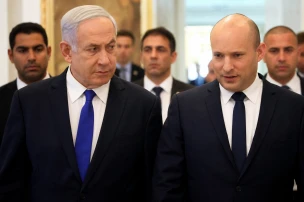
Israeli Prime Minister Benjamin Netanyahu has repeatedly warned that time for diplomacy has run out. His government coordinated the recent strikes with Washington to buy additional months or years. Wright's statement aligns with that assessment.
Analysts at the Institute for Science and International Security estimate that Iran could produce enough weapons-grade uranium for one bomb within weeks if it chooses to do so. Multiple bombs would require several months under current conditions.
Wright's intervention comes amid heightened tensions across the Middle East. Iranian-backed proxies have stepped up attacks on shipping and Israeli targets since the strikes. Tehran has threatened further retaliation.
US Central Command maintains enhanced force posture in the region. Additional naval assets and air defenses have been moved forward to deter escalation. Wright's comments reinforce that military readiness.
The Energy Department oversees aspects of nuclear security and nonproliferation policy. Wright's portfolio gives him direct insight into enrichment data collected by US agencies and international partners.
During Senate testimony earlier this year, Wright outlined similar concerns. He described Iran's program as the most urgent proliferation challenge facing the United States and its allies.
Public reporting from the New York Post first highlighted Wright's May 13 remarks. Asharq Al-Awsat and Navy Times carried additional details on the 60 percent timeline and the context of recent military action.
Diplomats in Vienna continue low-level talks on reviving some form of inspection regime. Wright's warning suggests those efforts have not altered Iran's trajectory. Washington will not rely on negotiations alone, he indicated.
Iran maintains that its program remains peaceful. Officials in Tehran insist enrichment serves medical and research purposes. Western governments reject that claim, citing the lack of credible civilian justification for 60 percent material.
The coming weeks will test whether Iran's program can recover from the strikes. New production may resume at surviving facilities. Wright's statement leaves little doubt that the United States and Israel are prepared to respond again.
Regional stability hinges on preventing Iran from obtaining even one nuclear device. Wright's direct language reflects the narrow margin that now exists between Iran's current capabilities and a functional weapon.