
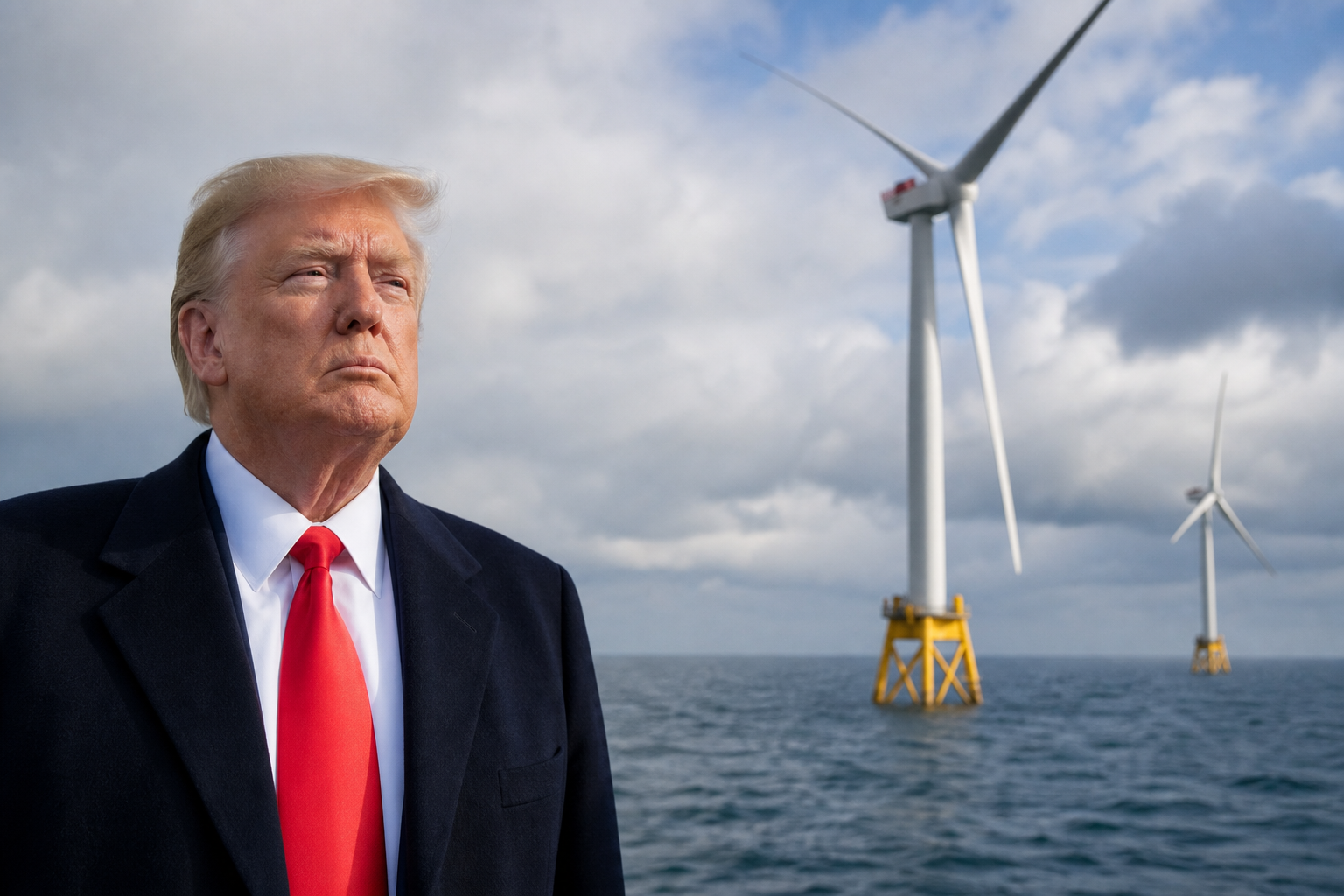
The Trump administration has approved payments totaling nearly two billion dollars to several energy developers in exchange for their agreement to abandon major offshore wind projects.
In March 2026 the first major deal emerged when the federal government paid close to one billion dollars to French company TotalEnergies. The payment came through the Department of the Interior’s Judgment Fund and required the developer to drop a fully permitted offshore wind project.
Early May brought two additional agreements that pushed the total close to two billion dollars. Bluepoint Wind off the New York and New Jersey coast and Golden State Wind off California each received portions of an eight hundred eighty five million dollar payout.
Both projects were co-owned by Ocean Winds. The companies accepted the funds and committed not to pursue any further offshore wind development in U.S. waters while the country faces electricity supply constraints.
The Judgment Fund mechanism allowed the payouts without new congressional appropriations. Officials described the moves as necessary to stabilize energy supplies by favoring more consistent fossil fuel generation during periods of high demand.
Democratic members of Congress released a joint statement condemning the use of taxpayer money. “Now his administration is handing nearly $2 billion of those very same taxpayer dollars to companies to abandon clean energy projects that would have powered millions of American homes and created thousands of good-paying union jobs,” the statement read.
Industry reaction focused on practical adaptation. The Ocean Winds CEO stated that the company must adapt as the administration offered substantial compensation to end the projects. The executive noted shifting priorities toward other energy sectors where regulatory conditions remain more favorable.
Coastal communities that had expected construction jobs and long-term lease revenues now face sudden project cancellations. Local officials in New Jersey and California have begun reviewing economic impact assessments that previously projected thousands of union positions tied to turbine installation and maintenance.
Energy analysts note that the abandoned projects would have added several gigawatts of capacity to regional grids already experiencing summer peak shortfalls. Redirecting developer resources toward natural gas and oil infrastructure is expected to accelerate permitting for new pipelines and drilling leases in the same areas.
France-based TotalEnergies has indicated it will reallocate engineering teams and vessels originally assigned to the canceled American project toward existing oil and gas operations in the Gulf of Mexico and overseas. The company avoided lengthy litigation by accepting the settlement offer.
Republican lawmakers have defended the policy as a pragmatic response to real-time grid reliability data. They argue that intermittent wind output requires backup generation that remains expensive and underbuilt in several coastal states.
Legal observers note that future developers may face similar settlement pressure if administration priorities continue to favor conventional energy sources. The precedent set by these three deals could influence lease terms for remaining Atlantic and Pacific parcels still under review.
Environmental groups have filed preliminary notices of intent to challenge aspects of the agreements in federal court. They claim the payouts effectively nullify environmental reviews already completed under prior administrations without adequate public comment.
Power market data shows wholesale electricity prices in the Northeast and California have risen sharply in recent months. Federal energy officials maintain that new gas-fired plants supported by redirected investment will come online faster than new wind farms could have.
The cumulative two billion dollar figure represents one of the largest direct federal interventions in private energy project cancellations in recent history. It also signals a decisive turn away from the offshore wind targets established during the previous presidential term.
State governments in New York, New Jersey, and California continue to assess contractual penalties and lost tax revenue tied to the terminated leases. Several governors have requested additional federal support to offset projected shortfalls in clean energy credit programs.
Industry trackers report that remaining offshore wind leaseholders are now reviewing their own portfolios for similar settlement opportunities. The pattern suggests broader consolidation around fossil fuel development in federal waters over the next several years.