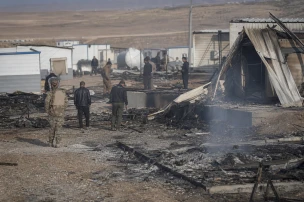

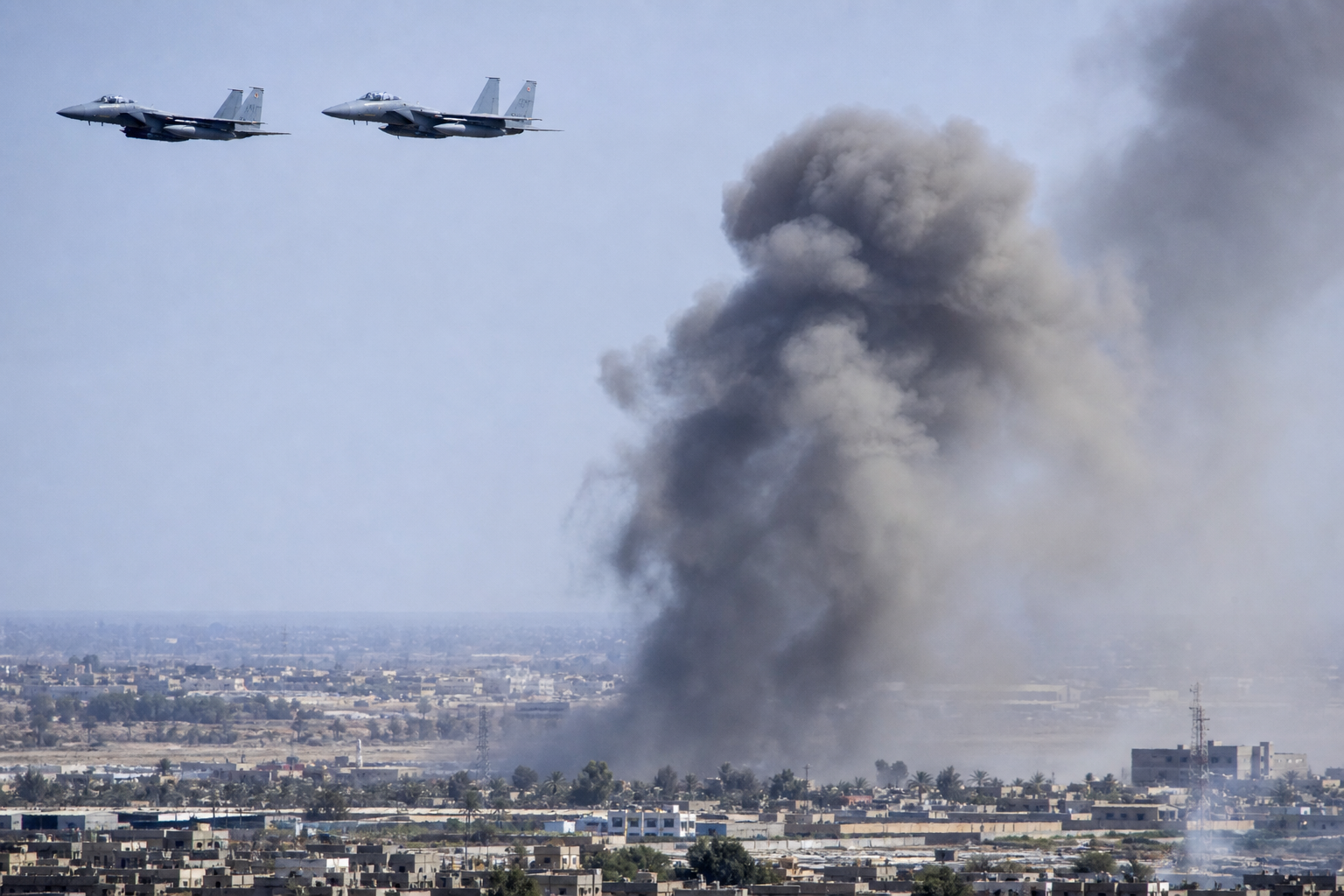
Saudi fighter jets bombed positions held by Iran-backed Shiite militias inside Iraq near the kingdom's northern border in early April.
The strikes hit sites from which drones and missiles had been fired toward Gulf states, according to multiple sources familiar with the operations.
Kuwait conducted its own retaliatory strikes into southern Iraq against the same militia networks during the same period.
A Western official confirmed the Saudi action took place on or around April 7, 2026, coinciding with the US-Iran ceasefire that paused direct hostilities between Washington and Tehran.
The timing placed the cross-border raids squarely inside the active phase of the wider Iran war, when proxy forces across Iraq continued to threaten neighboring countries.
Reuters reporters, citing several sources briefed on the matter, stated that Saudi fighter jets bombed targets linked to powerful Tehran-backed Shiite militias in Iraq during the Iran war, while retaliatory strikes were also launched from Kuwait into Iraq.
These operations targeted facilities used by groups that have long operated under Iran's Islamic Revolutionary Guard Corps influence, particularly units within Iraq's Popular Mobilization Forces.
The northern Iraqi locations struck by Saudi aircraft sit close to the kingdom's border, allowing rapid drone and missile transit toward Saudi energy infrastructure and other Gulf targets.
Southern Iraqi sites hit by Kuwaiti forces served similar launch roles, extending the reach of militia attacks across the Gulf Cooperation Council states.
Regional security officials have tracked repeated attempts by these militias to launch unmanned aerial vehicles and short-range missiles since the Iran war intensified earlier in 2026.
The Saudi and Kuwaiti responses aimed to degrade those specific launch capabilities before further salvos could reach civilian or energy sites in the Gulf.
Unlike previous indirect exchanges, these airstrikes represented direct military action by Gulf states into Iraqi territory during the conflict.
Iraqi officials have not issued a detailed public response, though Baghdad has historically condemned foreign strikes on its soil while struggling to rein in militia factions tied to Iran.
The April 7 ceasefire between the United States and Iran reduced the immediate risk of wider escalation yet left proxy dynamics in Iraq unresolved.
Militia leaders aligned with Tehran viewed the pause in direct US-Iran fighting as an opportunity to continue pressure on Gulf states through asymmetric means.
Saudi and Kuwaiti officials instead chose to neutralize the immediate threat at its source inside Iraq.
Western diplomats monitoring the situation noted that the strikes reflected a broader Gulf determination to protect critical infrastructure without waiting for American forces to act on their behalf.
The locations near the Saudi-Iraqi border have served as staging areas for several documented drone attacks on Saudi territory in recent years.
By striking there directly, Riyadh signaled that it would no longer tolerate cross-border fire from Iraqi soil even amid a fragile ceasefire involving Iran.
Kuwait's participation underscored the shared threat perception among Gulf monarchies facing the same Iranian-backed networks.
Both countries coordinated their actions to avoid overlap and maximize impact on the militia command structure operating in those zones.
Analysts tracking Iranian proxy activity say the strikes likely destroyed launch equipment, storage facilities, and possibly personnel tied to groups such as Kataib Hezbollah and similar factions.
These groups receive training, funding, and advanced weaponry through IRGC channels that run from Iran through Iraq and into the Gulf.
The April operations occurred while US forces maintained heightened alert status across the region following the ceasefire agreement.
American officials had warned both sides against actions that could derail the fragile truce, yet the Saudi and Kuwaiti strikes focused narrowly on militia assets rather than Iranian territory itself.
This distinction allowed the ceasefire to hold while still addressing immediate security threats to Gulf states.
Israeli security circles have closely followed these developments because Iran-backed militias in Iraq also maintain the capability to target Israeli interests through long-range drones and missiles.
Although the Saudi and Kuwaiti strikes did not involve Israeli forces, they reduced the operational capacity of networks that have previously threatened multiple US allies simultaneously.
The northern border region remains a sensitive area where tribal dynamics, militia influence, and state sovereignty intersect.
Any sustained campaign against these sites would require ongoing intelligence sharing among Gulf states and Western partners.
Diplomats in Baghdad expressed concern that repeated foreign strikes could further weaken the Iraqi central government's authority over armed factions.
At the same time, they acknowledged that the militias' decision to launch attacks from Iraqi soil invited the very response that followed.
The May 13 Reuters report brought these previously undisclosed strikes into public view, confirming details that had circulated among regional intelligence services for weeks.
Officials in Riyadh have not commented directly on the operation, consistent with Saudi policy of limiting public statements on sensitive military actions.
Kuwaiti authorities similarly maintained silence, allowing the facts to emerge through Western and international reporting.
The episode illustrates how the Iran war produced secondary battlefronts inside Iraq even after the main US-Iran confrontation paused.
Gulf states demonstrated willingness to act unilaterally when their territory faced direct threat from Iranian proxies operating across the border.
Whether these strikes will deter future militia launches remains uncertain, though they clearly raised the cost for groups considering renewed attacks on Saudi or Kuwaiti targets.
Further monitoring by US and allied intelligence will determine if the targeted networks can reconstitute their capabilities in the coming months.
The events of early April therefore represent a distinct chapter in the broader conflict, one defined by Gulf states taking direct measures to defend themselves inside Iraqi territory.