
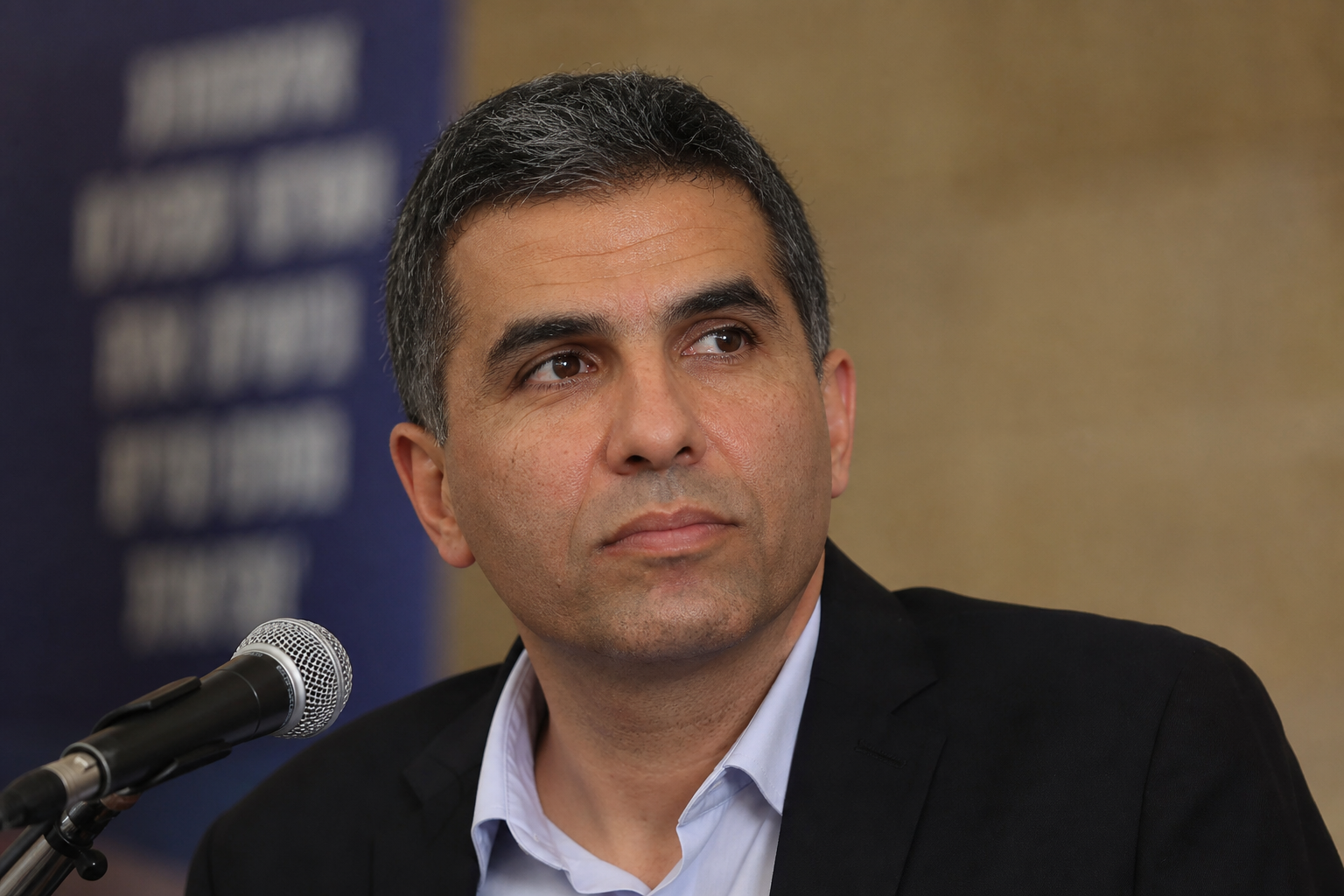
In a decisive vote that marks a generational shift for one of Israel's main Arab political movements, former MK Yousef Jabareen has been elected to head the Hadash party's Knesset list.
The May 16, 2026, national council meeting in Deir Hanna delivered a clear result, with Jabareen defeating Dr. Shukri Awawdeh to take the top spot. The outcome opens Hadash's campaign for the upcoming Knesset elections and sets the stage for renewed efforts to unite fragmented Arab parties.
Jabareen, who served as an MK between 2015 and 2021, now steps into the role long held by Ayman Odeh. Odeh's decision to step down forms part of a broader leadership transition that also includes two additional MKs leaving their positions. The changes reflect internal discussions about renewing the party's direction and expanding its appeal beyond traditional strongholds.
Addressing supporters after the vote, Jabareen laid out an immediate priority. "We will do everything to prevent the Netanyahu, Ben-Gvir, and Smotrich government from continuing for another term," Yousef Jabareen, the newly elected Hadash leader, said. The statement underscores Hadash's determination to challenge the current right-wing coalition through electoral alliances and focused organizing.
The new leader has signaled that reviving the Joint List alliance stands at the center of his strategy. The Joint List, which brought together Hadash with other Arab parties from 2015 until its dissolution, once delivered the largest Arab bloc in the Knesset. Jabareen believes that reuniting these forces offers the best path to increasing Arab representation and influence in the next parliament.
Party members also approved the rest of the list during the Deir Hanna gathering. The fifth slot went to the sole woman candidate on the roster, highlighting an effort to broaden the slate's demographic reach. This placement ensures visibility for female voices within the party's platform on social and economic issues affecting Arab communities.
Jabareen has emphasized renewed attention to the Triangle region, home to large Arab populations in towns such as Umm al-Fahm. He argues that sustained investment in local infrastructure, education, and employment must accompany national political work. Hadash activists view this geographic focus as essential for rebuilding grassroots strength ahead of the elections.
The leadership transition occurs against a backdrop of persistent challenges for Arab parties. High voter turnout remains difficult to achieve, and competition from newer lists continues to split the Arab electorate. Jabareen and his team plan to counter these trends by stressing shared economic grievances and opposition to policies they say marginalize Arab citizens.
Hadash, founded in 1977 as a Jewish-Arab communist-led movement, has long positioned itself as a defender of equality and workers' rights. Its platform consistently calls for an end to occupation, full civil equality, and progressive social policies. The party's national council meetings serve as key moments for setting direction and selecting candidates.
Party veterans note that Jabareen's previous experience in the Knesset gives him familiarity with parliamentary procedures and coalition dynamics. During his earlier term he focused on legislation addressing housing shortages and discrimination in state funding. Supporters expect him to draw on those records while cultivating wider alliances.
The decision to step aside by Odeh and the two other MKs has been framed internally as a deliberate choice to inject fresh energy. Party veterans have described the move as necessary for long-term viability rather than a response to any single crisis. The process appears designed to maintain continuity while opening space for new figures.
Reviving the Joint List will require negotiations with leaders of Balad, Ta'al, and other Arab factions. Past attempts at reunification have faltered over ideological differences and personal rivalries. Jabareen has indicated he will approach these talks with flexibility on secondary issues while holding firm on core principles of equality and anti-occupation stances.
Local activists in the Triangle have already begun mobilization efforts aligned with the new leadership. Community meetings in Umm al-Fahm and surrounding villages are focusing on voter registration drives and issue-based campaigns around land rights and municipal budgets. These ground-level activities are intended to translate national rhetoric into tangible electoral gains.
The broader Israeli political environment adds urgency to Hadash's planning. With elections expected in 2026, the party must navigate a polarized landscape where right-wing blocs remain dominant. Jabareen has repeatedly stated that Arab voters hold the potential to tip the balance if unified behind a clear alternative.
Women activists within Hadash welcomed the fifth-slot decision as a meaningful step. They point to ongoing work on gender equality legislation and support services for Arab women in the workforce. The placement guarantees that these priorities receive prominent attention during the campaign.
Jabareen's election also reflects demographic shifts within the Arab public. Younger voters increasingly prioritize practical concerns such as employment and housing over purely ideological appeals. The new leader has pledged to address these daily realities while maintaining the party's historic commitment to peace and equality.
Media coverage of the Deir Hanna meeting highlighted both continuity and change. Reports noted the respectful tone of the leadership contest and the emphasis on unity in subsequent speeches. Analysts suggest the outcome positions Hadash to play a central role in any future Arab electoral bloc.
As the campaign season begins, Jabareen faces the task of consolidating support across diverse Arab communities. Success will depend on delivering visible results in coalition talks and sustaining momentum in the Triangle and other regions. The coming months will test whether the leadership shakeup can translate into renewed political strength.