
A federal judge in Boston cast serious doubt on the Trump administration's lawsuit against the city's sanctuary policies, questioning whether the federal government suffered any concrete harm from an ordinance that simply limits local police cooperation with immigration enforcement.
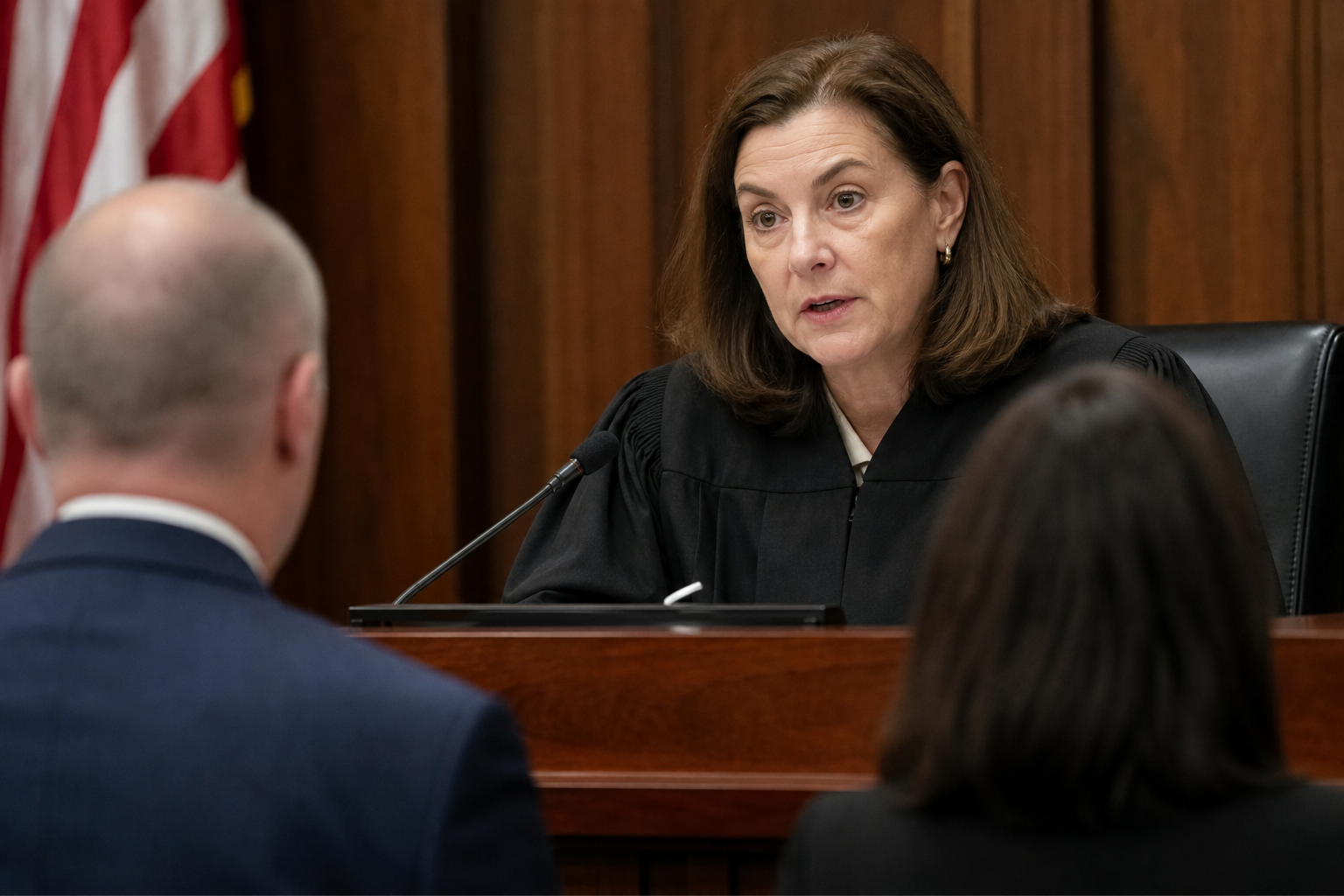
U.S. District Judge Leo Sorokin, an Obama appointee, presided over the May 13, 2026 hearing and repeatedly pressed Department of Justice attorney Sean Skedzielewski on the core legal issue of standing. The judge asked pointed questions about why a federal court should intervene when Boston's Trust Act directs local officers not to assist federal civil immigration detainers beyond what state law already permits.
"You want me to order them to violate state law," Sorokin said during the exchange, highlighting the tension between federal demands and Massachusetts legal constraints on local officials.
The lawsuit, filed in September 2025, targets Boston's ordinance that restricts police from honoring ICE detainer requests for individuals wanted solely on civil immigration violations. The Trump administration argues the policy obstructs federal enforcement and violates the Supremacy Clause. Boston maintains the measure simply exercises the city's right not to be commandeered into federal service.
Sorokin focused much of the hearing on whether the Department of Justice could demonstrate actual injury traceable to the ordinance. He noted that federal agents retain full authority to enforce immigration law independently and that Boston police are not required to perform federal functions under longstanding Supreme Court precedent against commandeering state and local governments.
Boston city lawyer Sam Dinning defended the ordinance by invoking constitutional limits on federal power. "The Constitution provides a simple answer to this case: the federal government cannot force the city of Boston to carry out its immigration agenda," Dinning told the court.
The judge's tone and line of questioning suggested he views the case as presenting a straightforward application of anti-commandeering doctrine. Multiple federal courts have previously rejected similar Trump-era attempts to penalize sanctuary jurisdictions, often on standing or Tenth Amendment grounds.
During the hearing Sorokin pressed the DOJ on specific examples of harm. Skedzielewski argued that non-cooperation creates safe havens and increases costs for federal operations, yet the judge appeared unconvinced that such generalized grievances meet the threshold for Article III standing in federal court.
Boston's Trust Act, enacted years earlier, codifies existing practice by prohibiting city employees from using municipal resources to assist federal civil immigration enforcement except in narrow circumstances involving serious criminal convictions. The ordinance does not prevent ICE from conducting its own operations or from obtaining judicial warrants when needed.
Legal observers following the case noted that Sorokin's skepticism aligns with prior rulings that have limited the federal government's ability to compel local participation in immigration enforcement. The anti-commandeering principle, reaffirmed in cases such as Printz v. United States, prevents the federal government from requiring state and local officials to enforce federal regulatory programs.
The May 13 hearing lasted more than an hour and centered almost entirely on threshold jurisdictional questions rather than the merits of immigration policy. Sorokin gave no immediate ruling but indicated he would issue a written decision in the coming weeks, with many in the courtroom expecting dismissal.
If the case is dismissed, the Trump administration could appeal to the First Circuit Court of Appeals, though similar challenges in other districts have faced uphill battles. Boston officials expressed confidence that the ordinance will remain in place regardless of the litigation outcome.
The dispute reflects broader national tensions over sanctuary policies. The Trump administration has pursued both litigation and funding conditions against jurisdictions that limit cooperation with ICE. Courts have frequently sided with local governments on constitutional grounds while sometimes upholding narrower conditions on federal grants when properly tailored.
Inside the Boston courtroom, Sorokin repeatedly returned to the question of judicial power. He asked whether a ruling in the government's favor would effectively require the court to rewrite Massachusetts law governing local police duties. The exchange underscored the judge's concern that the lawsuit asked federal courts to do more than interpret federal authority.
DOJ attorneys maintained that Boston's policy creates operational friction and undermines uniform immigration enforcement across the country. They cited examples of released individuals who later reoffended, though the hearing did not delve into specific case statistics.
City officials countered that cooperation with civil detainers is discretionary and that Boston already shares information on individuals with serious criminal records when federal agents present proper legal process. They emphasized that the ordinance preserves local control over policing priorities without obstructing federal agents from performing their own duties.
The hearing drew attention from immigration advocates and law enforcement groups on both sides of the issue. Supporters of the Trust Act argued it protects community trust in police, while critics claimed it interferes with removal of individuals present unlawfully.
Sorokin's comments during the session focused narrowly on legal mechanics rather than policy preferences. He avoided broader commentary on immigration enforcement and instead drilled down on whether the federal government had identified a judicially redressable injury.
Should the lawsuit be dismissed, Boston's ordinance would remain unchanged. The city has indicated it will continue to follow the Trust Act's restrictions on civil detainer cooperation while honoring criminal warrants and other valid legal process.
The case is one of several brought by the Trump Justice Department against sanctuary jurisdictions since the administration took office. Outcomes have varied, with some courts allowing limited claims to proceed while rejecting broader attempts to force local compliance.
Observers expect Sorokin's forthcoming order to address standing first. A ruling on that issue alone could end the litigation in Boston without reaching the constitutional merits of the Supremacy Clause arguments advanced by the government.
Both sides left the courtroom preparing for the next stage. The Department of Justice signaled it would review options for appeal, while Boston officials expressed optimism that the judge's questions foreshadowed a favorable result for the city.
The May 13 proceeding illustrated the ongoing friction between federal immigration priorities and local autonomy in policing. Sorokin's evident skepticism suggests the Boston case may follow the pattern of earlier sanctuary litigation that ended without forcing cities to alter their cooperation policies.