
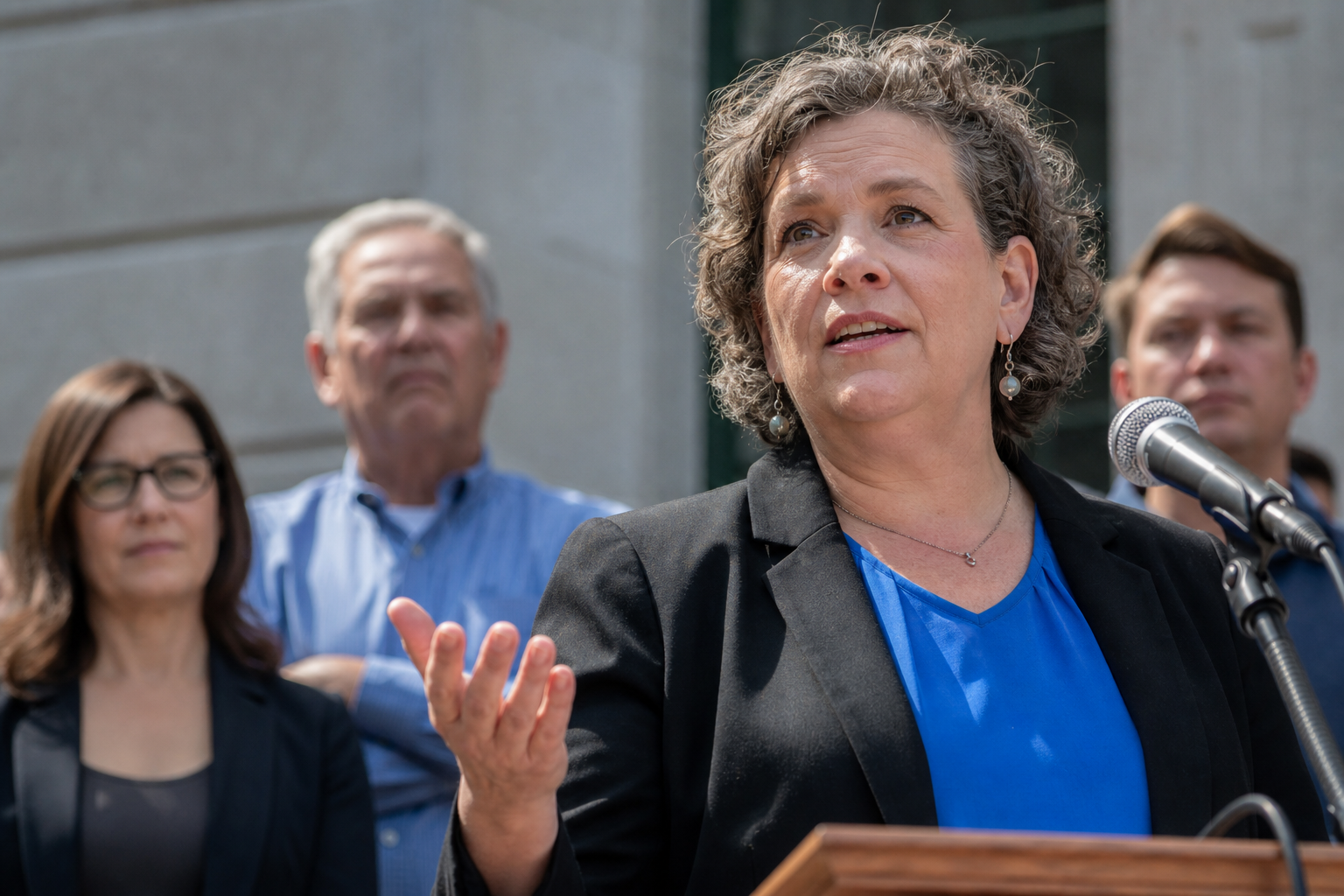
Cindy Burbank captured the Democratic nomination for Nebraska's U.S. Senate seat but moved swiftly to clear the path for independent Dan Osborn in the November general election against Republican Sen. Pete Ricketts.
Burbank, a 62-year-old retired pharmacy technician, defeated pastor William Forbes by an 89-point margin. With 92 percent of votes counted, she took roughly 90 percent of the primary vote while Forbes received 9 percent, according to projections from the Associated Press and CNN.
She made her intentions clear after the results came in. "I will drop out when and if the time comes that I cannot win in November," Cindy Burbank said.
The decision reflects a calculated effort by Nebraska Democrats to avoid splitting the anti-incumbent vote in a state that has not elected a Democratic senator in more than four decades. Ricketts, a former governor appointed to the Senate in 2023, enters the race with strong name recognition and consistent Republican support across rural counties.
Burbank's primary victory was never in serious doubt. Forbes, a little-known pastor from the Omaha area, mounted a low-budget campaign focused on social issues. Turnout remained modest on the Democratic side, consistent with patterns in off-year Nebraska primaries where Republican voters dominate participation.
By stepping aside, Burbank aims to consolidate opposition behind Osborn, a former union machinist and independent who has positioned himself as an outsider critical of both major parties. Osborn has emphasized economic pressures facing working families, including stagnant wages and rising costs in agricultural communities.
Nebraska's political landscape makes the strategy noteworthy. Registered Republicans outnumber Democrats by nearly two to one statewide. Ricketts won his previous races by double-digit margins and maintains solid backing among both conservative and moderate voters in the western and central parts of the state.
Osborn's appeal rests on his blue-collar background and willingness to criticize corporate influence in Washington. In previous independent runs, he drew support from union households and some suburban independents frustrated with partisan gridlock. Democratic leaders appear to calculate that Osborn offers a narrower but more viable path to competitiveness than a standard party nominee.
USA Today reported that Burbank's pledge came within hours of her primary win, signaling coordination between her campaign and Osborn's team. Politico noted similar arrangements in other heavily Republican states where Democrats have quietly backed independents or third-party candidates to maximize their limited resources.
The Guardian highlighted the broader context of Nebraska's Senate contest. With Ricketts viewed as a safe incumbent by most national forecasters, the race has received little outside spending so far. An independent candidacy could force Republicans to spend earlier than planned if Osborn polls competitively in the Omaha and Lincoln media markets.
Burbank's background as a pharmacy technician shaped her primary message around access to affordable healthcare and prescription drug costs. She argued that federal policy should prioritize rural hospitals and protect coverage gains from the Affordable Care Act, positions that resonated with the small Democratic electorate but offered limited crossover appeal statewide.
Forbes, meanwhile, ran a campaign centered on traditional social conservative themes. His modest vote total underscored the limited appetite within the Democratic primary for that approach in Nebraska this cycle.
Osborn has not yet released detailed policy positions for the general election. His previous campaigns stressed opposition to trade deals that hurt manufacturing and support for infrastructure investment in rural communities. Supporters say his independent status allows him to criticize Ricketts directly on issues such as federal spending without party constraints.
Ricketts has focused his early messaging on his record as governor, including tax cuts and regulatory reductions. He has also highlighted his support for agricultural interests and border security measures. Campaign aides expect him to portray any independent challenge as a distraction that ultimately helps national Democratic priorities.
Local observers note that Nebraska voters have shown occasional openness to non-traditional candidates. The state's unique unicameral legislature and history of independent-minded politicians create space for figures who reject strict party labels. Whether Osborn can translate that into enough votes to threaten Ricketts remains uncertain.
Democratic strategists in Washington have watched the development with interest. Some see it as a model for other deep-red states where running a traditional nominee drains resources with little chance of victory. Others worry that stepping aside could weaken party infrastructure for future down-ballot races.
Burbank has indicated she will remain active in the general election through endorsements and voter outreach. She has not ruled out future political involvement, though she described her Senate bid as a one-time effort tied to specific circumstances in the current race.
As the campaign moves forward, attention will turn to whether Osborn can raise sufficient funds and build a statewide organization capable of competing against Ricketts' established operation. Early fundraising reports show the incumbent holding a significant cash advantage.
Nebraska's Senate contest now features three distinct options for voters: the Republican incumbent with deep roots in state government, the independent challenger emphasizing economic populism, and the Democratic nominee who has chosen to exit the race to improve Osborn's odds. The coming months will reveal whether that choice alters the fundamental dynamics in a state long dominated by one party.