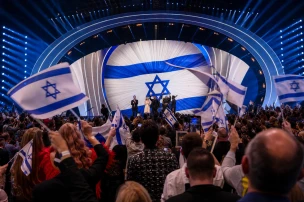

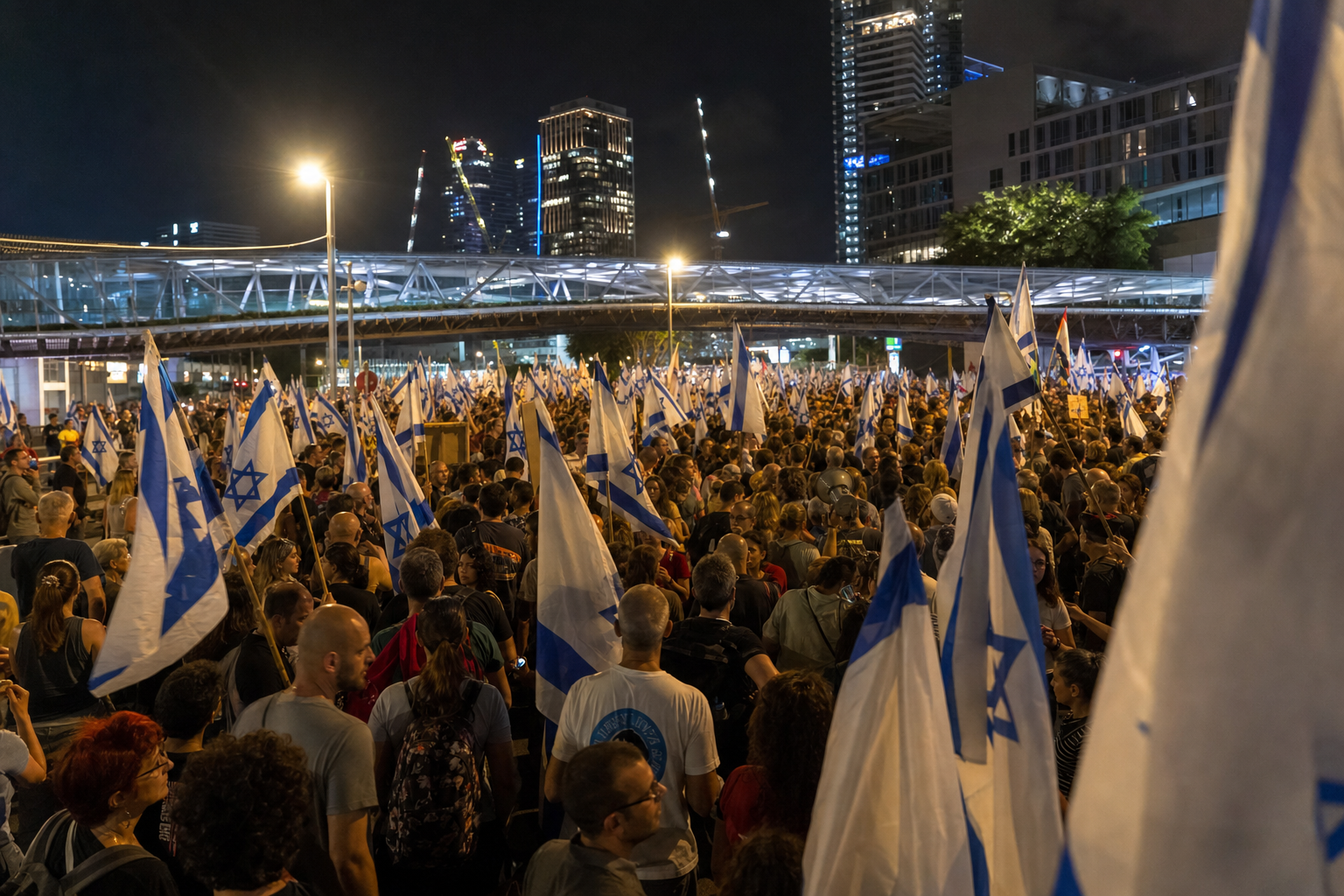
Israeli citizens filled public squares across the country once more to express discontent with Prime Minister Benjamin Netanyahu's government policies.
On May 16, 2026, roughly 200 demonstrators gathered at Rabin Square in Tel Aviv before marching toward Habima Square. They carried signs criticizing military exemption rules for ultra-Orthodox communities and the government's approach to prolonged conflicts. The procession moved steadily through central streets under clear skies, drawing glances from passersby and occasional honks from supportive drivers.
Participants chanted slogans focused on equal burden sharing in national defense. One repeated line targeted those avoiding service, highlighting frustration among reservists who have shouldered extended duties. The group remained orderly, with volunteer marshals keeping the line compact as it crossed busy intersections.
Former Minister Orna Barbivai, a key protest organizer, addressed the crowd near the end of the route. She stated that the demonstrations targeted "those who would die and not draft," referring to resistance against draft requirements for certain religious groups. Her remarks drew applause from attendees who view the current exemption framework as unfair.
The Tel Aviv action formed part of coordinated weekly events. Similar gatherings took place the same day in Jerusalem, Haifa and Be'er Sheva. Organizers described the actions as a continuation of pressure that began intensifying after October 2023 and has persisted through multiple legislative attempts to formalize exemptions.
In Jerusalem, several hundred people assembled near government buildings. Police deployed water cannons at one point to disperse portions of the crowd that approached restricted zones, according to reports from the scene. Demonstrators responded by sitting on the ground and continuing their chants until the equipment was withdrawn.
Haifa saw a smaller but vocal group gather in a central plaza. Participants included families of active-duty soldiers who spoke about extended reserve call-ups stretching into 2026. Local organizers handed out flyers detailing proposed legislation that would maintain broad exemptions for full-time Torah students.
Be'er Sheva hosted a parallel march that started near city hall and proceeded through commercial districts. Residents there focused messages on economic strain caused by prolonged mobilization, with some business owners joining to highlight labor shortages in key sectors.
These events follow a larger nationwide day of action on May 9 that drew over 1,000 participants. That earlier round included more extensive road blockades and drew wider media coverage. The May 16 actions appeared more contained in scale yet maintained consistent messaging across locations.
The core issues trace back to longstanding coalition disputes. Netanyahu's government has relied on support from ultra-Orthodox parties that insist on maintaining draft exemptions. Secular and national-religious reservists argue the policy places disproportionate load on a shrinking pool of personnel amid ongoing security operations.
Legislative efforts to codify exemptions have repeatedly stalled. Each failure has triggered fresh protest waves, with organizers promising continued weekly pressure until the Knesset passes a framework viewed as equitable. Opposition figures have echoed these calls, though they have not joined the street actions directly.
Many participants described personal motivations rooted in family experience. One reservist from central Israel said his unit had completed multiple Gaza rotations since 2023, with little rotation relief in sight. Another attendee noted that her son had postponed university studies for three consecutive years of service.
Police maintained a visible presence at all sites but reported no major arrests or violent clashes during the May 16 events. Organizers credited prior coordination with authorities for keeping demonstrations peaceful and within permitted routes.
Broader context includes sustained American interest in Israel's internal stability. U.S. officials have monitored coalition dynamics closely due to their impact on regional security coordination. Some American Jewish organizations have issued statements supporting equal service obligations without taking sides on specific legislation.
Netanyahu's office has not issued a direct response to the May 16 protests. Coalition partners have instead emphasized the need for unity during active security challenges. They argue that abrupt changes to exemption rules could destabilize the government at a sensitive time.
Protest leaders say they will return the following weekend with expanded numbers if no legislative progress occurs. They point to growing public fatigue with selective service rules as evidence that support for their position continues to widen beyond traditional opposition circles.
The repeated demonstrations reflect deeper divisions within Israeli society over national service, religious authority and the long-term costs of extended military commitments. Observers expect these tensions to remain central to political debate through the summer.