
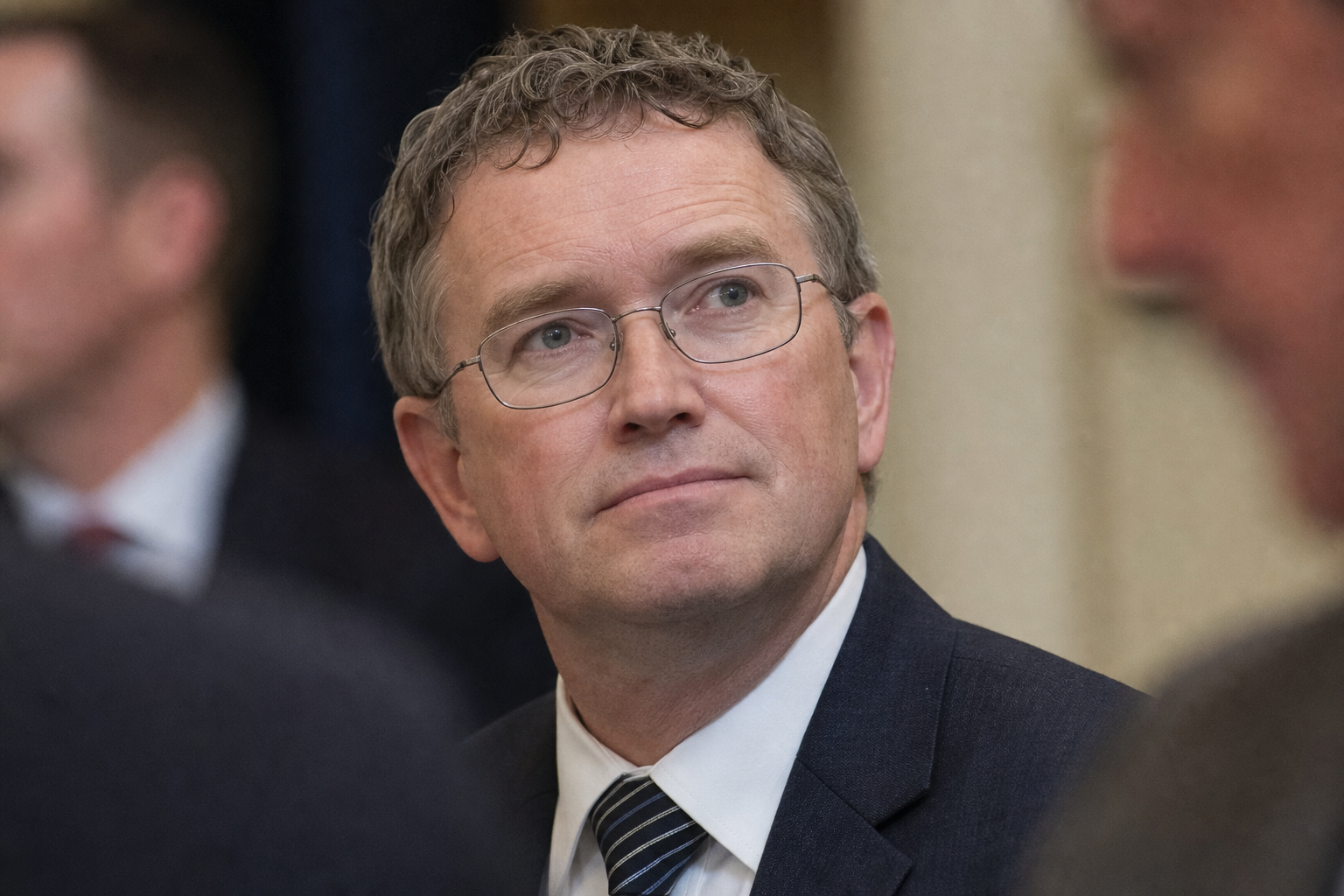
Kentucky Republican Representative Thomas Massie introduced legislation on May 15 requiring the American Israel Public Affairs Committee to register under the Foreign Agents Registration Act, immediately triggering accusations that the timing serves his reelection strategy.
The bill, dubbed the AIPAC Act by Massie, targets the influential pro-Israel lobbying organization at a moment when affiliated super PACs have poured more than $6.6 million into efforts to unseat him in the May 19 Republican primary for Kentucky's 4th Congressional District.
Massie announced the proposal in a statement that read, "Today, I introduced a bill called the AIPAC Act which would make AIPAC subject to the Foreign Agents Registration Act." The four-day gap between introduction and the primary has fueled claims from opponents that the congressman seeks to rally his base by confronting a frequent target of his foreign policy criticisms.
Opposition funding has come primarily from the United Democracy Project, an AIPAC-affiliated super PAC that spent $2.6 million against Massie, and the Republican Jewish Coalition, which added another $4 million in independent expenditures. These figures represent some of the heaviest outside spending in a House primary this cycle and have amplified scrutiny over whether Massie's bill functions more as campaign theater than substantive policy.
Challenger Ed Gallrein, a Trump-endorsed candidate, has capitalized on the moment by framing Massie's record as insufficiently supportive of Israel. Gallrein has repeatedly highlighted Massie's past votes against unconditional military aid to Israel and his consistent skepticism toward foreign lobbying influence in Washington.
Massie has long positioned himself as a libertarian-leaning Republican wary of expansive foreign entanglements. He has voted against multiple aid packages to Ukraine and criticized aspects of U.S. policy in the Middle East, positions that have drawn repeated attacks from pro-Israel organizations during his decade in Congress.
Supporters of the AIPAC Act argue that requiring registration under FARA would increase transparency around foreign policy lobbying without restricting legitimate advocacy. The Foreign Agents Registration Act, enacted in 1938, mandates disclosure for agents acting on behalf of foreign principals, though AIPAC has historically maintained that it operates as a domestic organization representing American citizens.
Critics inside and outside the pro-Israel community contend the legislation singles out one group while ignoring broader lobbying practices across defense contractors and other foreign interests. Several Democratic lawmakers privately described the timing as convenient for Massie but unlikely to advance in a Republican-controlled House.
Republican Jewish Coalition officials have described Massie's proposal as an attempt to distract voters from his foreign policy positions ahead of the primary. Matt Brooks, executive director of the Republican Jewish Coalition, noted that the organization's spending reflects constituent concerns in Kentucky rather than any coordinated retaliation for the bill itself.
Campaign finance records show the combined $6.6 million in opposition spending has funded television and digital advertisements portraying Massie as out of step with mainstream Republican support for Israel. The ads have focused on Massie's history of questioning aid levels and his reluctance to join bipartisan resolutions condemning certain Israeli government actions.
Massie has countered that his bill addresses a genuine gap in lobbying disclosure rules and that he would have introduced similar legislation regardless of the election calendar. His office pointed to prior statements criticizing the influence of foreign agents across multiple countries as evidence the proposal fits his established record.
Political analysts in Kentucky note that the 4th District has remained reliably Republican, yet the influx of outside money has forced Massie to spend more time defending his positions on Israel than in previous cycles. Local Republican activists report increased discussion of the issue at county meetings in recent weeks.
The primary outcome could signal whether direct challenges to AIPAC's influence carry electoral costs for Republican incumbents. Similar efforts by other lawmakers have sometimes succeeded in mobilizing progressive and libertarian voters while alienating traditional pro-Israel donors.
Massie has maintained a consistent voting record against what he describes as unchecked foreign aid and lobbying power. His district includes rural and suburban areas north of Louisville where foreign policy issues rarely dominate local conversations except during periods of heightened outside spending.
Opponents have also questioned whether the bill could survive legal scrutiny, noting that AIPAC maintains separate domestic and affiliated structures designed to comply with existing campaign finance laws. Legal experts suggest any FARA designation would face immediate court challenges from the organization.
Despite the controversy, Massie has continued regular constituent outreach in the district, emphasizing his work on domestic issues such as agriculture policy and federal spending restraint. Campaign events in recent days have featured the congressman highlighting his opposition to government waste rather than the AIPAC legislation.
The compressed timeline between the bill's introduction and the primary leaves little room for legislative movement before voters decide. Massie has indicated he will continue pushing the measure regardless of the election result, though passage remains improbable without broader bipartisan support.
Republican primary voters in the district will weigh Massie's long tenure and institutional knowledge against Gallrein's promise of stronger alignment with Trump administration priorities on Israel and foreign policy. The heavy super PAC involvement has turned what might have been a routine renomination into a test of lobbying influence in Republican primaries.
Voter sentiment in rural counties shows growing fatigue with outside spending that overshadows local priorities like infrastructure and farming subsidies. Massie continues to emphasize his independence from national donor pressures while meeting with small business owners across the district.
Turnout projections suggest the primary could see higher participation than usual due to the visibility of the Israel policy debate in local media coverage. Gallrein has focused his closing arguments on promises of closer coordination with the White House on Middle East security matters.