
Bangladesh's measles outbreak has claimed eight more lives in just 24 hours, pushing the death toll to 432 as health officials struggle to contain the disease spreading across all 64 districts.
The latest fatalities include one confirmed measles death and seven suspected cases, according to reports from The Daily Star. This brings the total suspected measles cases to over 60,206 since the surge began in mid-March 2026. The outbreak has now reached every corner of the country.
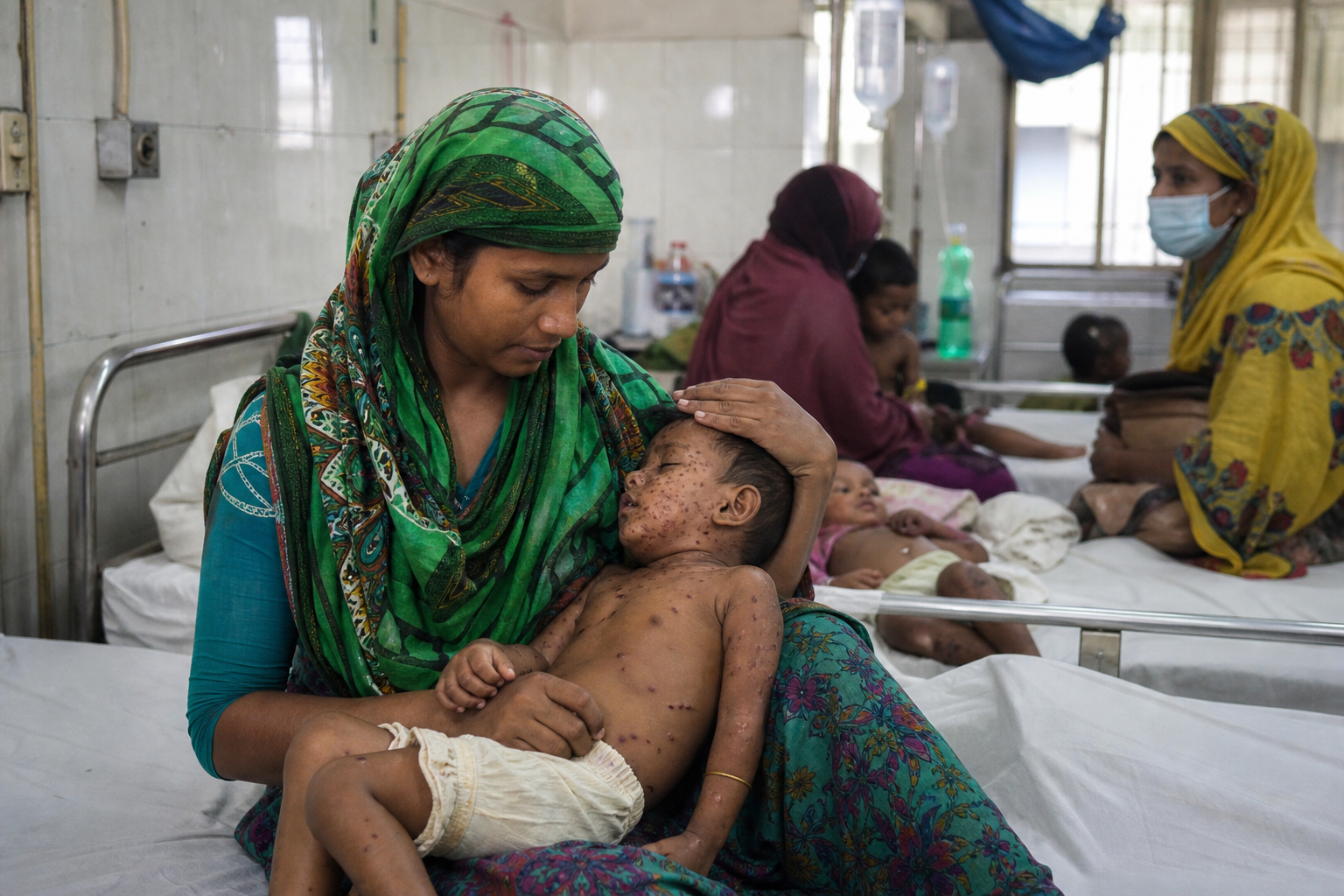
Children under the age of five continue to bear the heaviest burden, accounting for the majority of both infections and deaths. Many families in remote villages have watched young children develop severe complications including pneumonia and encephalitis after initial symptoms of high fever and rash appeared.
Local health centers report being overwhelmed by the volume of patients arriving daily. Limited vaccine supplies and difficulties reaching scattered rural populations have slowed the response, allowing the highly contagious virus to move unchecked from one district to the next.
The World Health Organization issued a high-risk assessment for the nationwide measles surge in its April 2026 situation report. Officials there emphasized that routine immunization coverage had fallen in several regions, creating pockets of susceptible children who now fuel the epidemic.
Doctors describe scenes of crowded wards where beds are shared and oxygen supplies run low during peak hours. Parents often travel long distances on foot or by rickshaw only to find facilities already at capacity.
One confirmed case involved a two-year-old boy in northern Bangladesh who developed breathing difficulties after a week of fever. Seven other deaths recorded in the same 24-hour period remain under investigation but show identical measles-like symptoms.
Public health teams have launched emergency vaccination drives targeting children who missed earlier doses. Mobile teams move through markets and schools, yet coverage remains uneven because some parents fear side effects while others simply cannot reach the clinics.
The economic strain adds another layer of hardship. Families lose daily wages when parents stay home to nurse sick children, and small clinics spend scarce resources on basic supportive care such as rehydration and fever management.
Historical records show Bangladesh experienced smaller measles clusters in past decades, but none matched the current geographic reach. The virus has exploited gaps created by recent disruptions in routine health services across the country.
International partners have pledged additional vaccine doses, yet logistics of cold-chain storage and last-mile delivery in flood-prone areas continue to slow distribution. Health workers say every day of delay translates into more preventable deaths.
Surveillance data indicate the outbreak began in mid-March with clusters in densely populated urban slums before radiating outward to all 64 districts. Case numbers have climbed steadily each week without clear signs of peaking.
Medical staff on the ground stress that early detection and isolation remain the most effective tools available until broader immunity is restored. They urge parents to seek care at the first sign of high fever accompanied by cough or rash.
With the death toll now at 432, authorities face mounting pressure to accelerate containment measures before the monsoon season further complicates access to affected communities. The coming weeks will test whether current efforts can finally bend the epidemic curve downward.