

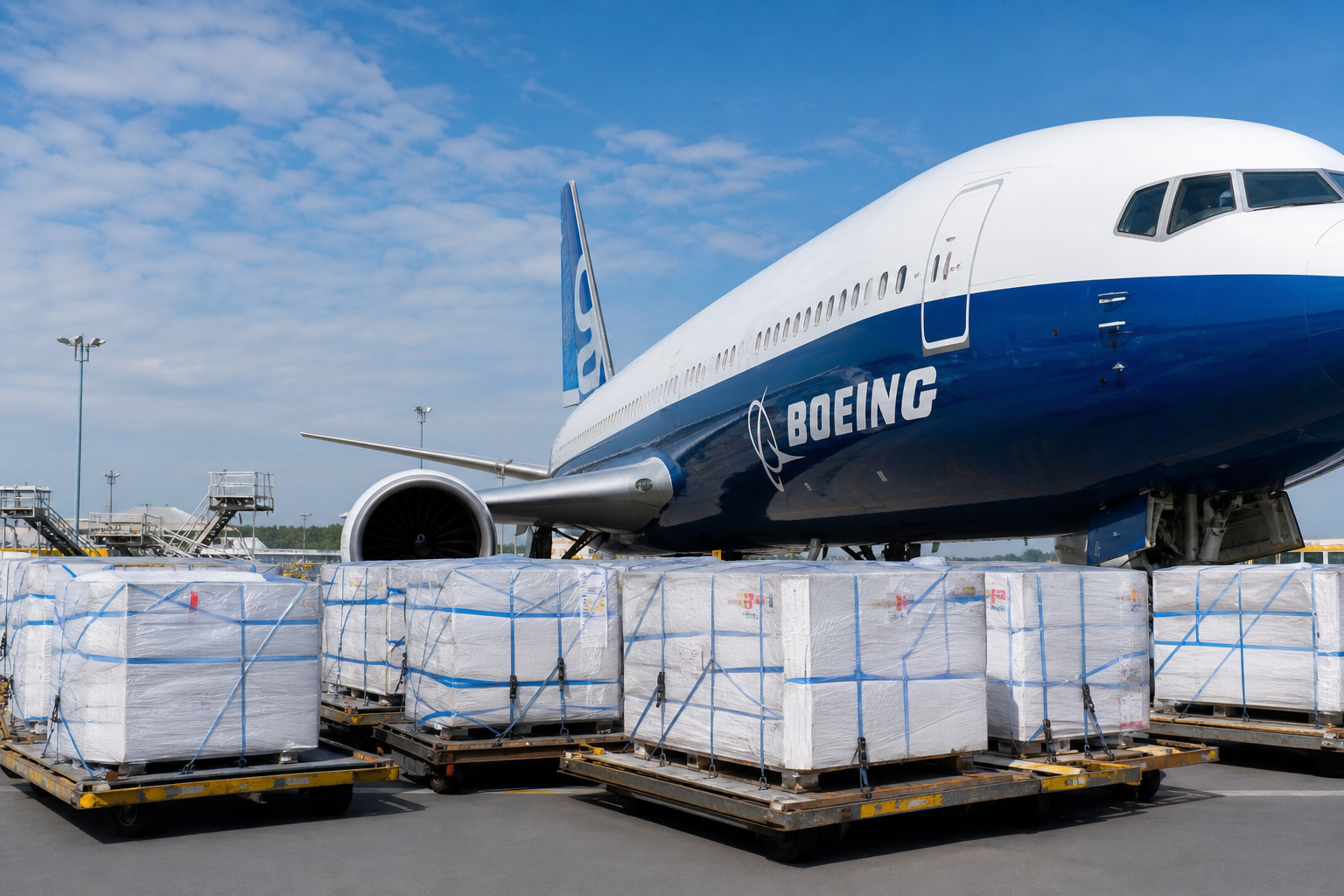
Boeing has secured 109 new aircraft orders in April, a clear sign of renewed airline interest in both its narrowbody and widebody programs.
The breakdown shows 28 commitments for the 777X, 29 for the 787, and 52 for the 737 MAX, according to detailed reporting by Aviation Week on May 12, 2026. These figures represent the bulk of the month’s activity and include a strong widebody component that analysts view as particularly valuable for long-term revenue.
Year-to-date net orders now total 276, giving Boeing a solid start to 2026 after several years of production constraints and regulatory scrutiny. The unidentified buyers behind the April deals are typical in this industry, often representing leasing companies or carriers that finalize public announcements later.
The 777X orders underscore demand for Boeing’s largest twin-aisle aircraft, designed to replace aging 777 and 747 fleets on ultra-long routes. Airlines value its extended range and lower fuel burn, features that become decisive when carriers plan network expansion beyond 2027.
The 29 787 orders add to an already healthy backlog for the Dreamliner family. This model’s composite fuselage and advanced systems continue to attract carriers focused on operating efficiency across medium to long-haul sectors.
The 52 737 MAX orders reflect sustained interest in Boeing’s single-aisle workhorse despite earlier grounding episodes. Production rates have been climbing steadily as suppliers resolve quality issues and regulators maintain oversight of final assembly.
Boeing simultaneously announced a $1.3 billion investment in its Wichita, Kansas facility. The commitment follows the company’s reacquisition of Spirit AeroSystems and targets expanded fuselage production capacity plus advanced automation upgrades.
Wichita has served as a critical node in Boeing’s supply chain for decades. Integrating Spirit’s operations in-house reduces reliance on external partners and gives Boeing greater control over quality and delivery schedules for both the 737 and widebody lines.
The capital expenditure will fund new tooling, workforce training, and facility modernization. Local economic development officials expect the project to support thousands of jobs and generate substantial multiplier effects across the Kansas aviation cluster.
Boeing CEO Kelly Ortberg addressed potential additional orders tied to international agreements. He stated, “If there’s an agreement at the country level … I’m highly confident that will include some aircraft orders. I think that’s a meaningful opportunity for us.”
The comment points to ongoing trade discussions that could unlock sales in markets where government-to-government frameworks influence fleet decisions. Such deals have historically delivered multi-billion-dollar contracts for both narrowbody and widebody aircraft.
Reports from AeroTime highlighted the mystery surrounding the 109 orders, noting that several major leasing companies and Asian carriers are frequently linked to similar undisclosed batches. Formal customer disclosures are expected in the coming quarters as purchase agreements reach final stages.
Airspace Economy coverage emphasized that the Wichita investment forms part of a larger strategy to stabilize and then accelerate production across all programs. Fuselage manufacturing capacity at the site directly affects the ability to meet delivery targets for the 737 MAX and 787 families.
Supply chain resilience remains a priority. By bringing Spirit capabilities back under Boeing control, the company aims to eliminate recurring quality escapes that previously disrupted assembly lines and delayed customer deliveries.
The April order performance arrives as global passenger traffic continues its post-pandemic recovery. Widebody aircraft in particular benefit from renewed long-haul leisure and business travel, especially on transpacific and transatlantic routes where the 777X and 787 hold strong competitive positions.
Boeing’s current backlog exceeds several thousand aircraft, providing production visibility well into the next decade. The April additions strengthen that visibility and support planning for gradual rate increases on both single-aisle and twin-aisle lines.
Industry observers note that widebody orders carry higher per-unit margins than narrowbodies, making the 57 widebody commitments financially meaningful even before deliveries begin. This mix helps offset the heavier volume focus on the 737 MAX program.
The Wichita expansion timeline aligns with Boeing’s goal of achieving stable, higher production rates by 2027. New equipment and processes installed under the $1.3 billion program will support both current models and future derivatives under study.
Overall, the combination of 109 orders and the major Kansas investment signals Boeing’s determination to regain momentum after years of operational challenges. Execution on production targets and quality metrics will determine how quickly these commitments translate into revenue and cash flow.